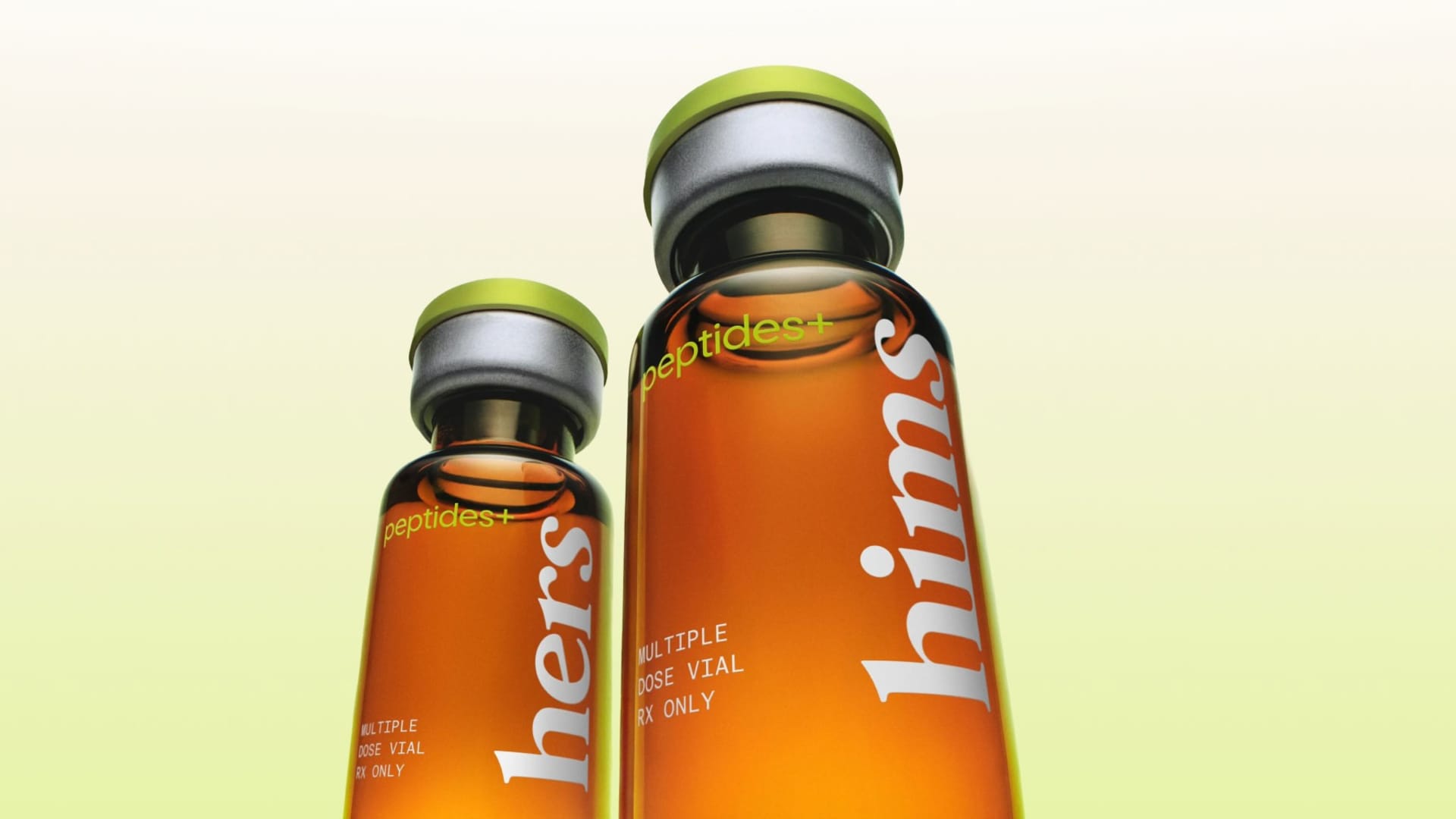
Hims & Hers peptide treatments. Courtesy: Hims & HersHims & Hers Health said Wednesday it will offer five peptide formulations and compounded longevity treatments in the U.S. as part of the initial launch of its Peptides+ platform, all of which are not approved by regulators. Even as it announced the new products, Hims & Hers acknowledged it has more to learn about how best to use peptides and how effective they are, underscoring the uncertainty surrounding the growing space. The new offerings come after the federal government eased restrictions on the composition of certain unapproved peptides, which are short chains of amino acids. Such products have gained popularity among fitness and longevity enthusiasts, who attest to helping with muscle growth, rapid injury recovery, and anti-aging, although most lack evidence from robust human trials. In late October, Hims launched an early access list for upcoming peptide offerings, and more than 10,000 people signed up in 15 days, a company spokesperson said in a statement. None of the company’s specific compounded products are approved by the Food and Drug Administration. But Hims said they are authorized by law and formulated by pharmacies “that adhere to rigorous quality standards and are licensed and inspected by state boards of pharmacy.” Products include formulations composed of sermorelin, a peptide that stimulates the release of growth hormone and is marketed for recovery, body composition and anti-aging; glutathione, a peptide promoted for athletic recovery and anti-aging; and nicotinamide adenine dinucleotide, or NAD+, a coenzyme that plays a role in cellular metabolism. The company will also offer compounded versions of vitamin B-12, a vitamin necessary for making red blood cells, developing DNA and maintaining healthy nerve function, and L-carnitine, an amino acid derivative that helps the body convert fat into energy. The FDA has approved certain prescription forms of both peptides for established medical uses, primarily for diagnosed deficiencies in those compounds. Hims said he plans to add more peptides and therapies made in the U.S. over time. That includes BPC-157, an unapproved peptide derived from a protein found in human gastric juice and marketed for healing processes. The company also intends to introduce another unapproved peptide called TB-500, which is derived from a naturally occurring protein in the body and is marketed for broader, systemic soft tissue recovery and flexibility. Most of the research on both has been done on animals, not humans. Hers Peptides Source: Hims & Hers Health To receive the products, Hims platform members will begin with an evaluation of their health history and goals with a licensed provider trained in peptide therapies, who can tailor a personalized plan to their needs, if appropriate. The company said it intends to use its communications platform to communicate with patients and ensure they are getting the desired results. “If it’s not, we have to do something about it,” Dr. Anant Vinjamoori, Hims’ medical director, told CNBC. “We need to, you know, adjust the dosage where appropriate, or in some cases consider other compounds that may be more suitable. And, of course, there will also be cases where we will need to refer people to other care options.” However, Vinjamoori said there is still uncertainty about how to best use the peptides. “We don’t have all this data that we’re used to with compounds like this,” he said. “We have the opportunity to do it right, and I think we see it as our responsibility to a company of our size, our ability and resources to really lead.” Vinjamoori added that people suffering from serious illnesses, such as cardiovascular, liver and kidney diseases, will not be candidates for the compounds for now. Meanwhile, Andrew Huberman, a well-known neuroscientist, podcaster and Stanford University School of Medicine professor who recently joined Hims’ board of directors, in a statement called the compounds “real medical treatments.” not just a wellness trend.” He said Hims provides safe access through “trusted providers and medical oversight.” Possible Concerns About Peptides But health experts raised concerns about the broader widespread marketing of peptides in the U.S. and access to them on telehealth platforms. “With peptides, I think you have to view them the same way you would view any drug that hasn’t been rigorously tested,” said Joshua Kritzer, a chemistry professor at the University of Tufts. “Without real evidence, all you have is anecdotal information, and that’s simply not enough information to put a substance in your body.” Kritzer said the lack of large clinical trials means researchers can’t rule out rare and potentially serious complications from peptides, the kinds of risks that have led regulators to reject or withdraw otherwise effective drugs from the market after they underwent extensive testing in humans. Doctors and pharmacies can make decisions about what dosage patients should take, said Paul Knoepfler, a professor of cell biology and human anatomy at UC Davis Health. Although some people rely on anecdotal data from real peptide users, “the dosage of these products hasn’t really been established,” he added. One risk, Knoepfler said, is that injecting too much of a synthetic peptide into patients could trigger “strange immune responses that are really bad for your health” because the body could recognize it as. “With peptides, it’s very complicated,” Knoepfler told CNBC. “How do you know what the effective amount would be for what you’re expected to do, and what amount would have the most risks?” But he said the more contact patients can have with doctors about taking a compounded peptide, the better, including those tied to telehealth companies, should make sure patients are well informed about the potential risks and unknowns of a given product and consider their preexisting conditions, history of cancer and other medications, Knoepfler said. This appears to be consistent with the approach Hims & Hers is taking. The company says patients using peptides and longevity products can also use its Care+ offering, which combines treatment with ongoing support. Thus, Kritzer argued that having a doctor who only meets a patient through websites or online, essentially mail-order platforms, “is not sufficient oversight to prescribe a prescription drug,” especially an unapproved one. Hims’ ability to legally sell some of these peptides is due to a major change in federal oversight by the Department of Health and Human Services. It issued a policy in October that says the Food and Drug Administration will not take enforcement action against licensed pharmacies, federal facilities. or doctors combining and dispensing six unapproved peptides while formal rules are reviewed. In practice, that means these pharmacies and other companies can now offer them, even though the peptides are not yet on the FDA’s official list of ingredients that compounding pharmacies can produce. It does not translate into formal approval of the specific peptides. The policy followed a 2023 decision by the Biden administration in which the FDA restricted compounding pharmacies from producing peptide formulations. Popular due to safety concerns, impurities and immune reactions. HHS Secretary Robert F. Kennedy Jr. has supported broader access to the peptides, calling himself a “big fan” of the treatments and arguing that the restrictions were leading Americans to buy potentially unsafe products from abroad. Kennedy previously described the use of BPC-157 to treat a muscle injury. California-based peptide manufacturing company equipped with advanced peptide synthesizers. Evidence, or lack thereof, of peptide efficacy varies by compound. A 2026 systematic review that examined 113 studies, including both small human trials and rodent research, found no eligible clinical outcome trials showing that intramuscular or intravenous NAD+ administration improves anti-aging endpoints in humans. some evidence for specific uses of certain peptides, such as possible weight loss. A review of 37 trials of L-carnitine found that participants lost about 2.7 pounds on average, although that analysis does not show that a compounded injection works the same way. Meanwhile, vitamin B-12 injections are more commonly used to help people with a diagnosed deficiency rather than preventive care. B-12. The evidence on glutathione is also sparse. Intravenous injections are widely marketed for skin whitening, but are not approved by the FDA for this purpose. A small study published in the Journal of Pakistan Association of Dermatologists that evaluated intravenous glutathione showed that the treatment is “not very effective” in lightening skin and that it loses effectiveness over time. The FDA also said in August that it received reports of at least 30 patients who experienced adverse events after receiving intravenous glutathione. compounded alone or in combination with other ingredients from different compounding pharmacies. All glutathione linked to the reports came from the same wholesale distributor and was labeled as dietary supplement grade, which is not an appropriate ingredient for making injectable medications. Two of the Texas pharmacies issued recalls related to elevated levels of endotoxins in their injectable glutathione medications. These studies and reports do not speak to how Hims’ exact combination will work, but they do highlight the current limits of the data studying the treatments and questions. that surround them.