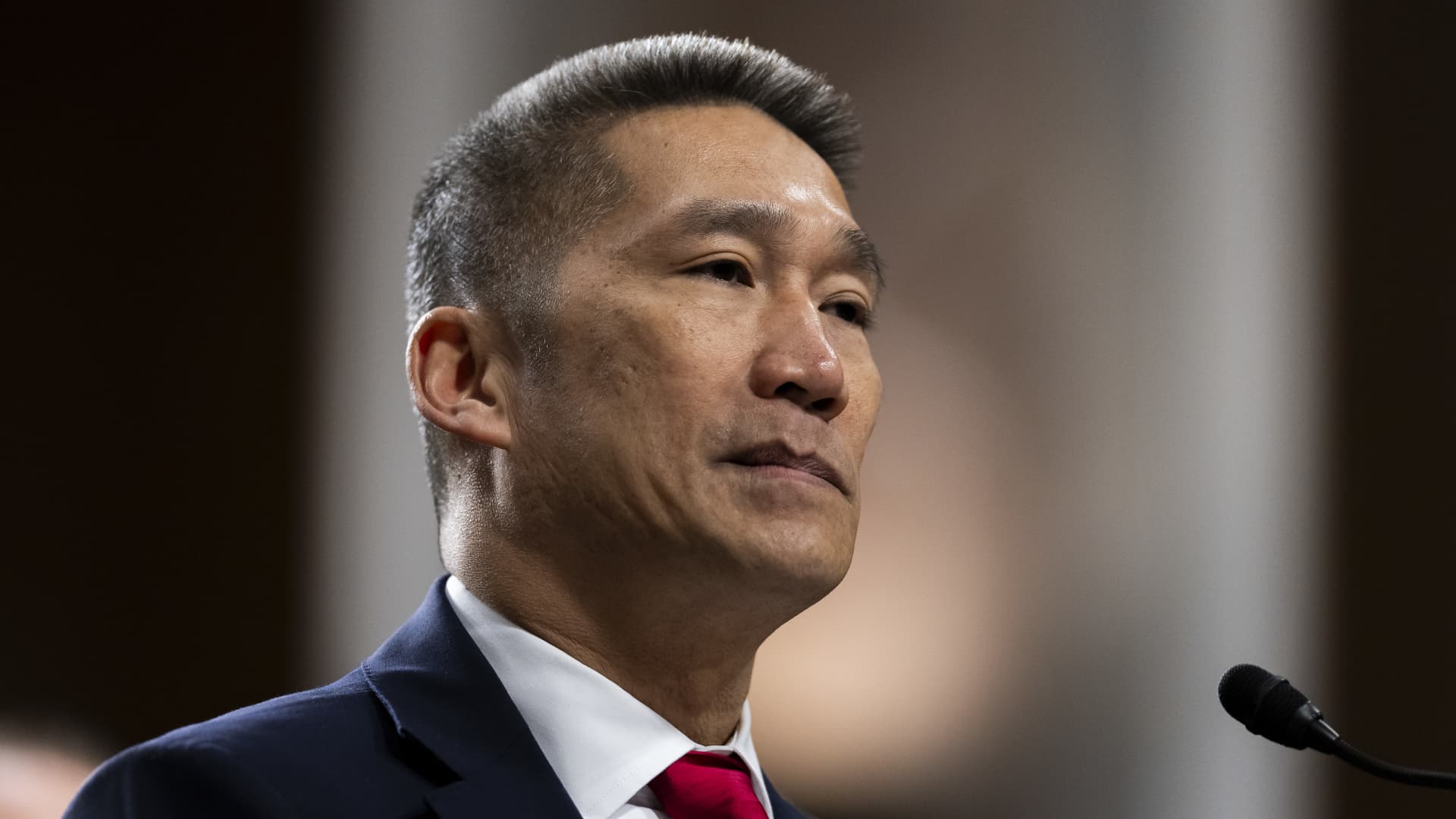
Acting US Navy Secretary Hung Cao’s confirmation hearing before the Senate Armed Services Committee led to some heated exchanges as he was questioned about the health of sailors and the Iran war. The Navy changed the condition codes for ammunition previously classified as expired so it could be used, Cao told senators Tuesday, as lawmakers questioned the conflict’s pressure on weapons stocks and naval deployments. He also said the military had increased production of key weapons. “When I was in uniform, we only produced 125 Tomahawks a year. Right now, we’re well over 60 each month,” he said, adding that the Army was working to increase production of SM-6 missiles and attract additional munitions manufacturers. Cao’s confirmation hearing comes as Republicans, who hold majorities in both the House and Senate, are coming to the end of their time in power in both chambers. The Democratic Party gained many seats in the midterm elections to obtain a comfortable majority in the next session that begins in January. President Donald Trump’s candidates for public office and his legislative agenda will face much tougher challenges then. Cao said the Navy was accelerating work on unmanned surface ships to relieve the 17 destroyers supporting the blockade of Iran’s ships, hoping to reduce pressure on the Fifth Fleet. But senators still pointed out the war’s effect on Navy resources. “For the first time in many years, the United States does not have any aircraft carriers deployed in the Pacific at this time,” said Senator Jack Reed (D.R.I.). Cao acknowledged that the war was “pressuring our naval resources.” However, he argued that the demonstration of combined American military capabilities had “really set China back,” a characterization that Sen. Mazie Hirono (D-Hawaii) disputed. Lawmakers also pressed Cao on the financial costs of the war, and Cao appeared to agree with Sen. Elizabeth Warren (D-Mass.)’s estimate of about $32.5 million per day in costs to maintain the blockade of Iranian ports. Demands for extended deployments have raised concerns about sailors’ access to food and basic supplies, as Cao told senators that the destroyer USS Gonzalez had a week’s worth of rations left. “I usually don’t like to see them go below two weeks of supplies,” he said, while insisting that the provisions were adequate and that the ships had never run out of food. When Sen. Mark Kelly (D-Ariz.) asked about reports of sailors losing 45 pounds, Cao asserted that dietary preferences might not be to the taste of certain sailors. She compared it to her children opening the refrigerator door and saying “there’s nothing to eat here.” “Losing 45 pounds is more serious than simply not liking food. Our sailors are asked to serve thousands of miles from home for months at a time. We have a responsibility to make sure they have what they need to do their jobs and stay healthy,” Kelly posted on X. Senators also questioned Cao about eight suicide attempts on the USS Abraham Lincoln aircraft carrier strike group during his deployment. Cao defended the Navy’s mental health support, describing the incidents as “eight suicide mitigations” because personnel had intervened. Kirsten Gillibrand (D-N.Y.) called the term “mitigations” an “insult,” saying they should be called suicide attempts. The questioning followed an earlier acknowledgment by the top U.S. commander in the Middle East of mental health concerns aboard the Lincoln. Cao promised that the entire Department of the Navy would achieve a clean financial audit by the end of the fiscal year. The Pentagon has had nine consecutive failures to obtain a clean department-wide audit opinion, according to Reuters. “We owe it to the American public to tell them exactly where their money is,” he said. If you are having suicidal thoughts, know that you are not alone. If you are in danger of acting on suicidal thoughts, call 911. If you or someone you know is struggling or in crisis, help is available. Call or text 988 or chat at 988lifeline.org.