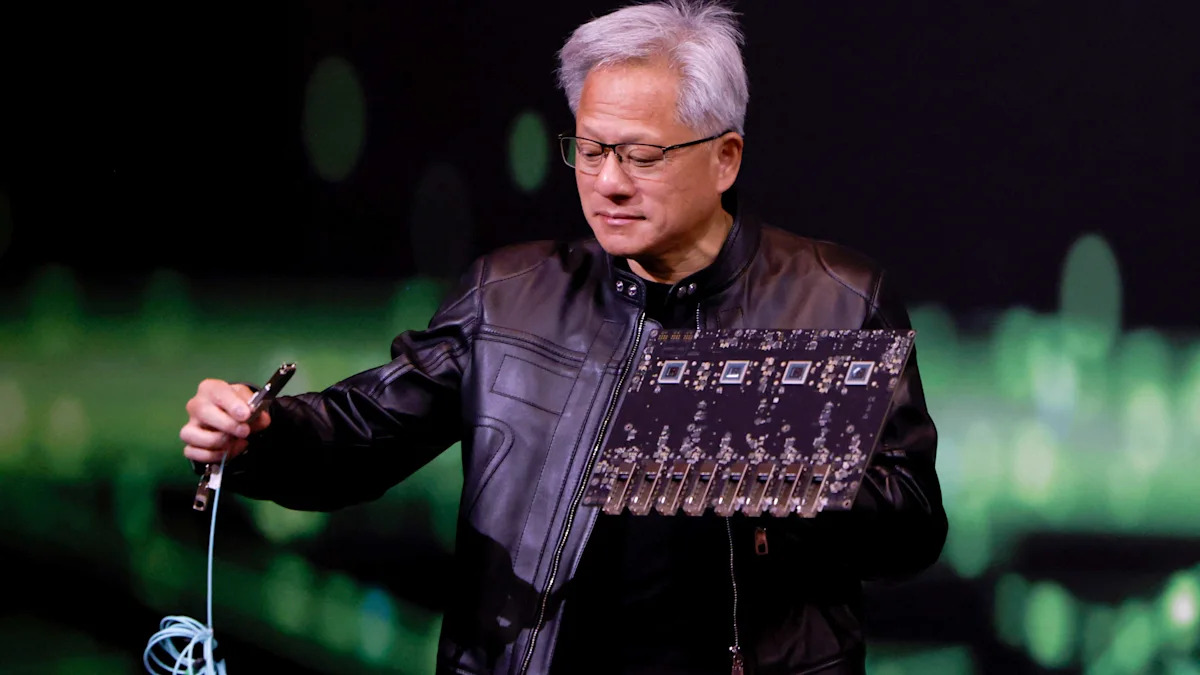
When Nvidia’s (NVDA) forward price-earnings ratio is six points below that of slow-growing and struggling food giant PepsiCo (PEP), as is the case today, it’s worth checking what financial assumptions are now in play on Wall Street. UBS believes the assumptions about Nvidia are brutal and unlikely to be correct, given the chip giant’s momentum for at least two more years, even without Huang as CEO. Nvidia shares fell 0.4% before the bell on Tuesday. 156.14 -6.71 (-4.12%) At Close: Nov 16 at 4:00:01 pm EST 155.42 -0.72 (-0.46%) Premarket: 5:44:10 am EST “In essence, the market assumes that calendar year 2028 will be the peak, there will be no growth thereafter, and EBITDA margins will be compressed ~1,500 basis points. This seems incredibly draconian to us,” UBS analyst Tim Arcuri wrote on Monday. Arcuri added: “We believe the near-term damage to the stock has already been done and we don’t think it makes sense to give up on the stock after it has fallen so much (as some of our peers did last week), especially ahead of January’s hyperscale earnings calls, where we believe capex will be guided above current Street expectations.” Arcuri maintained a Buy rating on Nvidia stock. Huang was ousted as CEO of the company he founded in 1993 amid a shocking turn of events last week. According to the New York Times, Huang, whose relationship with a woman suspected of being a Chinese spy has engulfed the company in scandal this week, also had a relationship with Nvidia executive Kimberly Powell, one of Huang’s approximately 60 direct reports. Reuters reported last Thursday that Huang was in a relationship with another Nvidia employee, whose name was not revealed. Huang has been married to his wife, Lori, for more than 40 years. As Nvidia searches for a successor, the board has installed veteran CFO Colette Kress as interim CEO ahead of the company’s earnings release on Tuesday. Nvidia has lost about $1.8 trillion in market value since the October 6 peak. Bank of America analyst Vivek Arya also believes the stock has gotten too cheap. “The stock’s 11x forward PE is a multi-decade low and a ~36% forward discount to nearby peer Broadcom, reflecting a considerable amount of stress and rebound potential,” Arya wrote. “Any industry (DC slowdown) or company concerns (China scrutiny, ASIC competition) are likely to only manifest towards the end of calendar year 2027/2028. Our model indicates $15+ in estimated EPS for calendar year 2028, ~50% above current levels, even if sales remain flat year-over-year at ~$700 billion. The stock’s implied PE “7x/11x on current/downside situation remains compelling. Importantly, even a 40% free cash flow ratio (vs. 50% consensus) could translate into ~$300 billion in annual free cash flow for buybacks/ecosystem financing.” Follow Brian Sozzi on X @BrianSozzi, Instagram and LinkedIn. Story tips? Email him at brian.sozzi@yahoofinance.com.