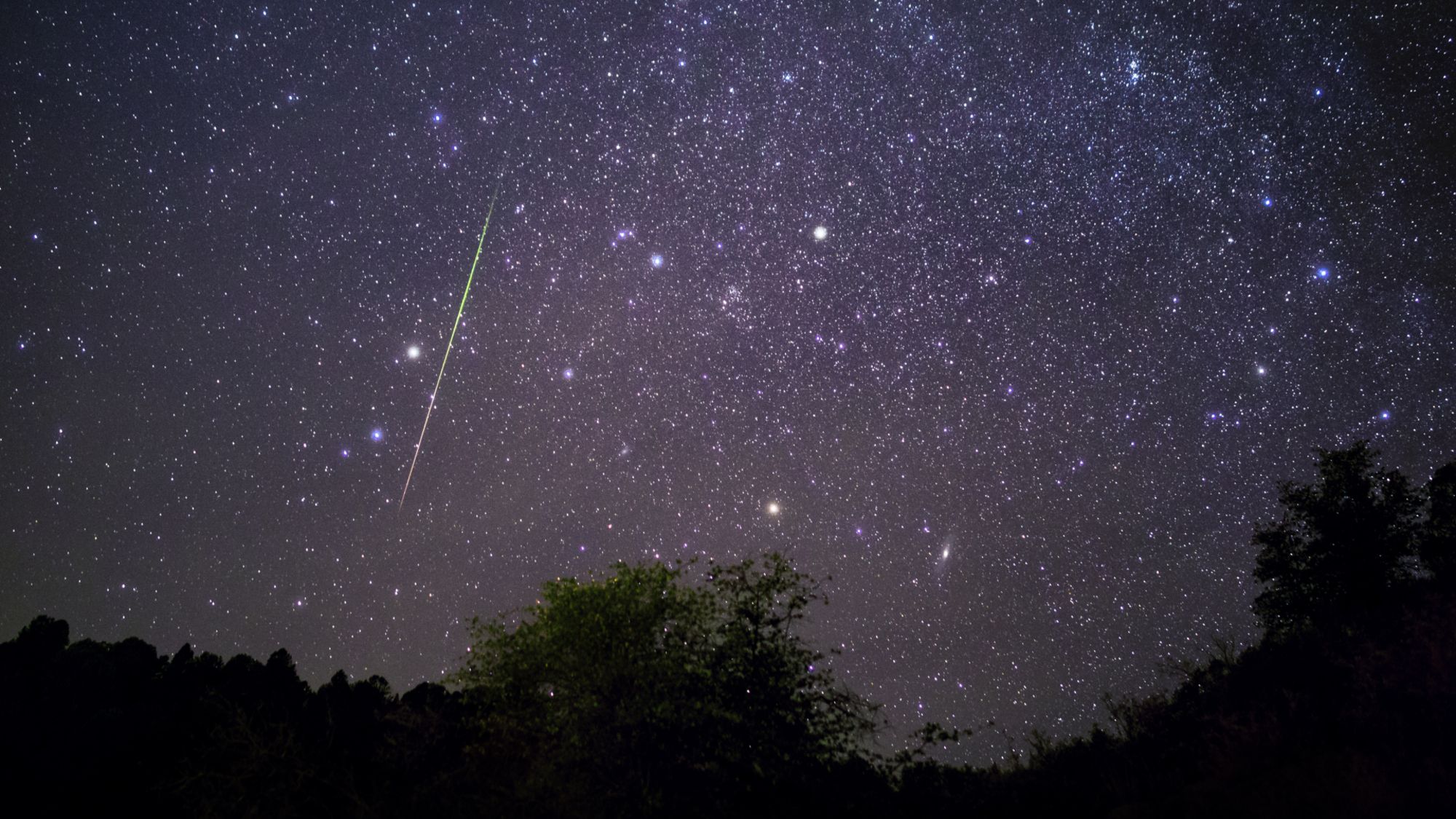
Follow Us Add us as a preferred source on Google Newsletter Subscribe to our newsletter The Leonid meteor shower peaks tonight (November 17-18), sending shooting stars and fireballs across the autumn sky as Earth passes through a stream of debris left behind by Comet 55P/Tempel-Tuttle. Up to 15 meteors per hour could be detected in perfect dark sky conditions on the night of November 17-18, according to the International Meteor Organization. Meanwhile, NASA has given a more conservative rate of less than three meteors per hour; time will tell. The Leonid meteors appear to move away from a point of origin, or radiant, in the constellation Leo, which shines high above the southeastern horizon in the predawn hours of mid-November. Both Jupiter and Mars will be just a few degrees apart in the constellation Leo on the night of the peak, making them particularly easy to find in 2026! When is the best time to look for Leonid meteors? The best time to spot Leonids is in the pre-dawn hours of November 18, when the radiant will reach its highest point in the southeastern sky, maximizing the number of meteors that can be seen skimming Earth’s atmosphere. By then, the crescent moon will have set, leaving darker skies and greater chances of spotting fainter meteors. Shooting stars that appear close to the radiant will hit the Earth almost head-on, leaving the shortest trails. Instead, find a patch of sky a short distance from the constellation Leo, where the meteors will be most impressive, and give your eyes 20 to 30 minutes to fully adjust to the darkness. You may like Why are the Leonids special? As if shooting stars weren’t enough, the Leonid shower is also known for generating dazzling fireballs and long-lasting Earth-grazing meteors, which hit our atmosphere at an oblique angle, leaving long trains in their wake before returning to space. The shower is also capable of producing magnificent meteor storms when Earth passes through particularly dense trails of debris left by comet 55P/Tempel-Tuttle, which orbits the sun approximately every 33 years. Unfortunately, we’ll have to wait a bit for the next big show. According to the Planetary Society, another Leonid meteor storm could occur as early as 2031, while a study published in August 2026 predicts potentially spectacular manifestations in 2033 and 2034. Want to photograph a shooting star? Then be sure to read our guide to shooting star images, along with our pick of the best astrophotography lenses and cameras on the market in 2026. Editor’s note: If you’d like to share your Leonid photos with Space.com readers, send your photos, comments, and your name and location to spacephotos@space.com.