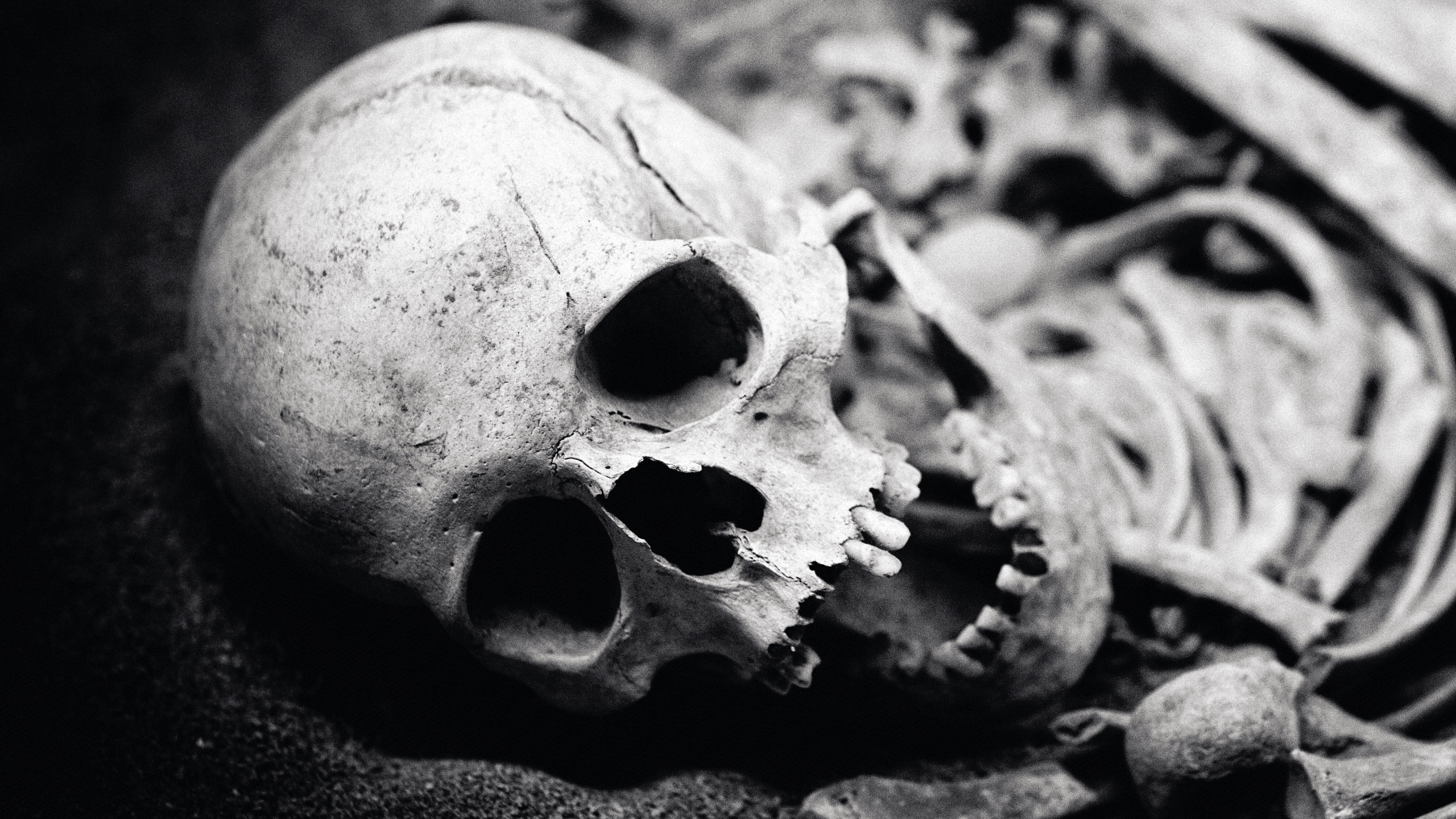
There is something strange about some of the skeletons buried in monasteries in Denmark. Some appear to date back decades, or even centuries, before their final resting places were built. So what’s going on? Scientists from the University of Southern Denmark and the Isotope Research Center believe they have found the answer. In an article published in npj Heritage Science, they have issued “words of caution” to archaeologists when dating medieval human remains. Radiocarbon dating is a fairly reliable method for estimating the age of bones and artifacts, up to about 50,000 years old. A chart detailing how carbon-14 enters the environment and organisms. The percentages given are compared to atmospheric levels of carbon-14. (Rasmussen et al., npj Heritage Science, 2026) The process begins in space: cosmic rays interact with nitrogen in the atmosphere, producing small amounts of a specific isotope called carbon-14, which then binds to atmospheric oxygen to form carbon dioxide. Trees and other photosynthesizing plants then absorb this carbon from the air into their own cells, and in turn, so do the animals that eat those plants (as well as animals that eat other animals that eat plants). They eventually die, obviously stop eating and therefore stop adding new carbon-14 to their cells. From there, carbon-14 levels can only decrease over time through radioactive decay. By analyzing carbon-14 levels within bones and comparing them to known historical levels of the isotope in the atmosphere, scientists can fairly accurately estimate the age of those bones. But there is a problem. Regular radiocarbon dating works well for humans and animals that eat primarily land animals and plants, but it’s a different story for those that eat a lot of fish, thanks to a phenomenon known as the “reservoir effect.” Rivers, lakes and oceans have different carbon isotope ratios, due to runoff of dissolved carbonates or the upwelling of much older carbon dioxide. That means rivers, for example, can contain about 15 percent less carbon-14 than the atmosphere. As a result, the bones of a person on a fish-rich diet may appear hundreds of years older than they really are. “In extreme cases, a Rhine fish [River]”An animal, for example, can appear up to 1,300 years older than a terrestrial organism that lived at exactly the same time,” says Kaare Lund Rasmussen, an archaeometrist at the University of Southern Denmark. “But that doesn’t mean you can simply subtract 1,300 years from the date of a person who ate freshwater fish. Quite the opposite. The particular problem with freshwater is that the effect varies enormously. It can range from zero to 1,000 years.” The team analyzed bones from 27 individuals excavated from medieval Danish monasteries, and sure enough, six samples had particularly anomalous ages. In each case, the bones appeared to be decades or centuries older than the buildings they were buried in or near. Red lines indicate radiocarbon dating age ranges for each skeleton, without correcting for the reservoir effect. The black dashes indicate the year each nunnery was founded, so it is very unlikely that any skeletons had been buried there before that time (Rasmussen et al., npj Heritage Science 2026). In one case, for example, a skeleton buried in the Danish town of Svendborg had been radiocarbon dated between 1100 and 1155 AD, but the monastery was not erected until 1236. Another, in the city of Viborg, dates back to 976 AD, more than a century before the monastery was built above them. “In medieval Christian Europe, meat was restricted during the period of Lent,” the researchers write. “However, the meat of freshwater fish was tolerated as a food source because freshwater fish was considered “cold” or “neutral” compared to the meat of warm-blooded animals and marine fish. Freshwater fish even in some Christian circles and cultures were considered a prestigious food. “There was more direct evidence that the reservoir effect was also at play. The team analyzed the samples for an isotope called nitrogen-15, which is rich in aquatic ecosystems, and sure enough, elevated levels were detected in all the samples. The researchers suggest that this phenomenon is not unique to Denmark, and is probably occurring in other parts of Europe and the rest of the world. They use an example from a Stone Age site in the Balkans, where human remains have been found. found pierced by arrows made from animal bones You might expect both sets of bones to be about the same age, but previous studies have found that the human bones appear to be up to 500 years older than the animal bone arrows. Either some Stone Age prankster stuck then-modern arrows into bones that had been lying around for half a millennium, or humans had been eating fish and animals hadn’t. “The caveat is that it is necessary to evaluate whether the excavated bones are affected by a freshwater reservoir effect and, if so, how large the reservoir effect might be,” the researchers conclude. The team recommends measuring nitrogen-15 levels in bones, especially those from the medieval period. If these levels are high, there are models that can help calibrate a more precise bone age. we know it.