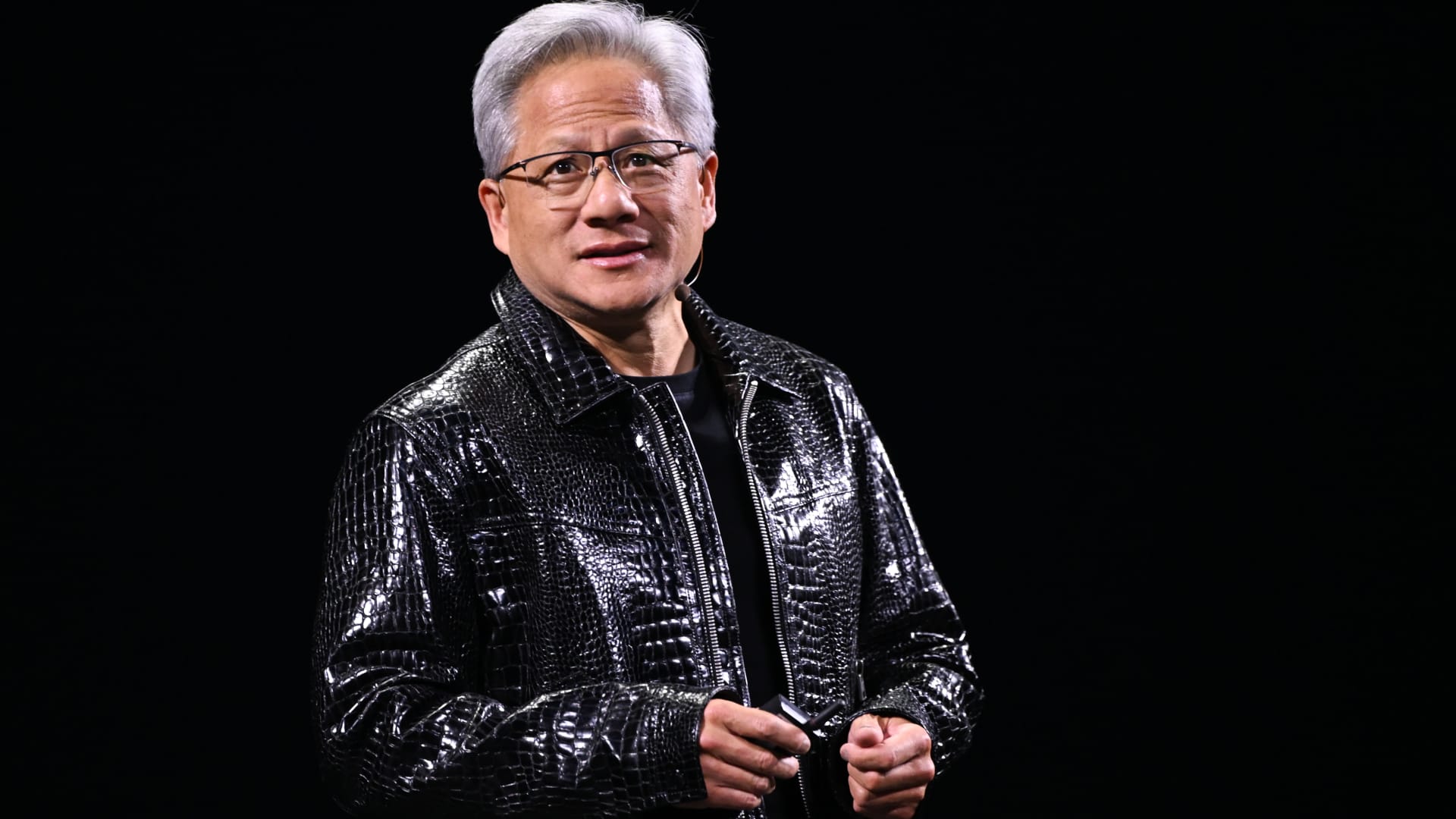
The surprising resignation of Nvidia CEO Jensen Huang raises a troubling question: Could the problems at the chipmaker spread through the closely connected financial network that Nvidia has built to support the rise of artificial intelligence? Follow CNBC’s live coverage of Nvidia CEO Jensen Huang’s resignation. Serious problems with Nvidia could cause far-reaching economic and financial damage. The company has made hundreds of billions of dollars in financial commitments to other companies to help the industry grow, earning it the nickname “central bank of AI.” The Federal Reserve and other financial institutions are closely watching the development of AI to monitor the possibility that an unexpected event could destabilize the global financial system. Even in July, Fed officials were discussing the possibility of a “broad asset revaluation” in case of problems in the AI sector. A repeat of the 2007-2008 financial crisis is not likely, according to current and former analysts and financial officials. Nvidia is not “too big to fail in the banking sense,” said Sheila Bair, a former government regulator who ran the Federal Deposit Insurance Corp. Unlike a troubled bank, Nvidia is not vulnerable to a sudden loss of confidence and would still produce a product that customers want to buy even if something went wrong. And his enormous capital gives him a cushion. But regulators must carefully monitor the exposure of banks and the broader financial system to Nvidia and other similar companies, Bair said. “The fall of Nvidia would be a pretty seismic event,” he said. Read more Nvidia news from CNBC Investors still have high hopes for Nvidia, which reports earnings on Tuesday. Analysts expect its revenue to more than double in the current fiscal year and then roughly double again over the next two years, according to LSEG data. But Huang’s departure from the company on Thursday following a pair of extramarital affairs, including one with a woman the New York Times said was suspected of spying for China, makes the company’s fate extraordinarily difficult to predict. Huang had led the company since co-founding it in 1993. Nvidia did not respond to a request for comment. The company named Chief Financial Officer Colette Kress as interim CEO. Nvidia shares fell 33% from their Oct. 6 high through Thursday morning. Still, people who closely follow the financial flows underlying AI say even larger losses by Nvidia probably wouldn’t trigger the kind of systemic problems that regulators are guarding against. And yet, the risks flowing from AI keep some finance officials awake. They are alert to the possibility that many of the factors that have contributed to the rise of AI could be reversed simultaneously. If the value of Nvidia’s GPU chips fell, for example, it could lead investors to question whether the companies that borrowed money to buy them would be able to pay their debts. In that case, the financial assistance that Big Tech companies have provided to others in the industry could suddenly become an obstacle to their growth. Technology companies would have credit problems at the same time as their capital falls. The problems between the giant technology companies would not be limited to the portfolios of technology investors, but could cause problems throughout the economy. “I think it’s a real concern because both the economy and the financial markets are on the same footing, which means a taper could have reinforcing effects between the two,” said Jason Wu, a deputy director at the International Monetary Fund who oversees the Global Markets Analysis unit. Wu was the lead author of a chapter in the IMF’s Global Financial Stability report released in October that warned of the potential for growing influence among AI companies and investors to trigger broader problems. The so-called hyperscalers (the largest technology companies) have grown from just 1% of bond issuance in the $15 trillion investment grade debt market to 10% in just two years. Hedge funds and retail investors are making even riskier longshot bets by taking on debt to buy stocks or investing in funds that have built-in leverage. Nvidia is at the center of all that. The company has repeatedly stepped in to help support smaller AI companies known as neoclouds, which build data centers using Nvidia chips and rent capacity to other companies. Among other obligations, Nvidia revealed in July that it had committed to purchasing up to $36 billion in cloud services from those companies. That helps Nvidia ensure there will be more customers for its AI chips and helps those companies find financing easier. Wu and others refer to these types of arrangements as circular financing. When the business grows, it can be productive for larger companies to help their customers buy their products. But if Nvidia couldn’t meet its obligations, this would affect the companies that borrowed the money and the banks that lent it to them. Relatively opaque private credit funds have also contributed greatly to the AI boom, and how they would fare is a topic of debate among regulators. Nvidia did not reveal its specific partners, but some neoclouds like CoreWeave and IREN have separately disclosed their relationships with the larger company. Many neoclouds have been under pressure in recent weeks. The cost of insuring CoreWeave’s debt, as measured by credit default spreads, rose 94% (nearly doubling) from Oct. 1 to Nov. 5, before leveling off, according to LSEG data. The price of an IREN convertible bond due 2029 fell 23% from November 3 to 5, amid a 26% drop in the company’s share price. Other Nvidia obligations include a $105 billion incremental guarantee for a major data center project in Ohio planned by OpenAI and SB Energy, subject to certain conditions. Nvidia pledged to back up to $125 billion of a $500 billion lending program from Wall Street financial firms. These obligations come in different forms and are unlikely to all mature at the same time, if ever. Stijn Van Nieuwerburgh, a finance professor at Columbia Business School, estimates them at $400 billion in total. That’s a huge sum, but it’s still a small fraction of Nvidia’s roughly $3.9 trillion market capitalization even after its stock declines. “The company would have to be on the verge of extinction before all these guarantees are compromised.” “I don’t want to say it’s a safe system, but I do want to say there’s a lot of equity in the system right now,” Van Nieuwerburgh said. But in recent days, Nvidia’s problems have separated it from the rest. Share prices for most neoclouds have recovered this week as Nvidia’s share price has fallen. That suggests investors view Nvidia’s problems as company-specific, for now. Meanwhile, the basic laws of economics are prompting other companies to try to get into Nvidia’s lucrative chip business. AMD, Broadcom, Intel, Google, Microsoft and OpenAI all have efforts underway to build their own AI chips, Van Nieuwerburgh said. Over time, they could replace Nvidia products. That could limit the financial consequences of any potential problems at the company. And yet, it’s impossible to completely rule out the financial risks of AI trading suddenly hitting a wall, added Van Nieuwerburgh, who spoke with me over Zoom on the sidelines of a bimonthly meeting of finance officials in Basel, Switzerland. Central bankers “are clearly very, very, very anxious about this and thinking a lot about these issues,” he said.