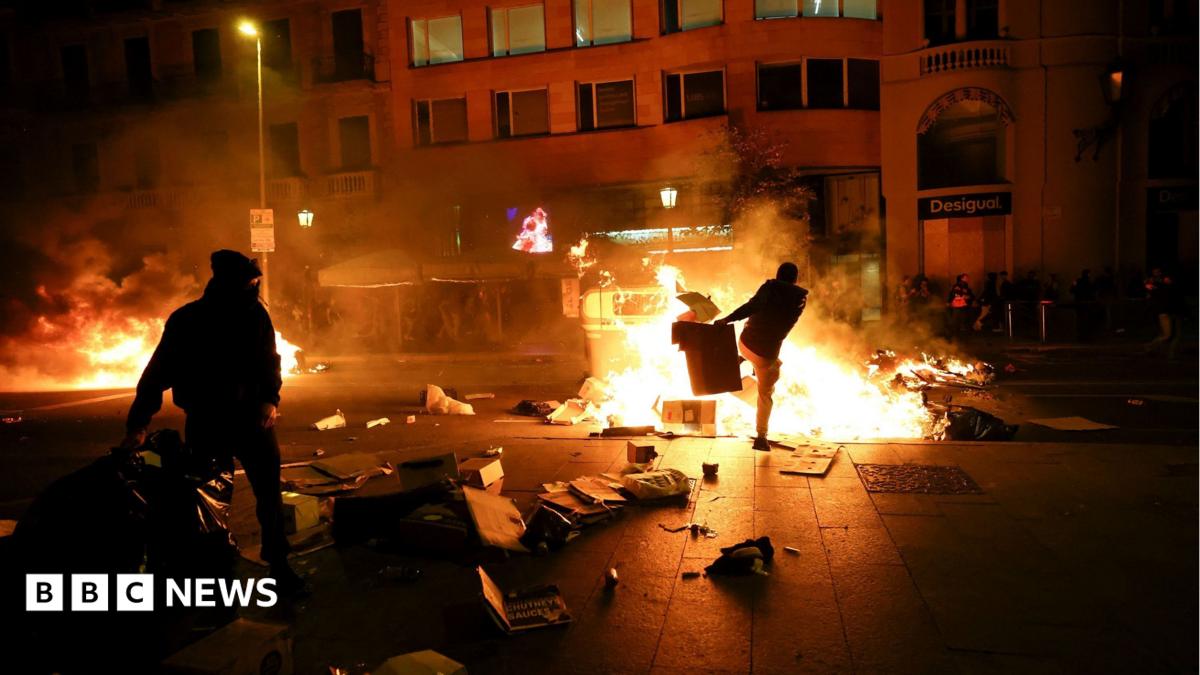
The conservative Popular Party (PP), on the other hand, has accused the government of trying to turn the strike into a weapon to obtain electoral benefits. PP leader Alberto Núñez Feijóo called the general strike “nonsense” and called the unions “mafia” and “garbage.” Feijoo’s party is leading in the polls and party spokesman Miguel Tellado accused the government of taking advantage of the strike to warn voters against allowing a right-wing government to be formed, which appears to be the most likely outcome of the Nov. 29 election. Sánchez told Spanish television this week: “What is foolish is to question workers’ right to strike.” Among those who participated in the general strike was Gonzalo Álvarez, 27 years old, who visited different pickets in central Madrid. Although he works in sales, he has been a volunteer in a housing union that tries to protect tenants and raise awareness about their rights. The eviction of Maricarmen Abascal at the end of September “was the little fire” that sparked this protest, he told the BBC. Alvarez knew the 87-year-old woman, whose rent had tripled under new landlords, and says he was deeply upset by the treatment she received. He rents a small one-bedroom apartment with his girlfriend, a dental hygienist, in the Arganzuela district, south of the city. The couple pays 1,000 euros between them, which means that each of them spends around half their salary on housing, even before other bills. “It’s crazy… with food, with electricity, with water, with gas.”