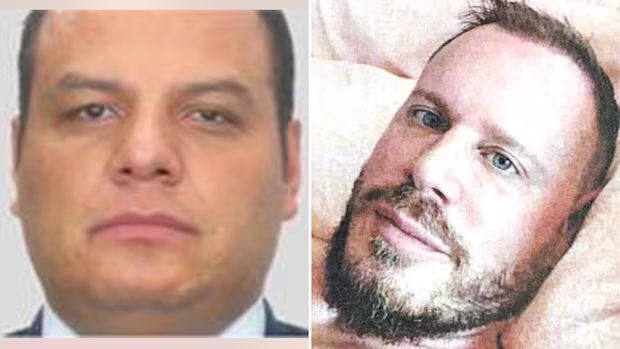
Listen to this articleDear 5 minutesThe audio version of this article is generated using AI-based technology. Pronunciation errors may occur. We are working with our partners to continually review and improve results. How did Ryan Wedding, the Canadian Olympic snowboarder turned international fugitive, manage to evade capture for a decade in Mexico? US federal charges announced in California on Tuesday provided part of the answer, providing new information about two alleged accomplices accused of helping protect Wedding by using tactics worthy of the Netflix series Narcos. gave the accomplices a code word so that the Mexican police and military personnel would not block the cocaine shipments. The keyword changed almost daily. What’s more, Vazquez is accused of providing Wedding and his accomplices with “authentic law enforcement credentials” that were doctored to bear their own names, allowing Wedding and others to safely pass through security checkpoints in Mexico. But all that help came at a cost. Prosecutors said Vazquez welcomed Wedding, a native of Thunder Bay, Ont., to a club of organized crime leaders who received confidential information, including details about arrest warrants and investigations. The indictment, released Tuesday, says Vázquez charged Wedding a one-time initiation fee of US$500,000 to join the group, and an average monthly fee of US$100,000. Mexico’s Security Minister Omar García Harfuch announced last week that Vázquez, known as “El General”, had been shot dead in an operation involving Mexican security forces. SEE | Mexican judge arrested for allegedly accepting bribes related to Wedding’s lieutenant: Mexican judge accused of accepting a $2 million bribe to free Ryan Wedding’s right-hand man. Prosecutors have charged a Mexican judge for allegedly accepting a $2 million U.S. bribe to free alleged Canadian drug lord Ryan Wedding’s second-in-command from detention. Luis Benítez Alcántara now faces extradition to the United States. His name was first publicly linked to Wedding a year ago, when the US Treasury Department announced sanctions against Vázquez and his companies for their ties to the Canadian. The department identified Vázquez as a former Mexican law enforcement officer with high-level connections. Wedding, 45, allegedly ran a murderous drug smuggling ring that generated $1 billion a year. The FBI said he fled to Mexico when he faced criminal charges in Montreal in 2015. Also known as Public Enemy, Wedding was arrested in Mexico in January and remains in US custody. He has pleaded not guilty to a list of charges related to murder and drug trafficking. He is scheduled to stand trial in Los Angeles next year. The suspect allegedly had ties to notorious cartels. Also in Tuesday’s news release, the U.S. Attorney’s Office in Los Angeles identified “alleged street gang member” Roberto Gomez as another key facilitator in Wedding’s ability to spend years on the run. Gomez, who called himself Fat Boy and Rooster, allegedly cultivated relationships with people who had access to confidential information from Mexican and U.S. authorities. Prosecutors said the 51-year-old former Los Angeles resident also kept in touch with leaders of the Sinaloa and Jalisco Nueva Generación cartels, two of Mexico’s most notorious criminal syndicates, considered terrorist organizations by the United States and Canada. Ryan Wedding is escorted off a plane in Ontario, California, in January, hours after his arrest in Mexico. (FBI) While Wedding was on the run, the FBI said he benefited from the protection of the Sinaloa Cartel, co-founded by infamous drug lord Joaquín (El Chapo) Guzmán. More details about Wedding’s alleged arrangements in Mexico are just beginning to come to light. “There were multiple attempts to capture Mr. Wedding, and in each of those attempts we were undermined,” First Assistant U.S. Attorney Bill Essayli told CBC News last week. “They either warned him or gave him a warning, and somehow he was always able to evade us, barely… and that’s why we believed he was getting help.” with bulk drug shipments. In one case, prosecutors said Gomez attempted to negotiate the sale of 453.6 kilograms of methamphetamine to Wedding for $550,000 in cryptocurrency. Gomez, who is listed as a fugitive living in Mexico, faces six charges, including drug offenses and one count of attempting to transact and negotiate with a “specially designated narcotics trafficker.” Ryan Wedding’s alleged second-in-command, Canadian Andrew Clark, was arrested in Mexico in October 2024 in an operation involving Interpol and the Mexican Navy. (Omar García Harfuch/Facebook) The charges revealed against Vázquez and Gómez add to a flurry of police activity over the past week in the Wedding case. The FBI announced the arrest in Colombia last week of a Mexican judge accused of accepting $2 million in bribes to free Wedding’s alleged second-in-command, Andrew Clark. On Wednesday, Mexican authorities are expected to auction off 61 rare, high-performance motorcycles seized last year from properties linked to Wedding. The FBI previously estimated the collection was worth $40 million. The U.S. Treasury also announced sanctions against Iran-linked companies in the Toronto and Vancouver areas accused of helping Wedding launder billions of dollars in drug proceeds. Also last week, a Wedding co-defendant described by U.S. authorities as the operator of a “high-level prostitution ring” in Mexico pleaded not guilty in Los Angeles to conspiracy to commit murder after being extradited from Colombia. Prosecutors allege that Carmen Yelinet Valoyes Florez used her network of sex workers to help locate the target of a murder plot, a Canadian-born FBI witness. Florez is also said to have introduced Wedding to his Colombian girlfriend. CBC News senior reporter Thomas Daigle has covered the Ryan Wedding case extensively. He can be reached by email at thomas.daigle@cbc.ca.