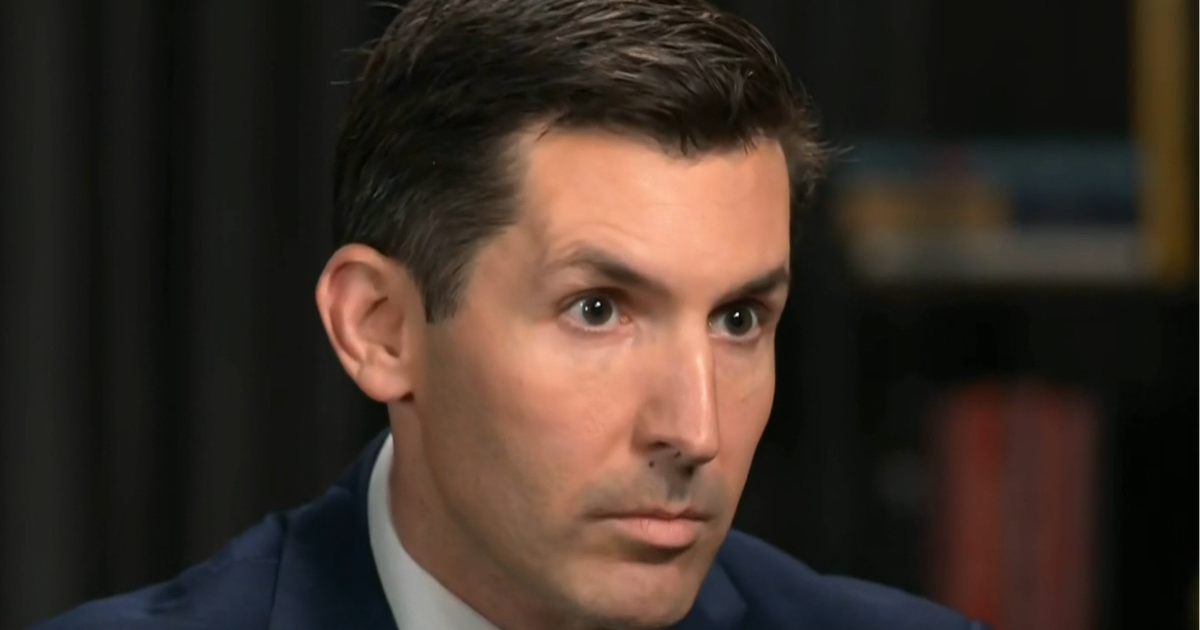
The full transcript of Margaret Brennan’s interview with Calley Means is available at cbsnews.com. A former senior White House adviser and top assistant to Health and Human Services Secretary Robert F. Kennedy Jr. is accusing several Trump administration officials, including recently resigned White House chief of staff Susie Wiles, of prioritizing industry interests over voter health as part of the White House’s midterm election strategy. “Under Trump’s nose, in many cases, there was a group of former lobbyists, catering to the vaping industry, catering to the ultra-processed food industry, catering to the pharmaceutical industry, catering to the pesticide industry, and doing his bidding with the excuse that we need their money for the midterm elections and we really need to go against what the voters said,” Calley Means told “Face the Nation” moderator Margaret Brennan in an interview. which aired on Sunday. Means helped found the “Make America Healthy Again” movement and helped form the winning alliance between Trump and Kennedy in 2024 before serving as Kennedy’s top aide. Means helped lead the Department of Health and Human Services’ efforts to revise the nation’s dietary guidelines and remove sodas and candy from SNAP benefits before resigning last month. He told CBS News that Wiles and “a tight-knit group” of other White House advisers “were taking money from the industries we fight.” Means went public on Friday with very specific allegations of corruption against Wiles and a call for President Trump to “clean his house” in an interview he recorded Thursday for “The Joe Rogan Experience” podcast. He claimed that Wiles and his deputy, James Blair, relentlessly pressured HHS to find a path to approving fruit-flavored vapes. In early May, the Food and Drug Administration approved some fruit-flavored e-cigarettes. Blair denied Means’ characterization of his role in the vaping debate in a statement to CBS News. “I didn’t specifically promote flavored vaping,” Blair said. “I have been tasked with pushing the FDA to make its process for approving or denying applications for nicotine delivery devices work the way current federal law dictates, meaning that applicants get a yes or no response upon approval within six months. Calley is intentionally misrepresenting my role and responsibility because he is completely opposed to the issue. Even though the president himself has made his position on smoking and smoking alternatives very publicly known and provided a clear direction. Calley just doesn’t like it.” Two sources familiar with the process told CBS News that Trump tasked Blair with pushing then-FDA Commissioner Dr. Marty Makary to respond more quickly to requests from the nicotine industry, but they also acknowledged that the president was seeking to make flavored vaporizers more available. As a 2024 presidential candidate, Trump vowed to “save” vaping and cited his past efforts on behalf of flavored vaping during his first administration, which he said in a social media post was aimed at getting people to quit smoking. Trump won endorsements from e-cigarette companies, store owners and vaping enthusiasts. In May, Makary was pressured to resign from his position as FDA commissioner amid reports that the White House had pressured him to approve fruit-flavored vapes. “Big Tobacco exploited its connections with the administration and HHS officials to repeatedly pressure me to approve fruit-flavored vaporizers that appeal to children; I wouldn’t do it,” Makary said in a statement to CBS News. “The Kratom/7-OH lobby used the same playbook to undermine my efforts to make this new ‘gas station heroin’ illegal. As FDA commissioner, I have always rejected political corruption just as voters across the political spectrum did last week.” Multiple sources confirmed to CBS News the New York Times report in May that tobacco lobbyists had been with him at the president’s golf course in Florida over lunch and had pressed him about the way the FDA was regulating e-cigarettes. Means claimed that Wiles arranged the meeting. Wiles submitted his resignation to Mr. Trump on Thursday night, a US official and a senior White House adviser told CBS News. His resignation was tied to Republicans’ midterm losses, according to three sources familiar with the matter. The departure became public shortly after Trump taped an interview with 60 Minutes at noon Friday. When asked if it was his intention to remove Wiles from office, Means responded: “Yes. I think President Trump has been subverted by people who are beholden to special interests and not what President Trump proposed or what voters voted for.” It is unclear at this time whether the public comments influenced the president’s decision to expedite Wiles’ departure. In a statement to CBS News, Wiles denied Means’ allegations that she arranged a meeting with tobacco industry representatives with the president at his golf course to discuss vaping policy. Earlier this year, Trump signed an executive order to boost production of glyphosate, a herbicide that is included in the herbicide Roundup and has been found to be linked to cancer. The WHO has deemed glyphosate “probably carcinogenic to humans.” For decades, as a private attorney, Kennedy had led a legal challenge to chemical giant Monsanto over its use of the herbicide. In a statement on social media at the time of the president’s order, Kennedy said, “Our agricultural system relies heavily on these chemicals.” Kennedy testified before Congress in March that he was “very clear with the president about my own displeasure with the executive order.” Kennedy said in that testimony that the executive order on glyphosate “came from the Pentagon” and “the president felt it was necessary for national security reasons.” In June, the Supreme Court sided with Monsanto and ruled that it cannot be held liable for failing to warn consumers about Roundup’s alleged cancer risks. On “Face the Nation,” Means accused White House adviser Heidi Overton of working with the Justice Department to write a brief to the Supreme Court, urging them to take up the case before Trump’s executive order. A senior White House official told CBS News that the attorney general drafted the brief for the Supreme Court at the court’s request. The official also said that Dr. Overton intervened in the report in the final stages, but only made “tonal” changes. The Trump administration argued in court filings that federal standards supersede state-level liability claims, which was the same position taken by glyphosate maker Monsanto, now known as Bayer. There is an ongoing EPA review of glyphosate, which is expected to conclude in early 2027. Means alleged that the EPA’s previous review of glyphosate was “dismissed because it had a ghostwritten investigation showing that Bayer bribed EPA officials.” Means resigned last month and said he leaves “with tremendous respect for President Trump and Robert F. Kennedy Jr.” Food reserves were replenished on the day of their departure. Means told “Face the Nation” that he was frustrated by his stalled efforts to create a federal definition of ultra-processed foods, which he says are poisoning American children. “There was relentless lobbying against this because the industry, and they’ve said it in meetings with me and other people, they just don’t want a definition because they don’t want Americans to have more transparency about what they eat because right now there’s a move away from ultra-processed foods.” Means said on “Face the Nation” that he trusts Mr. Trump’s stance on the “issue of improving children’s health,” but claimed that the president’s advisers gave him bad advice and “mistreated him.” “They blocked access and information about him all the time,” Means alleged. “It wouldn’t surprise me at all, you know, if they had very brief conversations about these issues, you know, where the president is extremely busy and the president says, ‘Okay, whatever.'” Trump’s top adviser Stephen Miller, who will take over as White House chief of staff on Monday, was not among them, according to Means. “Stephen Miller wants to accomplish transformative things with Bobby Kennedy and President Trump that are not partisan, but structural,” he said. “He wants to do the same things that Elizabeth Warren and (Abdul) El-Sayed and other people are promoting. And I think there’s a huge opportunity to come together and accomplish some important things that, frankly, we need to do.” In August, Trump nominated political aide Dr. Heidi Overton to be the next FDA commissioner. Kennedy has endorsed Overton’s nomination. However, Means told CBS News that Overton “was the biggest obstacle to MAHA policies that I found in the administration,” claiming that she “did everything “Wiles” told her to do.” Means alleged that in one particular meeting, Overton told Makary, whom Means described as her “mentor,” that she “couldn’t help him” on other policies unless he approved “a drug that she thought scientifically should not be approved,” Moderna’s mRNA flu vaccine, mFLUSIVA. In August, the FDA approved mFLUSIVA for adults age 50 and older. It was the first flu vaccine using mRNA technology to receive FDA approval. The approval came despite repeated criticism of mRNA technology from Kennedy, who in 2025 canceled 22 vaccine development projects using mRNA technology. The FDA had said earlier this year that it would decline to consider Moderna’s application. But he changed course about a week later. Clinical trials found that mFLUSIVA is slightly more effective than the standard flu vaccine. “It’s just a factual statement that after Marty left, in part because of the vaping issue, she pushed for the creation of a relaxed vaping strategy,” Means said, adding that he doesn’t believe Overton has the “character or integrity” to be an FDA commissioner. An Overton spokesperson responded to Means’ criticism of his qualifications, telling CBS News that “two former FDA commissioners think otherwise.” Calley Means is the brother of Dr. Casey Means, also a close Kennedy ally. CBS News previously reported that the two played a key role in coordinating Kennedy’s endorsement of Trump during the 2024 presidential campaign. Casey Means was briefly Trump’s pick for surgeon general, but her name was withdrawn in April because her candidacy stalled in the Senate. More from CBS News Go deeper with The Free Press