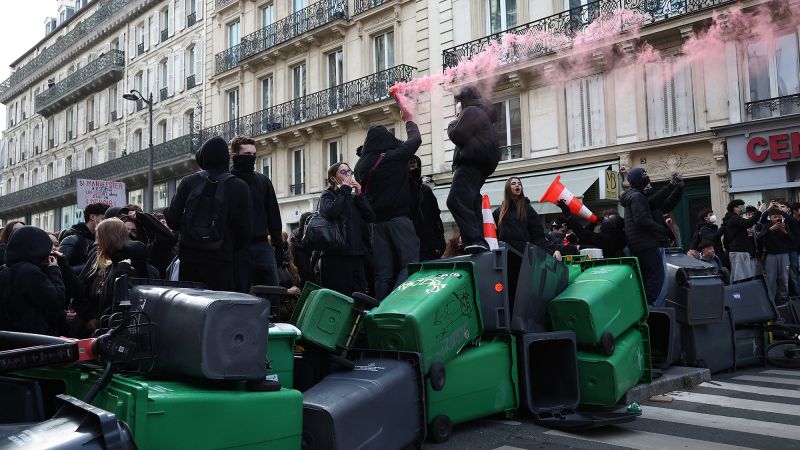
Hundreds of thousands of people are protesting across France today, but it is a movement that grew out of protests that occurred two months ago. In September, students and teachers at a secondary school in the Paris suburbs went on strike, demanding more staff and resources. Their demands were met and the strike ended, but it lit a spark that soon spread throughout the country. Since then, the movement has become a collective cry of anger, bringing together groups with different grievances, capturing widespread discontent over affordability, perceived government inaction, a growing wealth divide, and a deep desire for social and political change. The movement is no longer limited to students, but has attracted unions and yellow vest protesters, expressing frustration over the cost of living and calling for the resignation of French President Emmanuel Macron. The unions that have called today’s demonstrations in France demand higher wages and pensions. With so many causes fueling the protests, the anger is unlikely to subside anytime soon. And as France approaches a deeply divisive presidential election in April, the stakes are getting higher. Far-right leader Marine Le Pen, who leads the polls, stated at the end of October that “legitimate social grievances have been, once again, hostage to the far left.” His far-left rival, Jean-Luc Mélenchon, has repeatedly defended students’ right to protest.