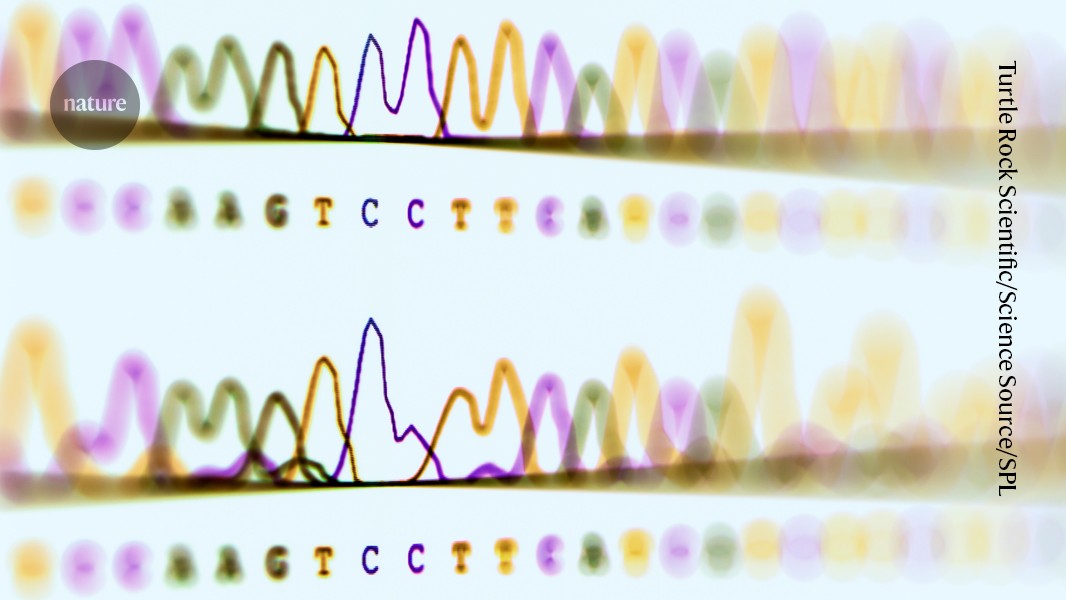
An autonomous laboratory called AutoDNA can determine the constituent “letters” of a DNA fragment. Credit: Turtle Rock Scientific/Science Source/Science Photo Library Saying someone has “good hands” is high praise in a molecular biology lab, where researchers must deftly handle delicate glassware, sample pipettes, and more. But in an unusual genetics lab at Shanghai Jiao Tong University in China, a team of AI-powered robots is designing and conducting hands-free experiments. Inside the “autonomous” laboratory The facility, described today1 in Nature, is one of the latest steps toward “autonomous” laboratories guided by AI, with minimal input from human scientists. With samples moved by robotic arms, the Shanghai lab can operate more than 20 types of instruments, complete thousands of operations in a single project, and perform experiments that involve synthesizing and sequencing DNA, among other tasks. A team of artificial intelligence agents designs and executes an experiment from start to finish, following a simple prompt from a human operator. After that, only human hands are needed to update the reagents and service the hardware. The system, called AutoDNA, is notable both for its degree of autonomy and because it can easily incorporate a wide range of laboratory equipment, says Milad Abolhasani, a chemical engineer at North Carolina State University in Raleigh. “The future of science will involve many autonomous laboratories.” On autopilot Laboratories have long incorporated automation into their workflows, using machines to carry out specific aspects of experimental protocols, such as mixing and heating chemicals. Now, some researchers hope to leverage increasingly sophisticated AI tools to create autonomous laboratories, in which an AI system designs and runs complex experiments, troubleshoots and modifies protocols, and orchestrates activities throughout an entire laboratory that is packed with disparate equipment. Designing these types of laboratories for molecular biology is challenging due to the field’s complex workflows, which require varied equipment and high precision, says Haibo Chen, a computer scientist at Shanghai Jiao Tong University and co-author of the report. “In many existing systems, human experts are still needed to configure the instruments,” he says. “AI is mainly added to handle only part of the process.” To create a more fully autonomous lab, Chen and his colleagues decided to build it from the beginning with AI in mind, rather than adding AI capabilities to a pre-existing system. Genetic messages The team tested AutoDNA by assigning it a variety of projects, including detecting a cancer-related mutation in a DNA sample. In another experiment, the researchers asked the system to encode a message in DNA using its four nucleotide bases, abbreviated as A, C, G and T. They selected a popular quote, often misattributed to cosmologist Stephen Hawking: “Intelligence is the ability to adapt to change.”