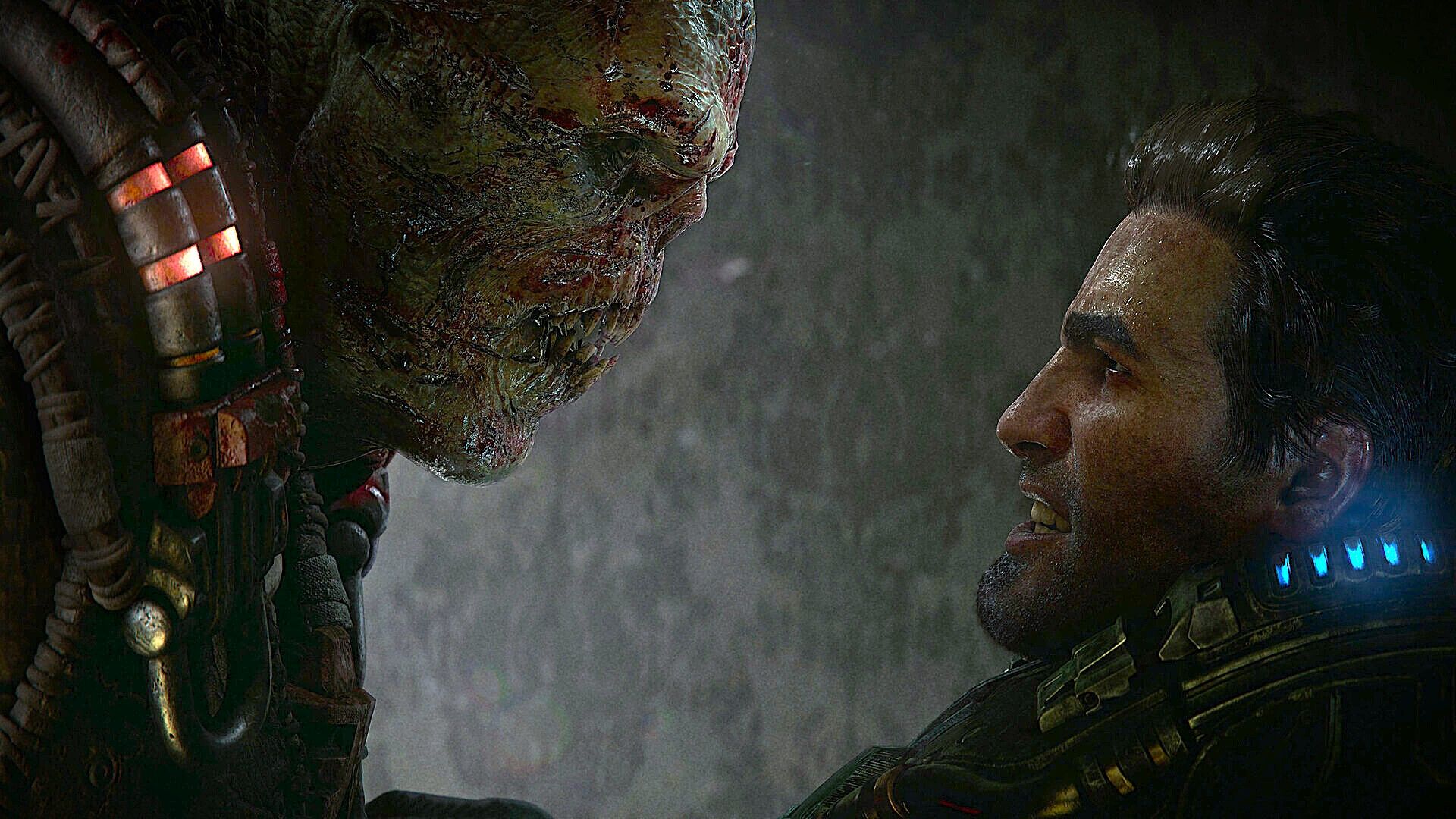
Follow Us Add us as a preferred source on Google Newsletter Subscribe to our newsletter Everyone is frothing at the mouth over Gears of War E:Day again, but this time it’s not the culture war. It’s the sensational reports about your budget and retail sales. Headlines claim that the game cost an astronomical $500 million to make, while other reports suggest that it “only” sold 400,000 copies at retail. As expected, the online feedback terminal machine is in full force, with some madly blaming Xbox fans for this failure. Xbox fans asked for exclusives, and yet when the going gets tough, “the fans didn’t put their money where their mouth is,” making the reported failure of Gears of War: E-Day “their fault.” It’s a neat and tidy narrative for console warriors, but one that’s completely out of touch with the modern gaming economy outside of the social media bubble. First of all, that $500 million figure requires crucial context before anyone uses it as a stick to win the game. As Derek Reese, former senior product manager at Xbox Game Creator Services, clarified, that cost isn’t simply the game’s direct production budget. Much of that figure comes from extensive operating expenses, with The Coalition essentially on the hook to fund Microsoft’s custom in-house branch of Unreal Engine and support integration of the engine across the Xbox studio network (a Turn 10-like load of tech debt that supports operating costs for ForzaTech, in Fable and Forza Horizon). Conflating the engine’s overall R&D operating expenses with the direct cost of developing a single game represents a misleading omission in the larger narrative. Budget talk aside, expecting Xbox gamers to subscribe to Game Pass Ultimate for $22.99 a month and an annual commitment of $275+, AND spend $70 on day one for each first-party title just to prop up traditional sales metrics is unrealistic and absurd. The suggestion that players must pay twice to prove they support a studio fundamentally misses the point of why Microsoft created this system in the first place. Xbox Game Pass Ultimate is not a free game (Image credit: Xbox Game Studios) For what many spend on an Xbox Game Pass Ultimate subscription, at standard retail, that’s the cost of about four $70 full-price AAA games. When a player opts into the Game Pass ecosystem, they are effectively paying upfront for their lineup of games. Expecting that same consumer to purchase Gears of War E: Day at retail price to satisfy outdated quarterly sales charts ignores the basic economic contract of a subscription service. The entire value proposition of Game Pass is that you don’t have to shell out $70 every time a major title arrives. Not only that, but framing Game Pass users as passive freeloaders ignores key facts we already know. Under oath during the FTC proceedings, Xbox president at the time, Sarah Bond, revealed that Game Pass subscribers actually spend 20% more money on average on games than those who don’t subscribe. I, too, have pleaded with fans to “put their money where their mouth is” for divested Microsoft outfits like Undead Labs. There’s a clear distinction between asking gamers to support a core internal Microsoft studio, whose quarterly profits run into the tens of billions, and supporting the newly independent Undead Labs. Players who are financially capable could buy State of Decay 3 to stick it to Microsoft’s counters and show Xbox what they just abandoned. Many players have controlled their spending ahead of the big release of GTA 6. (Image credit: Rockstar Games) The Coalition is a victim of Microsoft’s structuring. Putting them on the line for Unreal Engine support in multiple games, collaboration with Epic Games, and at the same time creating a multifaceted multiplayer title crushed by Call of Duty: MW4, World of Warcraft: Forever, Grand Theft Auto 6, and several other heavyweights this quarter is pure madness. In a single two-month span, players were asked to choose between massive titles from each subgenre: Marvel’s Wolverine, Silent Hill: Townfall, Minecraft. Dungeons 2, Ace Combat 8, and major remasters like The Witcher 3: Wild Hunt and Dynasty Warriors 3 Complete Edition. Expecting a single game to generate record $70 direct sales during one of the busiest and most grueling launch windows in recent video game history is wishful thinking. In a climate where players are already evaluating their spending, a day one entry to Game Pass was an incredibly convenient and lower-cost way to play E-Day. The $70 SKU is dead on Xbox and the $30 upgrades replaced it. How much does a pint cost nowadays? (Image credit: Windows Central | Xbox) Anyway, simply citing 400,000 units sold or focusing on Steam copies grossly misrepresents the actual paying audience. Game Pass subscribers really engaged with the game’s revenue model in a massive way through the $30 Premium Edition upgrade. That’s much easier to justify in terms of purchasing when you feel like you’re already getting something of value from your subscription. How many would have spent ANYTHING on the game without it being on Game Pass? How do we actually predict that behavior? There’s no “alternate reality generator” to see how the game would have held up in a universe without Game Pass, GTA 6, or the rest. The $70 premium SKU is, for all practical purposes, functionally dead for first-party Xbox console titles. But that’s not because Xbox gamers refuse to spend money; it’s because Microsoft has trained them to spend money on early access add-ons instead of $70 on a standalone license. The same people attacking Xbox Game Pass are probably the same type of people happy to wait for Steam sales, who have also contributed to the rejection of the $70 retail model. This is before we even talk about free titles like Fortnite, Roblox, mobile games, and others that really dominate the spend. For many of these people, it’s a blatant double standard to mock gamers for using the exact monetization model Xbox has designed for them. Exclusivity is a marathon, not a sprint. Repairing Xbox will take years. I hope the powers that be at Microsoft realize this. (Image credit: Microsoft) The second major flaw in current discourse is the demand for seemingly instant gratification. Asha Sharma positioned Gears of War: E-Day and Clockwork Revolution as console exclusives at this year’s Xbox Games Showcase as something of an olive branch to the community. A sign that platform exclusivity remained a key priority for Xbox. But a game was never going to change hardware sales overnight. The reality of today’s market comes down to demographics and household finances. Just a quick story from my own experience showing an E-Day colleague running on an Xbox ROG Ally X during a train ride to work. He was impressed by the images and fondly recalled purchasing an Xbox console specifically for the original Gears of War. But today, as he told me, he has a PS5, a mortgage and a family. Finding out that E-Day is not on PlayStation was a bummer for him, as he was really interested in the game, but spending a significant amount of money on a secondary console for a single game is simply no longer a justifiable household expense for him. Decisions like that are no longer made on impulse for the age and demographic of console users Xbox is targeting. Hardware momentum won’t be regained with a single flagship release; it must be a slow and steady rebuild over years of constant, non-stop attacks. As a family, we’ve talked about purchasing a Nintendo Switch 2, prompted in part by the release of Ocarina of Time, but that alone isn’t a deal-breaker; We will have access to Pokopia, Mario Kart, Donkey Kong Bonanza, etc., all exclusives that make it a more justifiable expense and from which the whole family can benefit. Expecting E-Day alone to magically reverse years of cross-platform strategy shifts and hardware decline in a single month is incredibly short-sighted. One game won’t convince someone to switch ecosystems, but four or five in a two-year period might. Regaining brand trust requires patience, something the Internet feedback loop lacks, and something Microsoft has conspicuously lacked in the past. The danger of short-sighted turns. Can Xbox resist? (Image credit: Windows Central | Jez Corden) If Microsoft interprets E-Day’s initial retail sales as a failure of exclusivity rather than a predictable result of its own subscription strategy and timeline, they risk making another premature course correction, so for their own sake, I hope they’re ignoring the current narrative. Niche or new IPs like Clockwork Revolution won’t move the needle on their own either. What’s really needed, if you feel like it, is exclusivity around massive pillars that define the platform; The moments where a game like The Elder Scrolls 6 stays strictly within the Xbox and PC ecosystem might actually be what makes casual gamers reevaluate where they play. I don’t even think something like Elder Scrolls 6 on its own would do it, but if it’s preceded by a bunch of other exclusives, it might. Game Pass was designed to change the way gamers consume games. Blaming the player base for using the service exactly as advertised is a strange double standard. Many players paid out of pocket for the E-Day premium upgrade in addition to their subscriptions. If Xbox wants to prove that exclusivity still matters, it needs to give the strategy room to breathe. And virtue signaling experts should stop expecting subscription-first, “wait for a sale” players to buy a $70 retail model, they’ve been repeatedly and explicitly told they don’t need to. Join us on Reddit at r/WindowsCentral to share your ideas and discuss our latest news, reviews, and more.