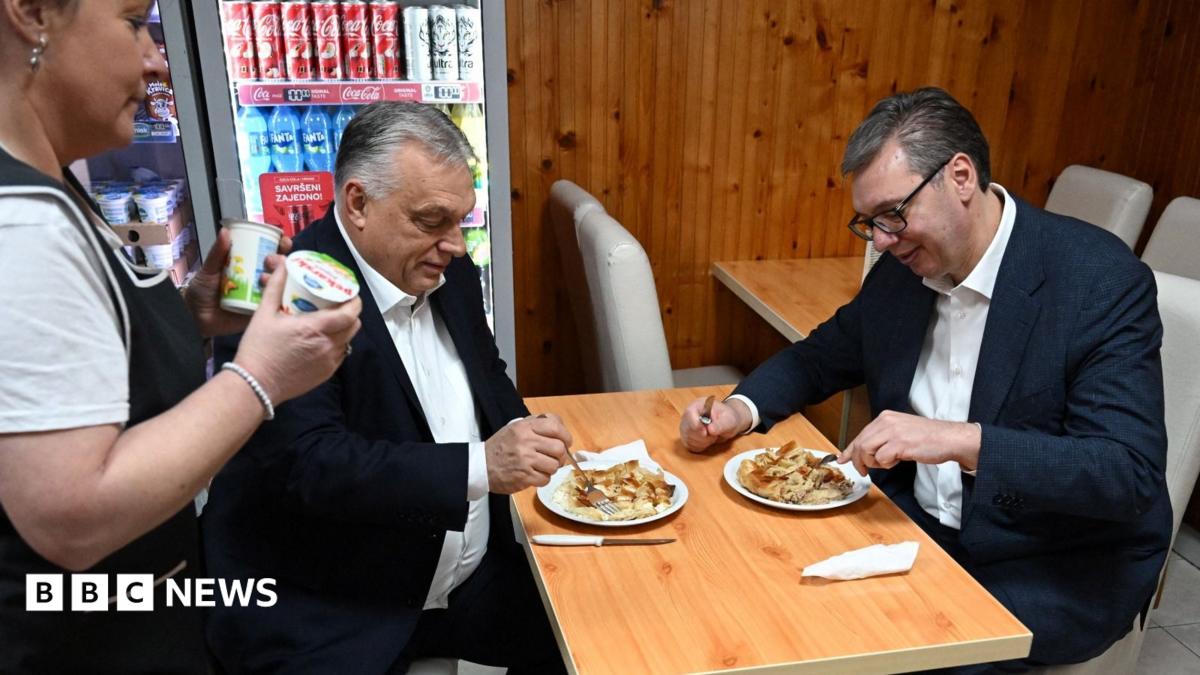
Voter mobilization and the role of election observers played an important role in the opposition’s victory in both countries. Last weekend, the civic action group DE in Hungary sent 70 election observers to Serbia to work with representatives of the student movement, visiting polling stations in the northern Serbian province of Vojvodina. During the summer, even before the elections were called, they held workshops to share their experience and methods of the Hungarian elections with Serbian students. A key technique was to identify in advance “infected” constituencies, places where the surprisingly high number of votes for the ruling party in previous elections suggested that voter intimidation or “chain voting” techniques had been used. “Starting at 16:00 on election day, we noticed groups of masked hooligans – Vučiċ supporters – gathering near the polling stations,” Péter Klemm, a student activist from Subotica, told the BBC. “So we sent mobile crews and started filming everything.” Combined with the “fixed” observers already installed, between 20 and 30 volunteers at each threatened polling station acted as a strong deterrent, he believes, and prevented intimidation or fraud. Orbán in Hungary and Vučiċ in Serbia, both seemed invincible. Both were powerful leaders, in office for 16 and 14 years, who had assumed control of state institutions and established overlapping business empires in the two countries. Orban chose cheese, meat from Vučiċ, when they sat down to a quick lunch of traditional burek pastries at a small, popular bakery in the city center of Subotica almost a year ago. They continued to a local winery, to talk about oil and other business: Hungary’s planned purchase of the Nis oil refinery in Serbia. The two nationalist leaders found much in common, in business and politics, including their friendship with Russia’s Vladimir Putin and Chinese President Xi Jinping, and their strong support for Milorad Dodik, the Bosnian Serb separatist leader. A high-speed railway is being built between Belgrade and Budapest with Chinese financing and know-how.