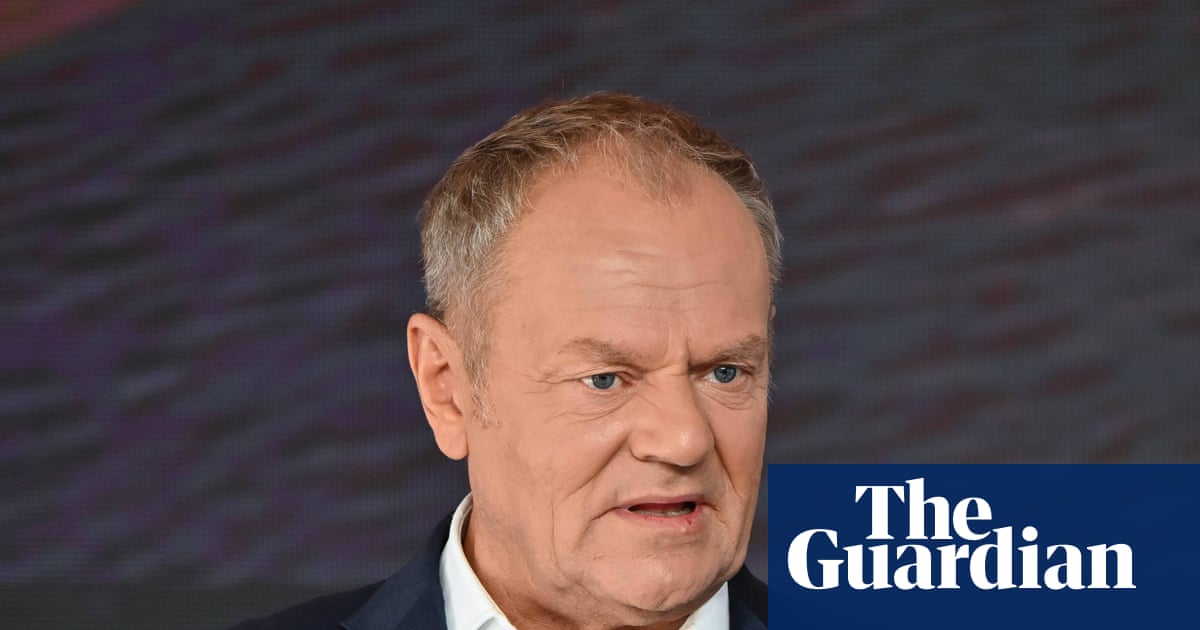
Poland’s Prime Minister Donald Tusk has promised to carry out a disputed overhaul of the country’s constitutional court, declaring that “on certain issues, there can be no compromise.” In a prime-time television address Saturday night, Tusk appeared defiant, despite nightly protests in which riot police were mobilized to protect the court building, saying the reorganization was vital to restoring a court paralyzed by years of political wrangling. Paralyzed for more than a decade, the court sat at the center of clashes over the rule of law between the right-wing Law and Justice (PiS) party and the EU during the party’s eight years of rule. Since returning to power in 2023, the center-right Tusk party has tried to undo those judicial changes, but its agenda has been thwarted by opposition-aligned presidents with broad veto powers. Earlier this year, President Karol Nawrocki refused to swear in five judges approved by parliament. The crisis erupted again on Friday when a group of government-backed judges attempted to seize procedural control of the court, suspending the PiS-appointed chief judge and deputy and sparking street protests. Conservative supporters gather in front of the constitutional court in Warsaw. Photograph: Agata Grzybowska/Anadolu/Getty Images Defending the action, Tusk said there was “never any doubt that the court in the form imposed by PiS was not a genuine court”, citing adverse rulings by European courts. He compared the opposition’s outrage to “a thief who snatches an old woman’s purse, runs away and, when caught, shouts that he is being subjected to violence.” Tusk said: “Let’s call it what it is: for years, there have been organizations and politicians in Poland seeking to destroy democracy and the rule of law. It is no coincidence that they find support among pro-Russian forces globally.” He later highlighted that Russia’s former president, Dmitry Medvedev, had joined the opposition in a protest over the changes, accusing Warsaw of “a constitutional coup” and “persecuting conservatives.” “And everything is clear,” Tusk said. He also criticized the opposition-aligned Nawrocki for joining the protests on Friday night and forcing his way into the court building to intervene. “In a democratic state, no politician can enter a court to issue orders or intimidate judges, not even the president,” Tusk said. “We Poles have achieved too much success in building a strong state to give up now.” He said it was the government’s duty to ensure their safety and the conditions necessary for the court to function. “And I intend to fulfill that duty,” he said. On Saturday, the legal basis for the temporary suspension was “questionable”, warning that it would “not contribute” to re-establishing the court. Foreign Minister Radosław Sikorski admitted that the events outside the court “were not elegant,” but insisted: “The alternative was to grant an unconstitutional transformation of Poland into a presidential republic.” Nawrocki held some cross-party political talks on Saturday, with no apparent progress. His top adviser, Zbigniew Bogucki, responded to Tusk’s speech by calling the prime minister “a pathological liar who is setting Poland on fire.”