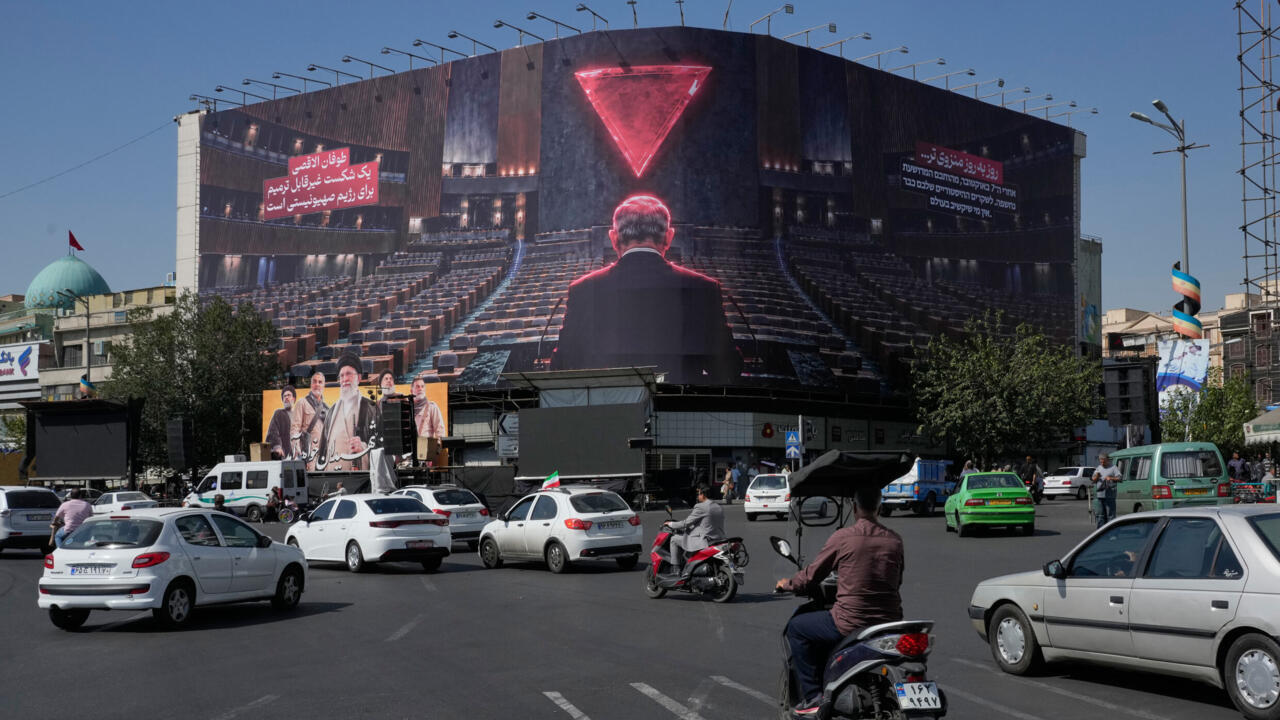

Iran’s supreme leader on Saturday warned the United States and Israel against launching new attacks following his threats to resume them after crucial elections, as fears grow over a return to fighting. The statement came as the Islamic republic’s top diplomat said there were no plans to hold talks with the United States, while indirect mediation through Qatar continues. US Secretary of State Marco Rubio said on Saturday that Trump had not yet made a decision on further attacks. “We can achieve military objectives if we pursue it. He hasn’t made a decision. I don’t have any announcement about it with you today, and we don’t take it lightly either,” Rubio said at a G20 news conference in Atlanta, Georgia. But Rubio added that Trump “has not made a decision” on further military action, amid reports that the US leader could strike after Tuesday’s key midterm elections. “I don’t have any announcements about it with you today, and we don’t take it lightly either,” Rubio said. While criticizing Tehran for “actively and openly” targeting commercial vessels for attack, Rubio also expressed Trump’s preference for a diplomatic solution to end the war with Iran. But he did not commit to a timetable for the talks. See moreReports show that the United States and Israel are planning new attacks against Iran. US President Donald Trump had previously warned of further military action after the US holds midterm elections early next week, saying last weekend that he was weighing whether to “take them down”. In Israel, which is coming off new elections, Prime Minister Benjamin Netanyahu has spoken of a “historic and unique opportunity” to overthrow the Iranian government. Polls in both countries could determine the direction of the conflict, as Israel voted on Tuesday but has yet to form a new government. “Any level or type of threat must be met with an immediate, impactful and geographically unrestricted response,” Iran’s Supreme Leader Mojtaba Khamenei told top military commanders at a meeting, according to a statement. The meeting was the first reported meeting between Khamenei and senior military commanders, and included the chief of staff of the armed forces, Ali Abdollahi, the head of the army, Amir Hatami, and the commander of the Revolutionary Guard, Ahmad Vahidi. The supreme leader has not been seen publicly since before he took command in March following the assassination of his father, Ayatollah Ali Khamenei, in attacks between the United States and Israel. Khamenei also ordered commanders to update Iran’s target list to include “all types of tangible and intangible assets belonging to the American Zionist enemy.” Iran previously warned it would consider cutting undersea cables in the Strait of Hormuz. Oil prices influence American vote Since the initial attacks between the United States and Israel in February, ordinary Iranians “have been in a state of limbo for the last year,” Fariba, a housewife in Tehran, told AFP. But other residents of the Iranian capital downplayed the potential return to full-scale conflict. “We are not afraid of another war. We have been at war for 48 years,” said Ebrahim, a salesman in his 40s. Since the outbreak of war, Tehran has restricted shipping through the strategic waterway, which normally carries around a fifth of global oil consumption. See moreTrump vs MAGA: Why his movement is dividing The blockade has caused global energy prices to rise, making the war unpopular with the American public ahead of Tuesday’s midterm congressional elections. Advances by the Democratic opposition could restrict, to some extent, Trump’s ability to implement policies. The vote in Israel has left Netanyahu’s political camp with the most seats in parliament but without a majority, leaving the makeup of the next administration unclear. Read more ‘Atmosphere of fear’: Trump moves to restrict voting rights ahead of midterm elections ‘Flames of war’ The war began on February 28 with attacks by the United States and Israel against Iran. The Islamic republic quickly responded with attacks on US assets in countries in the region. Fresh diplomatic efforts are underway to prevent any resumption of fighting: Qatari mediators landed in Tehran on Friday and US Vice President JD Vance sent a letter to Iran’s security chief Mohsen Rezaei. But Iranian Foreign Minister Abbas Araghchi said Saturday that “there are currently no plans for meetings with US officials.” “Iran’s conditions are clear and consultations on this matter are taking place among mediators,” he said in an interview with Al Jazeera, according to state news agency IRNA. Read moreAre new attacks planned between the United States and Israel against Iran? Qatar and Pakistan have been mediating between the warring parties, but the talks have yet to produce a lasting agreement. The Wall Street Journal reported Wednesday that Vance had sent his letter to Iran’s security chief on Trump’s instructions in an attempt to revive negotiations and prevent further US attacks. Araghchi confirmed that Iran received the letter and said: “The effort by the American side to open dialogue and reach a broader understanding is considered a positive step.” But the Iranian side remained firm in its warnings against further attacks. Earlier on Saturday, army spokesman Mohammad Akaraminia said any resumption of hostilities would only widen the scope of the war. “The flames of war will undoubtedly engulf a much broader geographic area,” he said on social media, without giving further details. Araghchi warned in X of a “devastating blow that Iran’s powerful Armed Forces will deal against those who dare to harm our people.” He said there will no longer be “red lines.” (FRANCE 24 with AFP)