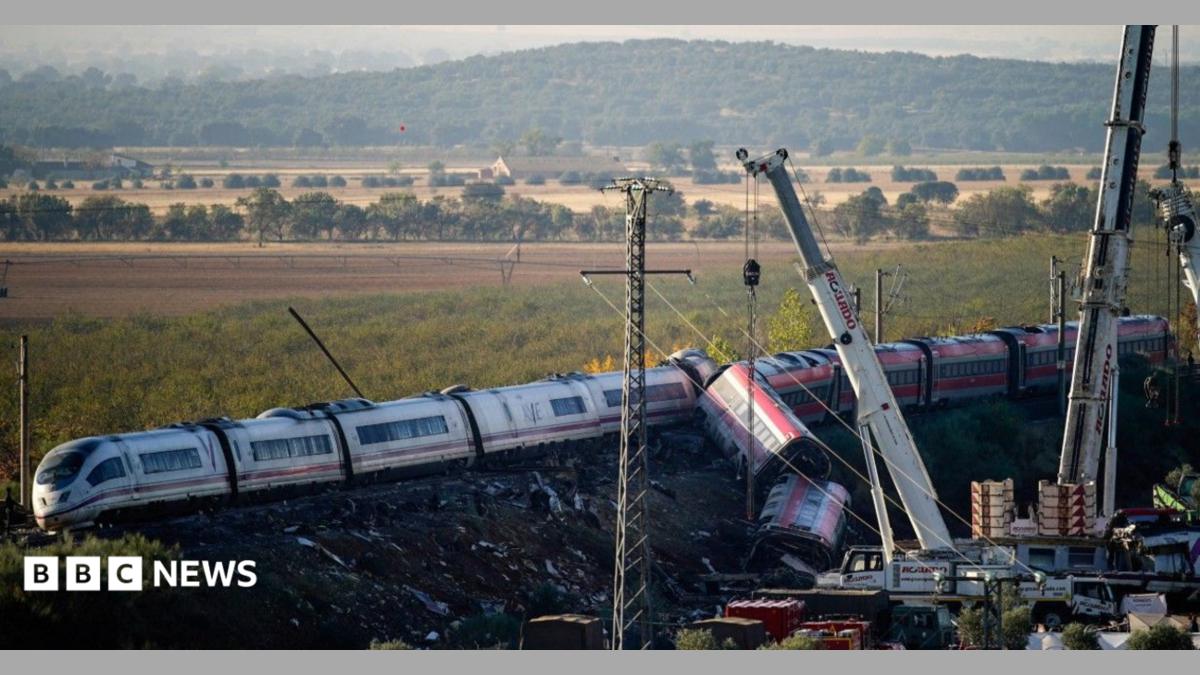
Crucially, at one point a controller ordered a stopped train to restart, authorizing it to proceed at 160 km/h (100 mph) even though a second train was stuck on the line ahead. The impending collision was made clear in audio calls and on giant screens in the Madrid control center. “They worked. We checked it. They could see what was happening,” Puente confirmed. But the advancing train was never ordered to stop. “I’m not a judge… But these are the facts.” So would you still take personal and political responsibility and resign? Puente called it his “duty,” rather, to remain as minister. “I will face things, I will explain, I will elucidate,” he replied. “I will think about how to improve the system and give confidence to those who want to travel by train and feel calm and safe. But the Spaniards will have a hard time convincing. “This is not only a very serious accident, but the second in a very short time,” says Paco Camas, from the pollster Ipsos. The investigation into the accident that occurred in January in Adamuz, near Córdoba, is still open, and the first reports suggest that it was a crack in the rails, something very different from the last one. collision. But there it has a similar impact. “It destroys people’s trust not only in the railways but in institutions in general,” Camas warns. “And in Spain, when things like this happen, we know that people blame their government.” For the Sánchez team, it is the latest in a spiral of crisis. They shouted about incompetence and lack of funding. Later, a video of a pensioner being forcibly evicted from his home went viral and sparked street protests. It was then that Sánchez called an early election. His chances of winning the vote now seemed slim even before the train accident.