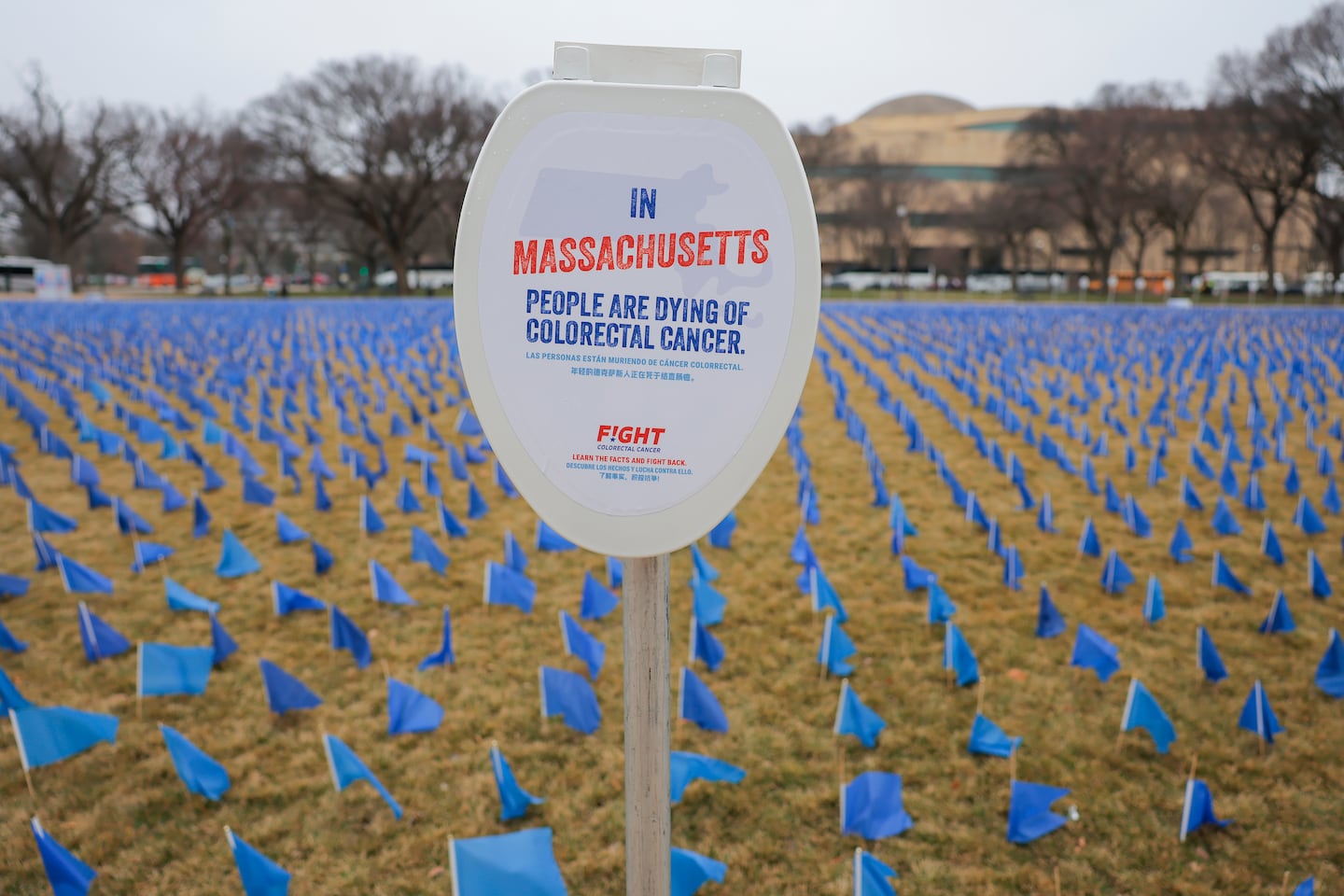
“It’s been a bit of a black box,” said Ana Anderson, a senior author and core faculty member of the Gene Lay Institute of Immunology and Inflammation at Brigham and Women’s Hospital. “Now we have a research direction. We have a path to follow and hopefully find something that’s really specific to this disease and that will be the basis for developing tailored therapies specifically for young-onset colon cancer.” In the United States, rates of colorectal cancer among people younger than 50 rose nearly 3 percent each year from 2013 through 2022, according to the American Cancer Society. Colorectal cancer is now the leading cause of cancer death in that age group. Researchers have sought explanations for the perplexing rise. A growing body of evidence has linked risk to diet and ultra-processed foods, among other lifestyle and environmental factors. But experts say it’s also important to understand what is happening inside the tumors and bodies of younger patients. In the new study published in the peer-reviewed journal Nature Medicine, scientists examined 189 tumors from people in their 20s to 90s, including 54 patients who were diagnosed when they were younger than 50. They analyzed more than 850,000 cells. The researchers also looked for factors that changed with age, revealing subtle differences between the younger and older patients studied, said Dr. Kimmie Ng, a senior author and director of the Young-Onset Colorectal Cancer Center at Dana-Farber Cancer Institute. Researchers observed that tumors in younger patients appeared to have a different composition of cells, namely a much higher proportion of connective and supporting cells, known as stromal cells. Studies of other types of solid cancer have linked stromal cells to chemotherapy resistance. The study also found differences in how genes are expressed in the tumors of younger people — a finding that experts say could lead to new therapeutic targets. The dataset is the largest to date for colorectal cancer and includes the highest number of young patients, Ng said. “It gives a huge amount of hope,” she said. “It really serves as a guidepost to where we should direct our future research efforts.”The new research gives scientists access to large quantities of detailed data, said Dr. John Paul Shen, an associate professor in the department of gastrointestinal medical oncology at the University of Texas MD Anderson Cancer Center. “There’s some very clear experiments that we might do in our lab or other people would do in their labs around the world,” said Shen, who was not involved in the study. “That’s hugely valuable.” But he and other experts noted that the dataset, while expansive in its cellular analysis, is drawn from a limited number of people. Ng said the study’s cohort aligns with what is generally known about young-onset colorectal cancer patients around the world. Future research could build on the study by analyzing other groups of patients, said Dr. Christina Annunziata, senior vice president of extramural discovery science at the American Cancer Society.While the new study holds promise for helping researchers discover better ways to prevent and treat colorectal cancer in young people, experts said many breakthroughs may still be a ways off. Having the dataset, Annunziata said, is “an essential first step.” “The research is necessary for us to understand why people are getting cancers early and what we can do about it,” she said. Allyson Chiu can be reached at allyson.chiu@globe.com. Follow her on X @_allysonchiu.