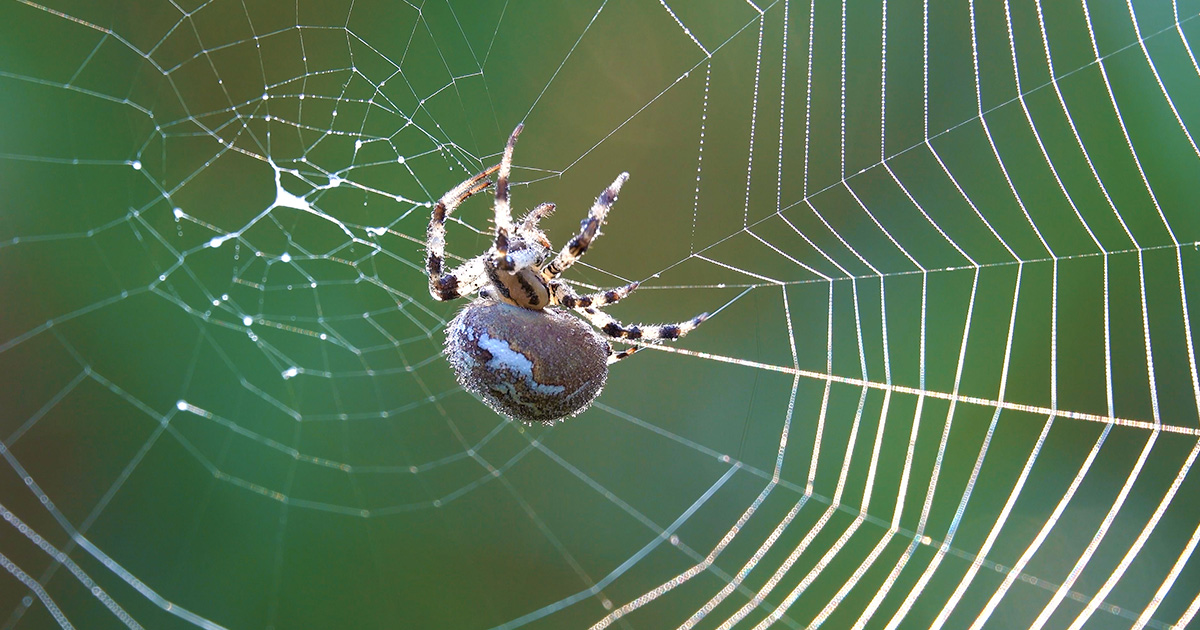
A spider, when it falls from a wall, does not fall for long. In milliseconds, turn protein soup into sturdy climbing gear. Using a thin, shiny silk thread, the spider rises. The strand is stronger than Kevlar, the synthetic fiber in bicycle tires and bulletproof vests, and stronger than steel. It is flexible and biocompatible with the human body. Scientists dream of turning spider silk into high-performance materials for seat belts, helmets, naval materials, and even scaffolds that help repair brain cells. But attempts to produce spider silk in the laboratory have failed because researchers don’t know enough about how a spider spins “silk drug”—a liquid mixture of proteins, water and salt—from its silk glands into a remarkable solid. Mapping the molecular mechanisms behind the process is “really the holy grail” for the field, said Gregory Holland, a chemist and spectroscopist at San Diego State University. Recently, he led research that described how liquid spider drug molecules rearrange themselves into semi-liquid droplets called condensates before becoming solid silk fiber. The result is an atomic-level look at the spider’s silk factory. The findings are also a practical guide to the formation of condensates, which nature has repeatedly used to organize molecules for genetic processes and for the creation of impressively strong biological materials. “It is increasingly clear that [condensates are] a common strategy that is being used in a variety of different organisms,” said Matthew Harrington, a biological materials scientist at McGill University who was not involved in the study. By analyzing how nature uses condensates, scientists hope to recreate some of its strongest materials. Silk factory spiders are incredible natural factories. They can spin up to seven types of silks, and the same spider can often spin several of them. Aciniform silk wraps around insects to eat later. Flagelliform silk gummy reinforces capture In 1907, scientists discovered that spider silk is made of long, modular proteins, later called spidroins, which belong to the same group of fiber proteins as collagen and keratin. The underlying structure of the fiber Silk is made of flat sheets of protein, known as beta sheets, that are embedded in a non-crystalline, less ordered matrix.