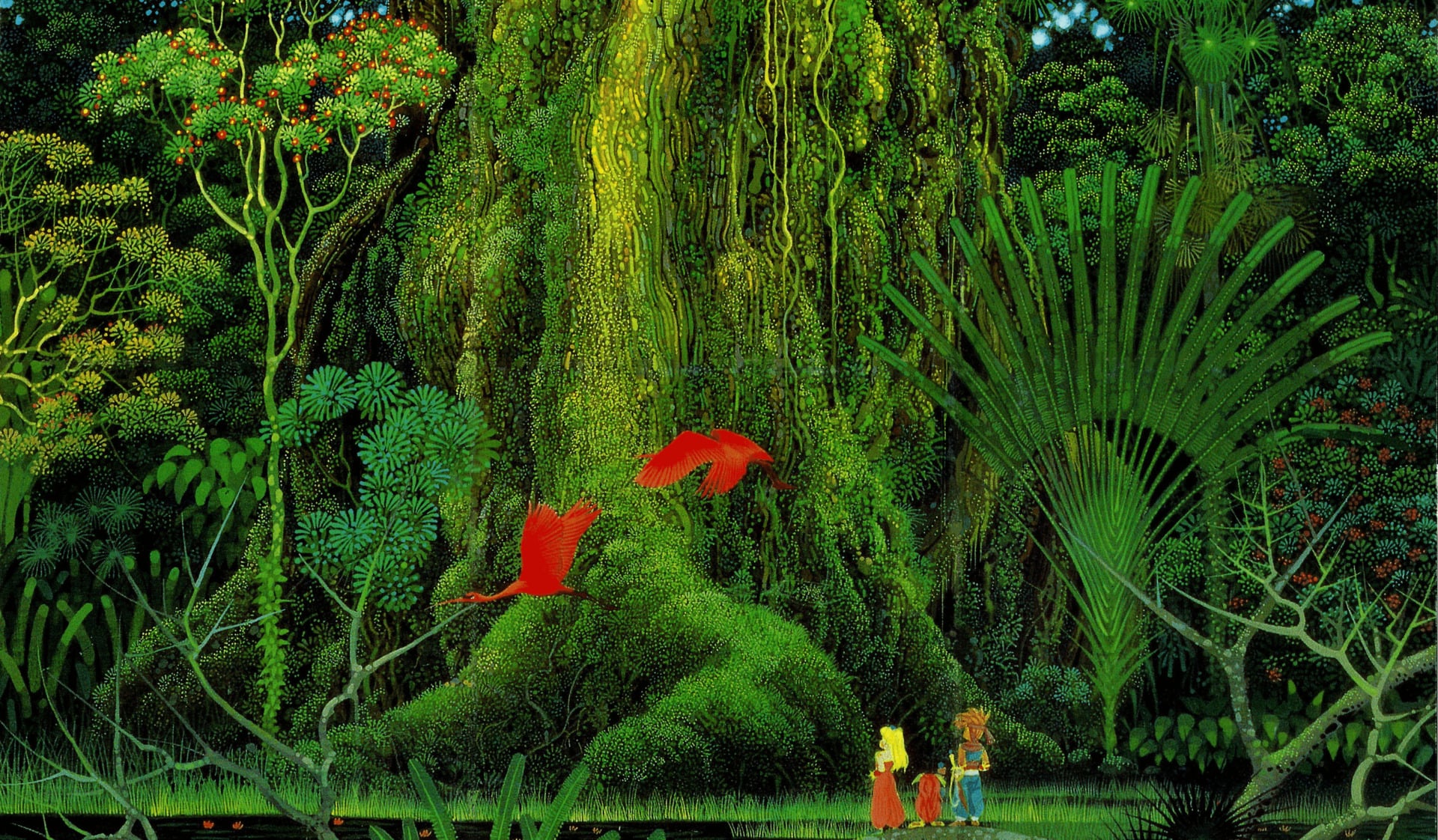
In a retrospective interview about the development of the first Final Fantasy and Mana games, Square Enix veterans Hiromichi Tanaka, Kouichi Ishii, and Yoshinori Kitase discussed developing these franchises and working for Square during its illustrious SNES era, while also sharing the similarities between developing games back then and doing so in the modern, increasingly AI-driven game development world of today. In the interview, conducted by Famitsu to commemorate the 35th anniversary of the Mana series, the developers recalled their early work. Kitase, in particular, directed Chrono Trigger, numerous Final Fantasy games including VII, VIII and X on PS1 and PS2, and was also one of the producers of the original Kingdom Hearts. Secret of Mana was originally planned to be a game for Nintendo’s canceled CD for SNES, featuring character designs by Dragon Ball creator Akira Toriyama, they said, before it was reimagined as a standard SNES game. Toriyama didn’t end up working on it, but he did work on Chrono Trigger, which was spun off after this change in Secret of Mana’s development. This turbulence during development, along with Nintendo’s decision not to switch to discs for the Nintendo 64, led to the decision to make Final Fantasy VII a PlayStation exclusive. The gang says that the fact that games back then required smaller teams and took less time to create than today gave them the flexibility to make many changes in the development of a game. And from his point of view, AI could allow smaller teams to create games that would otherwise be beyond the scope of what they could achieve. “Just as various technologies have supported game development before, I think we can see AI playing an increasingly important role in game development,” Kitase noted. “However, we will have to carefully consider how to make the most of it.” For the group, AI could be a useful tool similar to generalized engines like Unity and Unreal Engine, which meant that developers no longer needed to create their own tools to create a game. However, that doesn’t mean that AI can take over all the work needed to develop a new game. For the next generation of creators, a human being must know how to turn an idea into something worthwhile. “Today, with engines like Unreal and Unity available, the foundation for game development already exists for many people,” adds Kitase. “Combined with the support of new tools and other technologies, this makes it easier even for those with little experience to create games, which is an important change as it allows them to gain the experience of developing and completing work on a game. However, when it comes to creating something and taking it from 0 to 1, you absolutely have to have people. That will never change, so the next generation of developers must have the ability to make something from scratch.” Ishii adds that even if AI were used in prototyping, the final game needs a human touch or it won’t resonate. “While we need to carefully consider how to incorporate AI into games, I have to admit that I’m very excited about it,” he adds. “If we can develop prototypes faster, we will have more time to test and refine them, thinking about whether we should try another way. But humans will still have to define the beginning and the end of the work process. If we rely solely on AI, the result may look polished, but it may seem cold and lack the necessary human touch.” It’s this need for a human touch (Kitase gives an example of this, recalling that two years ago he considered using AI to help him compose a speech for his eldest son’s wedding before deciding it didn’t feel right to do so and writing it himself) that alienates the group from technology in general. However, in terms of how the technology, if implemented, could change the role of a creator and redefine what it means to create in the future, his comments mirror those made by Nintendo legend Shigeru Miyamoto while receiving an Order of Culture for his contributions to game development last week. Discussions about the use of AI in Japanese development circles are generally leaning toward responsible use, rather than questioning whether it should be used, which makes sense considering that recent surveys have concluded that more than 85 percent of developers in Japan are actively using or considering using the technology. It is still unclear whether developers find that balance between the technology itself and the human touch, as well as whether the public can accept its use.