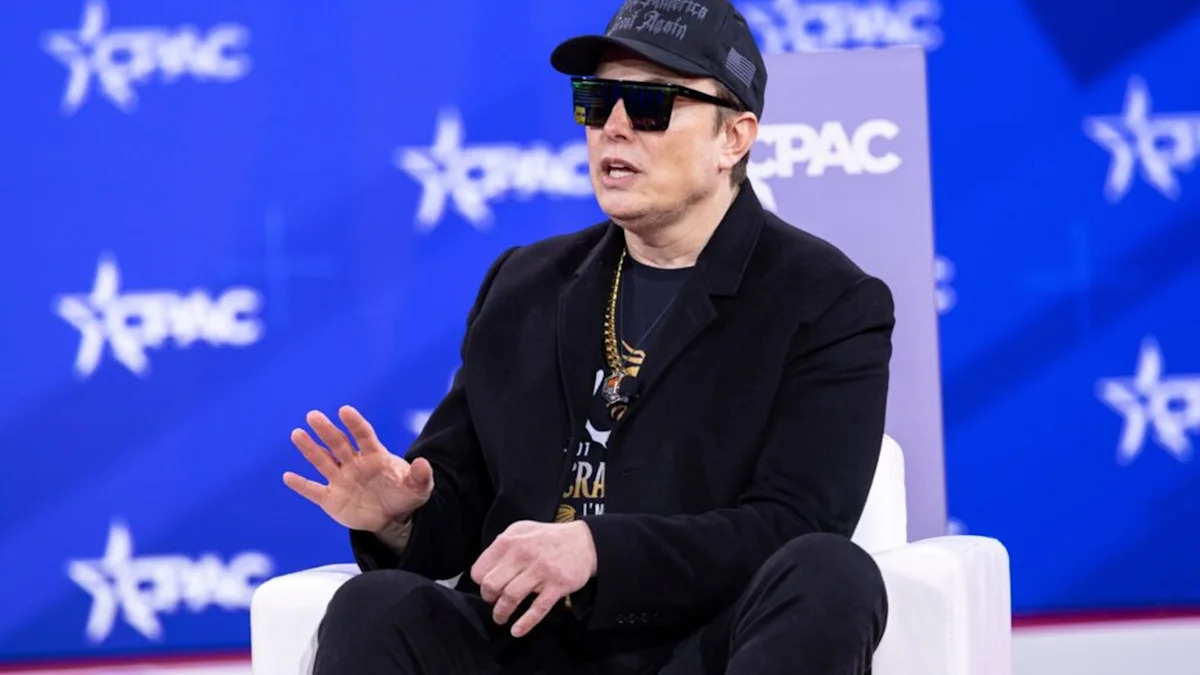
Benzinga and Yahoo Finance LLC may earn commissions or revenue on some articles through the links below. Elon Musk’s ambition to establish a self-sufficient civilization of a million people on Mars faces skepticism from Nobel Prize-winning astronomer Michel Mayor, who argues that the planet’s hostile conditions make mass migration unrealistic and humanity must prioritize protecting Earth. Nobel Prize winner challenges Musk’s vision of a million people on Mars “We don’t have a Planet B. We have to take care of the Earth,” Mayor told delegates at the Starmus science festival in Tenerife, Spain, on Wednesday, challenging the Space Exploration Technologies Corp. founder’s vision of making humanity multiplanetary. Don’t miss: Advertising “Could a million people migrate to Mars in the next century?” Mayor asked, noting its thin atmosphere, frigid temperatures, radiation exposure and toxic soil. “The pressure on Mars is something like one-hundredth of the Earth’s atmosphere. It is carbon dioxide, argon, but no oxygen. Therefore, it is not at all convenient for man,” he said. NASA research into Martian conditions supports those concerns, identifying surface temperatures reaching -153 degrees Celsius and radiation exposure roughly 40 to 50 times Earth levels. Mayor argued that settlers would need pressurized structures or underground habitats to survive. SpaceX Pursues Ambitious Plans for Mars Settlement SpaceX’s published roadmap for Mars envisions transporting more than one million colonists and millions of tons of cargo using reusable Starship spacecraft. Musk previously outlined plans to dramatically increase Starship launches, with the goal of flying more than 30 missions daily by 2030. See also: Avoid the Number One Investment Mistake: How Your ‘Safe’ Holdings Could Cost You Big. He also reaffirmed his commitment to Mars despite SpaceX’s increasing focus on lunar exploration. The company’s current roadmap schedules initial cargo missions to Mars no earlier than 2028. Exoplanet pioneer warns against abandoning Earth Mayor shared the 2019 Nobel Prize in Physics with Didier Queloz for discovering 51 Pegasi b, the first confirmed exoplanet orbiting a Sun-like star, in 1995. Despite that groundbreaking discovery, Mayor ruled out distant planets as viable alternatives to Earth.AdvertisementAdvertisement”We have to take physics into account,” he said, explaining that reaching a potentially habitable planet 30 light years away using the speeds of Apollo-era spacecraft would take millions of years. His warning contrasts with Musk’s vision of making interplanetary travel accessible to ordinary people. Mayor argued that humanity cannot depend on distant worlds to survive. Photo courtesy of Shutterstock Read next: Build wealth in more than just the market Building a resilient portfolio means thinking beyond a single asset or market trend. Business cycles change, sectors rise and fall, and no investment performs well in all environments. That’s why many investors are looking to diversify with platforms that provide access to real estate, fixed income opportunities, precious metals, and even self-directed retirement accounts. By spreading exposure across multiple asset classes, it is easier to manage risk, capture consistent returns, and create long-term wealth that is not tied to the fortunes of a single company or industry. EquityMultiple For accredited investors looking beyond stocks and bonds, EquityMultiple provides access to vetted commercial real estate deals starting at $5,000, with only ~5% of opportunities passing their due diligence process. accessible with a low barrier to entry. Investors can purchase fractional shares of single-family rentals and vacation homes starting as low as $100. This allows everyday investors to diversify into real estate, collect rental income, and build long-term wealth without needing to manage properties directly. American PowerGen As artificial intelligence drives an increase in electricity demand, reliable power generation is becoming a critical part of the technology ecosystem. American PowerGen is developing natural gas-fired power plants in Texas, a rapidly growing market driven by artificial intelligence data centers, manufacturing expansion and population growth. By advancing projects through permitting, fueling and grid interconnection, the company is positioning itself to help meet growing energy needs while offering investors exposure to the infrastructure supporting the next wave of AI and industrial growth. BitoAs AI coding tools take on more of the work traditionally done by developers, businesses face new challenges around code quality, context, and the rising cost of AI-powered development. Bito is creating software designed to help AI coding agents better understand complex code bases while helping companies control AI development costs. Founded by former PubMatic executives, Bito has raised more than $10 million from institutional and individual investors and is now raising additional capital through a Wefunder offering, giving investors the opportunity to invest in a company that targets an emerging need within the rapidly expanding artificial intelligence software market. FarmTogetherFarmland has historically maintained its value through market volatility and generated returns uncorrelated with stocks and bonds. For accredited investors, FarmTogether offers direct access to high-quality US farmland starting at $15,000, fully managed, with no headaches for landowners. Financing Private real estate and private credit can add income and stability to a stock-heavy portfolio. Fundrise offers access to diversified private real estate and credit strategies through an easy-to-use platform, with professionally managed portfolios designed to generate passive income and long-term growth.Advertisement© 2026 Benzinga.com. Benzinga does not provide investment advice. All rights reserved.