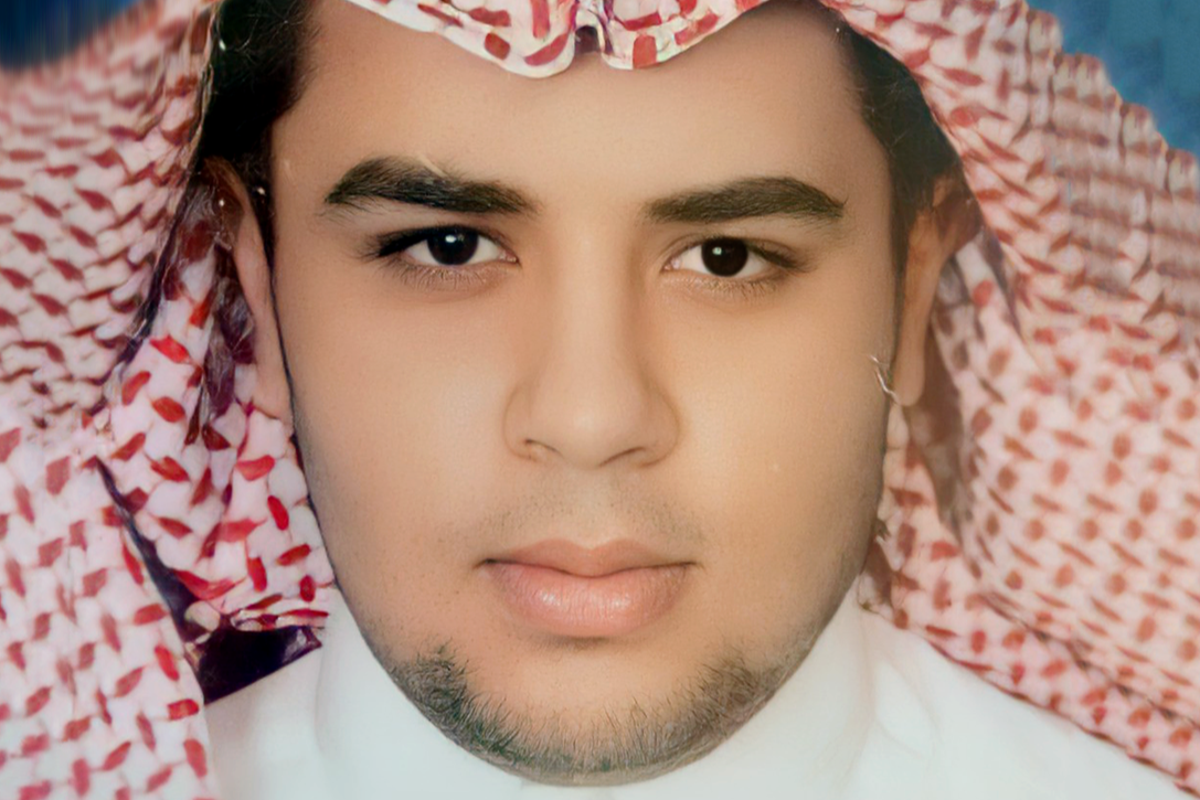
Do you want to bookmark your favorite articles and stories to read or refer to later? Start your freelance membership today. Join today Already a member? Saudi Arabia has executed a man for crimes he allegedly committed when he was just 14 years old, despite formally lifting the death penalty for crimes committed by minors in 2020. Hassan Zaki al-Faraj, 29, was executed without warning on October 17 for participating in protests over the kingdom’s treatment of its Shiite majority when he was just a child. He was executed along with four other Eastern Province men convicted in the same case, and human rights groups warn that more young “criminals” are still waiting on death row. While in custody, Faraj was subjected to “serious acts of torture,” held in solitary confinement for long periods and denied communication with the outside world, according to MENA Rights Group. His execution comes despite the regime, which has spent billions trying to transform its reputation for rights abuses in recent years, removing the death penalty for crimes committed by minors in 2020. Jeed Basyouni, head of death penalty projects at MENA at Reprieve, a London-based human rights legal action NGO, told The Independent: “Saudi Arabia’s claim to have abolished capital punishment for child crimes was always a lie, but now they have abandoned all claim.” Hassan Zaki al-Faraj, 29, was executed without warning on October 17 (Handout). He urged the British government to intervene now to save the life of another man at risk of execution for his alleged involvement in a protest as a child. Youssef Al-Manasif, now 30, faces imminent execution for his alleged involvement in protests over the treatment of Shiite Muslims when he was just 15, human rights groups have warned. He was arrested and charged in 2017 with numerous crimes, including participating in tumultuous gatherings affecting the unity and stability of the Kingdom, joining a terrorist cell, financing terrorism, selling narcotic pills to security agents and promoting sedition. But Reprieve, who campaigns for the abolition of the death penalty, says he was tortured and forced to sign a false confession and did not meet his state-appointed lawyer until 2022, five years after the arrest. Manasif and Faraj were sentenced to death in November 2022, more than two years after the law changed. Yousef al-Manasif, now 30, faces imminent execution for his alleged involvement in protests over the treatment of Shia Muslims (Handout) “These are nights “After seeing what happened to Jalal al-Labbad, Abdullah al-Derazi, Ali al-Subaiti and Hassan Zaki al-Faraj, is it any wonder that Youssef is terrified, fearing that the next dawn will be his last?” By all accounts “He reportedly stayed home, only to be arrested years later for being in the wrong place at the wrong time,” he said. “There is nothing normal about executing people for allegedly participating in protests as children; the Kingdom’s international partners must stop pretending that this is okay and intervene urgently to prevent Youssef’s execution.” Saudi Arabia carries out most of its capital punishment with beheadings and is the only country that still uses the method. The death penalty has been imposed for crimes ranging from murder to adultery, the “practice of witchcraft” and blasphemy. Mohammed bin Salman, crown prince and prime minister of Saudi Arabia, in Paris on August 24 (AFP/Getty) The kingdom formally ended the death penalty for crimes committed by minors in 2020. But human rights groups say the practice continues regardless. Basyouni said the charity had seen a “horrific pattern” of young men accused of attending protests as teenagers, tortured into making false confessions to terrorism offences, and then sentenced to death and executed. The kingdom carried out 347 executions in 2025, marking a new record for the Middle Eastern nation, following a record 345 executions in 2024, according to the European Saudi Organization for Human Rights (ESOHR). related to drug crimes. Amnesty International reported in June that Saudi authorities had already executed nearly 100 people this year. In 2016, the Conservative government left Saudi Arabia off a list of countries to challenge its use of capital punishment (AFP/Getty). Ms Basyouni said the UK and other international partners of Saudi Arabia must urgently intervene to prevent the execution of Youssef al-Manasif. He pointed to a precedent where UK government intervention reportedly saved three accused children from execution. “A strong diplomatic intervention by the FCDO could save Youssef’s life,” he said. In 2021, Saudi Arabia agreed to commute the death sentences of three men for crimes they allegedly committed as minors, again sentencing them to 10 years in prison. The Independent revealed in 2016, however, that the British government left Saudi Arabia off a list of 30 countries to be questioned for their continued use of the death penalty. Human rights groups raised concerns at the time that it was about safeguarding billions of pounds in defense contracts and security cooperation. Joey Shea, senior Saudi Arabia researcher at Human Rights Watch, warned that al-Manasif was “at serious risk of execution” following the high court’s decision. He added: “The execution of Hassan al-Faraj is unconscionable, compounded by alleged evidence tainted by torture and a well-documented history of unfair trials.” The Independent contacted the British Foreign Office and the Saudi Ministry of Justice. to comment.