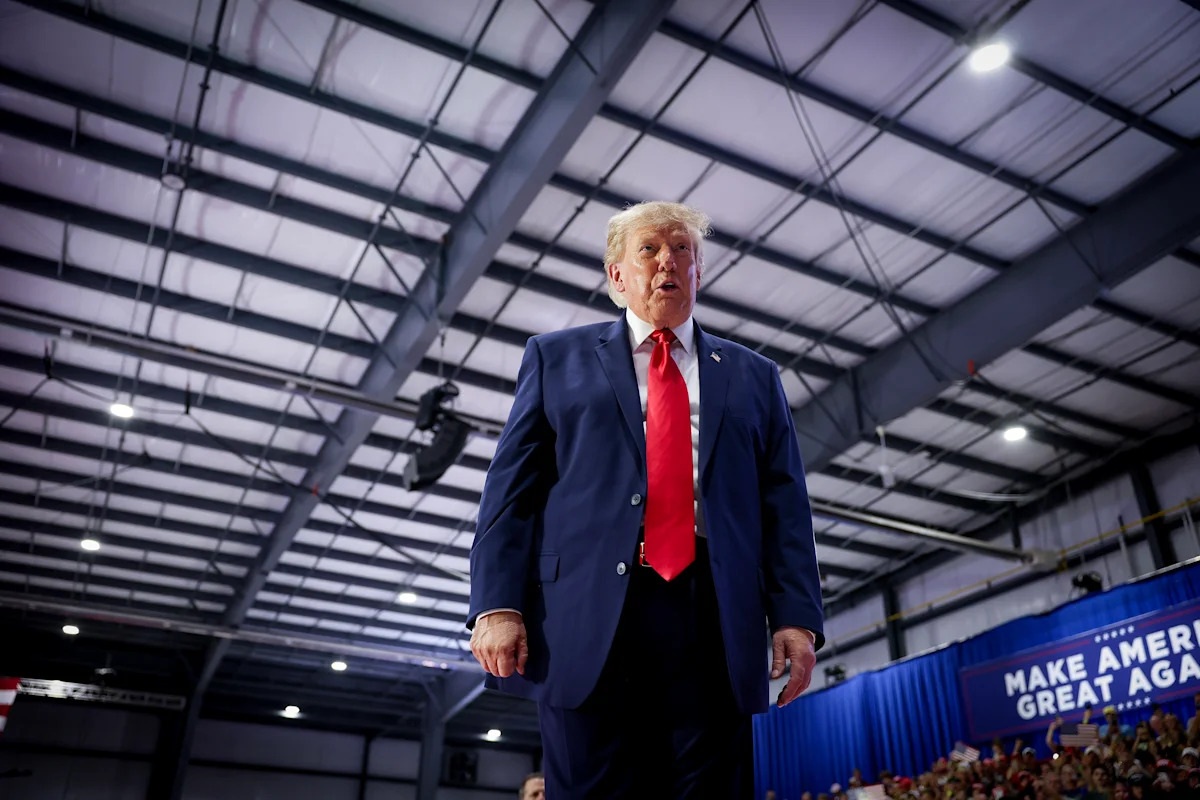
So far in President Trump’s second term, prices in the United States have risen only about half as fast compared to his predecessor’s four years in office. However, Trump has a 72% disapproval rating on the issue and risks paying a high political price (just as former President Joe Biden did) with voters drawing a direct connection between rising prices and the president’s policies. In the last election cycle, prices on all items rose more than 20% during Biden’s term, causing widespread distress among voters. This time, price growth is noticeably slower, rising 5.4% in just under two years from inauguration day. But a Yahoo Finance analysis of price data shows that some major outliers have hit Americans’ wallets hard, largely due to increases in goods affected by the war in Iran and tariffs. Fuel oil and gasoline are perhaps the most dramatic examples, rising more than 30% starting in March in response to the war in Iran and the closure of the Strait of Hormuz. And voters have noticed, as shown in poll after poll. A New York Times/Siena poll released this week found that 73% of likely voters disapprove of the president’s handling of gas prices. Trump underscored the importance of energy prices when he released an accusation this week that “Iran is doing everything it can to drive up the price of oil ahead of the U.S. midterm elections.” Trump has often responded to questions about high energy prices by saying they won’t be a problem once the war with Iran ends. Read more: How oil price shocks impact your wallet, from gas to food Link between price increases and Trump policies The connection between price increases and Trump’s tariff policy has also become evident. Coffee prices have risen nearly 23% during Trump’s second term (more than double what it was under Biden), as tariffs drove up prices before Trump removed many of the tariffs on coffee late last year in response to discontent from coffee drinkers. Products such as toys and footwear have also risen rapidly as importers in China and other parts of Asia faced new tariffs. Toys are a particularly clear example: they fell 4.6% during Biden’s term and then rose 7.8% so far during Trump’s term. “Maybe kids will have two dolls instead of 30, and maybe the two dolls will cost a couple dollars more than they normally would,” Trump said in a rare acknowledgment of tariff-driven price increases when pressed on the issue in April. Other assets have moved in the opposite direction. Eggs rose an average of 2.57% each month when Biden was in the White House, but have so far fallen 3.82% each month during Trump’s term, the analysis shows. But tariffs remain in the spotlight and are unpopular: A Silver Bulletin polling average finds that 62.7% of Americans disapprove of the way Trump has handled trade and tariffs, compared to 32.8% who approve. President Donald Trump is seen after a rally on October 22 in Sioux City, Iowa. (Anna Moneymaker/Getty Images) · Anna Moneymaker via Getty Images The gas in focus in the final weeks of the campaign Despite the different roots, inflation has become the central political issue for Trump and his party (just as it was for Biden and the Democrats) and comes as early voting for the November 3 midterm elections is underway. And perhaps no single price is more politically charged, for any president, than the cost of a gallon of gasoline. Trump is trying to make his case as gasoline prices average around $4.30 a gallon and diesel is elevated after setting an all-time record price last month, according to the American Automobile Association (AAA). Trump has taken multiple steps this week to try to control prices, including $8 billion in support for farmers and invoking the Defense Production Act on Thursday to allocate new funds to increase refining capacity. Yahoo Finance Trump touted the measures to voters in Iowa on Thursday, saying the release of $150 million would lead to increased diesel and gasoline production. However, he faces the inconvenient fact that his record on gas prices is now virtually indistinguishable from Biden’s. Since January 20, 2025, prices have averaged $3.449 per gallon according to data from the Energy Information Administration. Under Biden, the average price was $3.455 per gallon during his four years. Trump spent much of the last campaign promising the opposite, promising $2 per gallon for gas and making inflation disappear in almost every 2024 campaign speech. This is leading voters to blame the president for the situation. This week’s national poll from the New York Times and Siena University found that 75% of voters consider economic conditions fair or poor, and a solid majority blames Trump. As Ipsos also put it this week in a summary of recent findings: “American confidence in the economy has been poor since the war with Iran began.” [and] now the bottom has collapsed.” Ben Werschkul is Washington correspondent for Yahoo Finance.