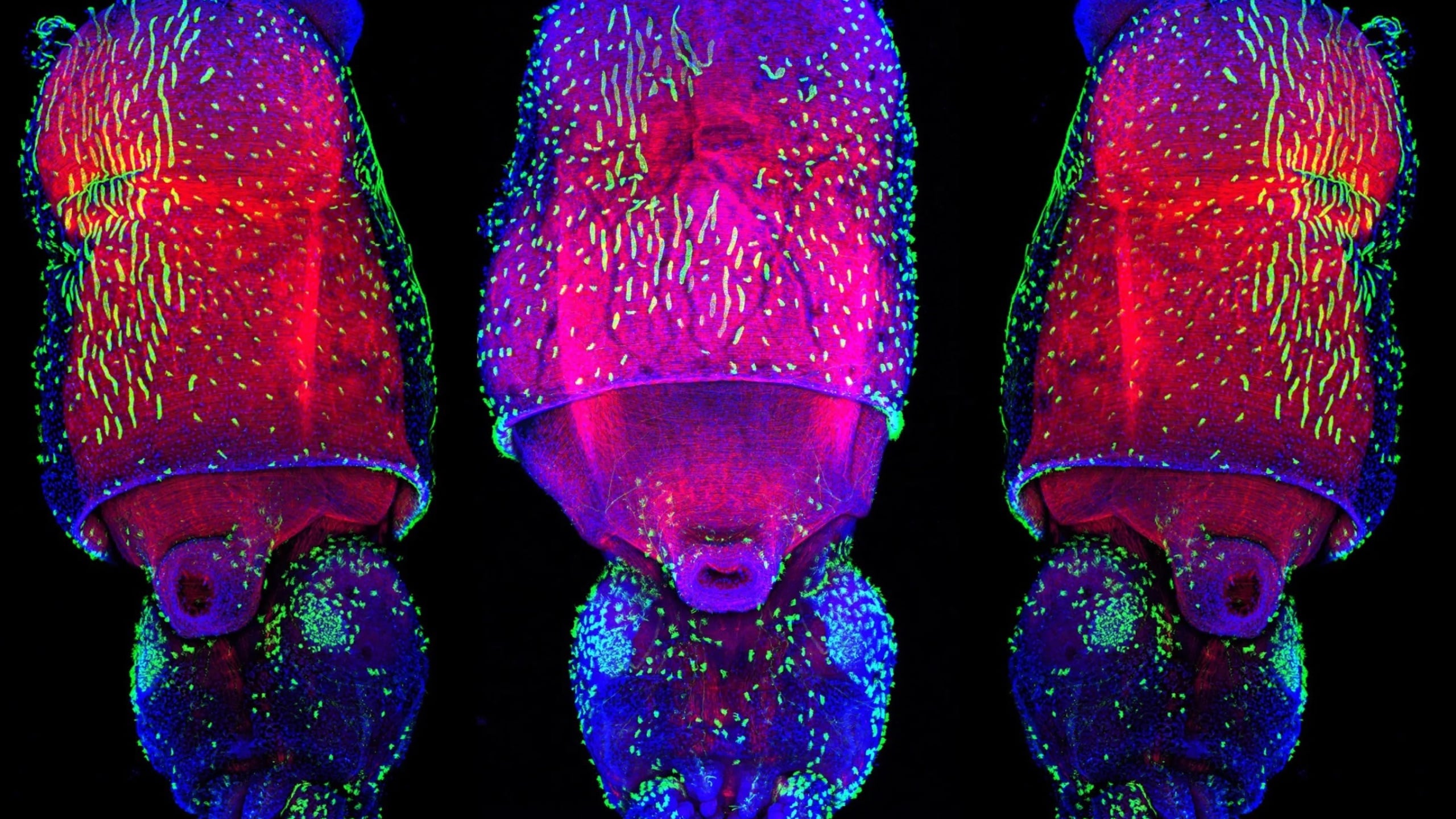
Cephalopods like squid may be the closest thing to an extraterrestrial intelligence we’ve ever known, with a diverse evolutionary lineage from a completely different world beneath the waves. However, despite our uniquely developed brains and bodies, we are all works in progress through a common process. Humans and other animals constantly undergo ephemeral and reversible transcriptomic remixing through what is known as “RNA-acting adenosine deaminase” or ADAR-mediated RNA editing. In simplified terms, this is like printing out a recipe but swapping out the raisins for chocolate chips right before handing them to the baker. No other creature can do this as well as the coleoid cephalopods, which include the clever, soft squids, octopuses, and cuttlefish, and it’s not even close. The RNA of these cephalopods appears to be more malleable than Skyrim’s character creator, leading to altered proteins that sometimes increase biological capabilities to an extraordinary scale, new research shows. In a study published in the journal Cell, a research team led by bioscientists at the University of California, San Francisco (UCSF), explored the proteome (the full complement of approximately 24,000 proteins) of the coastal longfin squid (Doryteuthis pealeii), to determine what these edits actually do. The longfin squid (Dorytheuthis pealeii). (Roger Hanlon/Marine Biology Laboratory) The biggest surprise may have been the breadth of the edits’ effects. “We found effects on protein activity, stability, localization, and even how they interact with other proteins. The downstream effects even go so far as to regulate the health of the organelles,” first author Jack Moen, a cellular and molecular scientist at UCSF, told ScienceAlert. “By editing the RNA instructions used to make proteins, these animals can generate proteins with different properties, all without changing their DNA.” Prior to this work, relatively little was known about these changes. But they have previously been shown to influence central nervous system communication, perhaps in response to environmental or physiological conditions, such as temperature fluctuations, the researchers say in the paper. To uncover additional effects, they explored nearly 8,000 protein-edited sites on more than 2,000 different proteins in the squid’s optic lobe and gills. This allowed a comparison of RNA editing activity in the squid’s sophisticated brain versus the more “janitor” respiratory organ. The optic lobe, responsible for seeing and responding to things, makes up a considerable part of the squid’s central nervous system and displays frequent and more complex editing activity. A graphic summary of the research. (Moen et al., Cell, 2026) This may make sense, since cephalopods possess the strongest ADAR editing capacity and the most complex nervous systems seen in invertebrates, characteristics that emerged together, the researchers suggest. Importantly, such edits occur in sequences that code for proteins rather than in the “junk” parts of your genome that do not code for proteins. Some of these changes occur in ADAR proteins, as the molecular workers themselves are altered to provide a level of genetic balance or self-regulation. “Another result that caught our attention was the potential to create new protein sequences,” adds Moen, as they identified 5,000 short proteins that were not in the reference squid proteome or in the standard Swiss-Prot database of 14,000 organisms. A good baker (or anyone) will always make different types of cookies. The editing action also changes where the proteins are located; Their altered forms hit the road, moving from the outskirts of the cells toward the nucleus or cell headquarters. This protein recoding can change the action of organelles (cells’ version of organs) like mitochondria, and even those who dozed through physical therapy know that these are the essential “powerhouses of the cell” that produce energy. In fact, the researchers found that this recoding can make squid mitochondria more similar to human mitochondria: more environmentally stable and better able to recycle themselves. Similarly, recoding also appears to affect your creatine systems to provide bursts of squid energy for evasive movements or other complex brain processes. Surprisingly, all of this happens by editing one database at a time. In fact, that’s the point, because it doesn’t change the DNA master blueprint and potentially transmit harmful mutations – a free proteomic test, no credit card information required. Overall, the findings show that cephalopods are even more alien than we have given them credit for, maintaining an unparalleled level of genetic flexibility. But why does this apply to cephalopods and not other animals? It’s due to the structures of the ADAR enzymes, but also for other reasons that require more research, explains Moen. The theoretical possibilities are overwhelming and beyond astronomical, with more protein variants than all the stars, planets, and superalcohol clouds in the Universe combined. “If we look at all the sites identified in the RNA sequencing data, the theoretical estimate is closer to 10²⁴⁸,” Moen told ScienceAlert. That’s more than 100 orders of magnitude larger than all the atoms in the Universe. Therefore, it represents a fundamental duality between natural potential and reality. “They describe enormous potential diversity,” Moen said. “How much animals actually produce is still unknown.” The research was published in Cell. This article was fact-checked by Rachel Garner and edited by Peter Dockrill. While we take pride in our process, we’re only human. If you spot an error, please let us know.