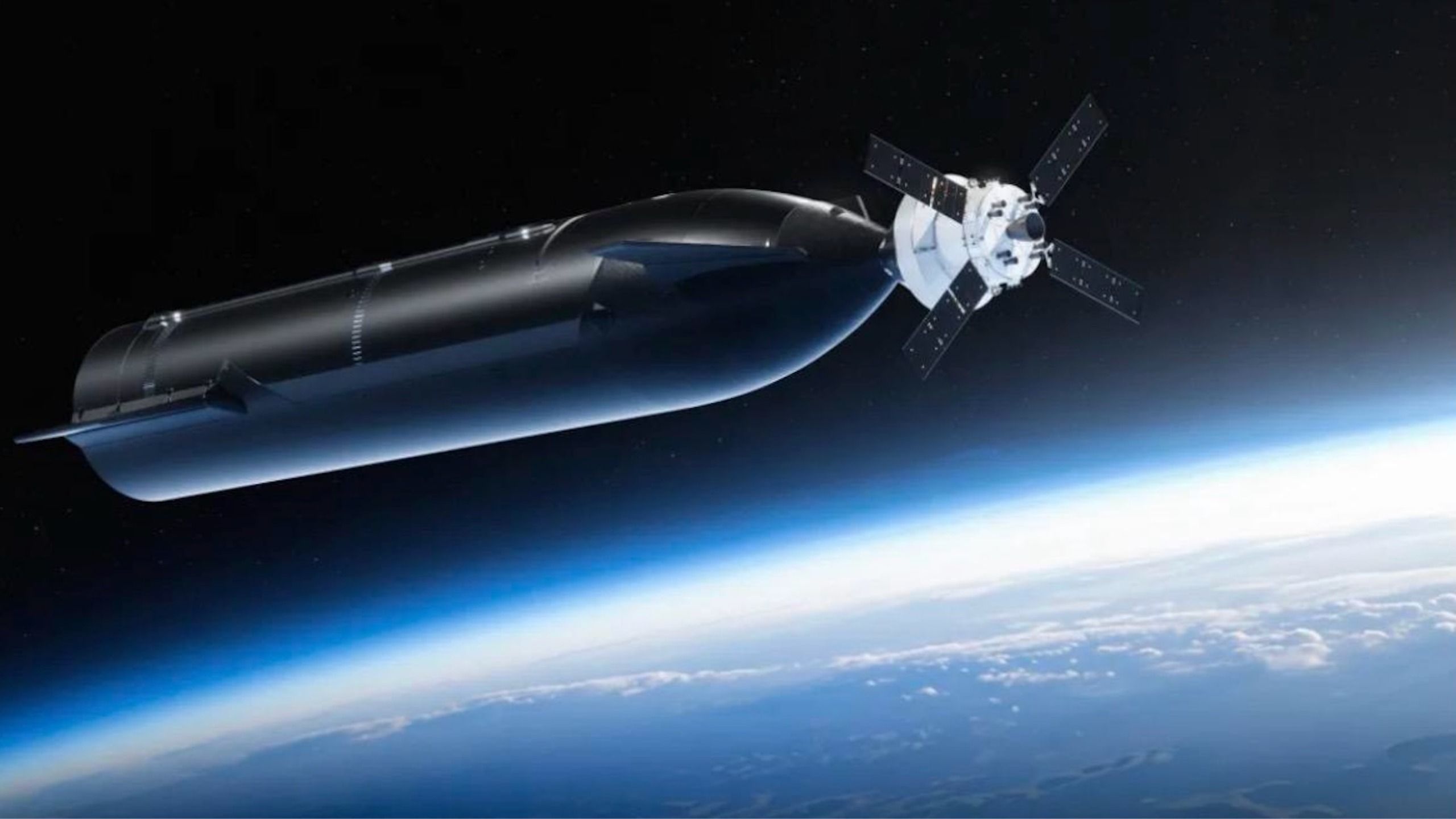
Follow Us Add us as a preferred source on Google Newsletter Subscribe to our newsletter NASA just gave us our best look yet at its test flight of the Artemis III lunar lander. The agency presented a detailed concept of operations for Artemis III today (Oct. 23) during a press conference at the Kennedy Space Center, emphasizing how important flight is to its lunar plans and how challenging it will be to get everything right. accomplished,” said Jeremy Parsons, NASA’s Artemis program manager, during today’s event, which lasted more than two hours. The basic concept of operations for NASA’s Artemis III docking test in low Earth orbit. (Image credit: NASA) Those three rockets are NASA’s Space Launch System (SLS), SpaceX’s Starship, and Blue Origin’s New Glenn, all of which will fly from Florida’s Space Coast. If all goes as planned, New Glenn will lift off first, carrying Blue Origin’s Blue Moon lunar lander into low Earth orbit (LEO). miles) and zoom out to 1,806 km (1,122 miles), according to Parsons. The capsule will then maneuver into an orbit with an altitude of about 345 miles (555 km). LEO before rendezvousing with Blue Moon, which will take place on day 3 of the flight at an altitude of 273 miles (439 km). They are going to enter the lander. They are going to evaluate the environmental controls, the life support systems. “We will confirm that the spacecraft can maintain adequate atmospheric pressure, and we will also test emergency scenarios, dual vehicle control, and test our Mission Control teams.” What to read next The SpaceX vehicle, the 52-meter (171-foot) tall upper stage of its fully reusable Starship megarocket, will rendezvous with Orion in LEO on flight day 8, at an altitude of about 381 km (237 miles). But this will be a very different encounter from the encounter with Blue Moon. “The demonstration with Starship is shorter, about two hours,” Parsons said. “The crew will not enter the Starship during the mission, but it gives us critical data and allows us to really understand the forces of the docking, how we are going to push, how we are going to work together.” The mission is 14 days, Parsons said, but could last up to 17 days.) During that time, the crew will evaluate their survival suits, something that was not done during the 10-day Artemis II flight around the moon last April, and will also perform a variety of other work, from detailed health assessments to scientific experiments and technology demonstrations. planned. “Everything we do on Artemis III is designed to reduce the risk of our future lunar landing missions,” Parsons said. “It’s not clear at this time which of these two privately developed landers, Blue Moon or Starship, will fly on Artemis IV, achieving the first crewed lunar landing since the.” Apollo 17 in 1972. NASA still preserves the optionality, “to give our two lunar landing partners the greatest opportunity to be prepared before astronauts land on the moon in 2028,” NASA Administrator Jared Isaacman said during today’s event. “We have no intention of giving up a viable path to the surface before the data and schedule force us to do so,” he added. No matter what decision NASA makes for Artemis IV, both Blue Moon and Starship should touch down on gray land relatively soon, according to Parsons. “Regardless of who goes first, both providers are planning lunar landing missions in 2028,” he said. And those missions will be quite different from each other. For example, in the Blue Origin landings, Orion will meet Blue Moon in lunar orbit. However, in the SpaceX landings, Starship will likely dock with NASA’s capsule in Earth orbit and boost it to the moon, Parsons said, the “push” he referred to earlier. It is still unclear when exactly Artemis III will be released. NASA is targeting summer next year, but it may find it difficult to meet that schedule: Last month, in an internal memo, Isaacman told agency employees that Artemis III was about 90 days behind schedule. Some of the biggest challenges have involved the supply chain for the mission’s lunar landers, Parsons said during today’s event. But he and Isaacman emphasized that NASA is confident in its ability to solve these problems. “We are moving with real speed and purpose right now,” Isaacman said.