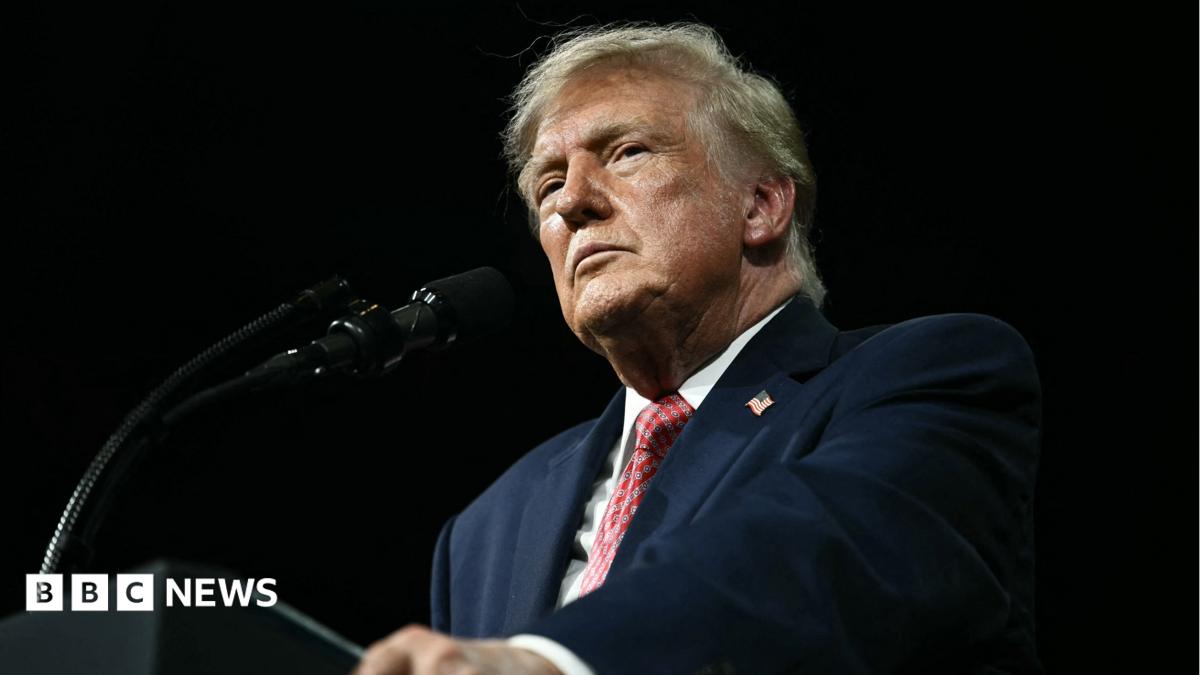
A US judge has ordered President Donald Trump to answer questions under oath in his defamation lawsuit against the BBC by December 11. Trump is suing the BBC over an episode of Panorama that edited together two different sections of a speech he gave before the US Capitol riot in 2021. Trump canceled a previous deposition – or interview under oath – on October 16, citing “matters of national importance.” But a lawyer representing the BBC said in court that Trump was campaigning in Georgia that day and had “prioritized that” over answering questions. President Trump’s lawsuit against the BBC is in the phase known as “discovery,” where both sides provide internal or other records that could constitute evidence. Charles Tobin, a lawyer for the BBC, told a court in Miami on Thursday that with two months left in the discovery period, Trump had not yet completed a deposition. U.S. Magistrate Judge Enjoliqué Lett said Trump must appear for deposition by Dec. 11 or face sanctions — the most extreme of which could be dismissal of the lawsuit unless the discovery period is extended. In American law, a deposition is an extrajudicial statement made under oath in response to questions, which is recorded for use in subsequent proceedings. The statements have legal weight: a court reporter records them verbatim, and the transcripts can later be used as evidence in trials. They are typically held in a lawyer’s office without a judge physically present. In defamation cases, lawyers for both sides are usually present at the depositions. Last week, lawyers asked Lett to force Trump to testify after the last scheduled meeting did not take place. That day, Trump attended a midterm campaign rally in Dalton, Georgia, and a fundraiser at his Mar-a-Lago estate in Florida. In a separate filing on Wednesday, Trump’s lawyers said the president could appear for the interview between January 11 and 22 next year, and claimed the BBC was “wrong to assert that President Trump is avoiding his testimony in this action.” Trump’s lawsuit, filed in Florida, accuses the BBC of “intentionally, maliciously and deceptively altering” the speech he gave outside the Capitol on January 6, 2021. The BBC apologized for the error and said the broadcast gave “the erroneous impression that President Trump made a direct call for violent action.” In July, Trump’s lawyers admitted they had no evidence the documentary was available in the US on the BBC’s BritBox subscription service – as they originally claimed – or on the BBC website, BBC select or through US broadcasters. Trump eventually agreed to drop the lawsuit against BBC Studios, his commercial arm, after the BBC argued that it had “no role in the creation or production of the documentary.”