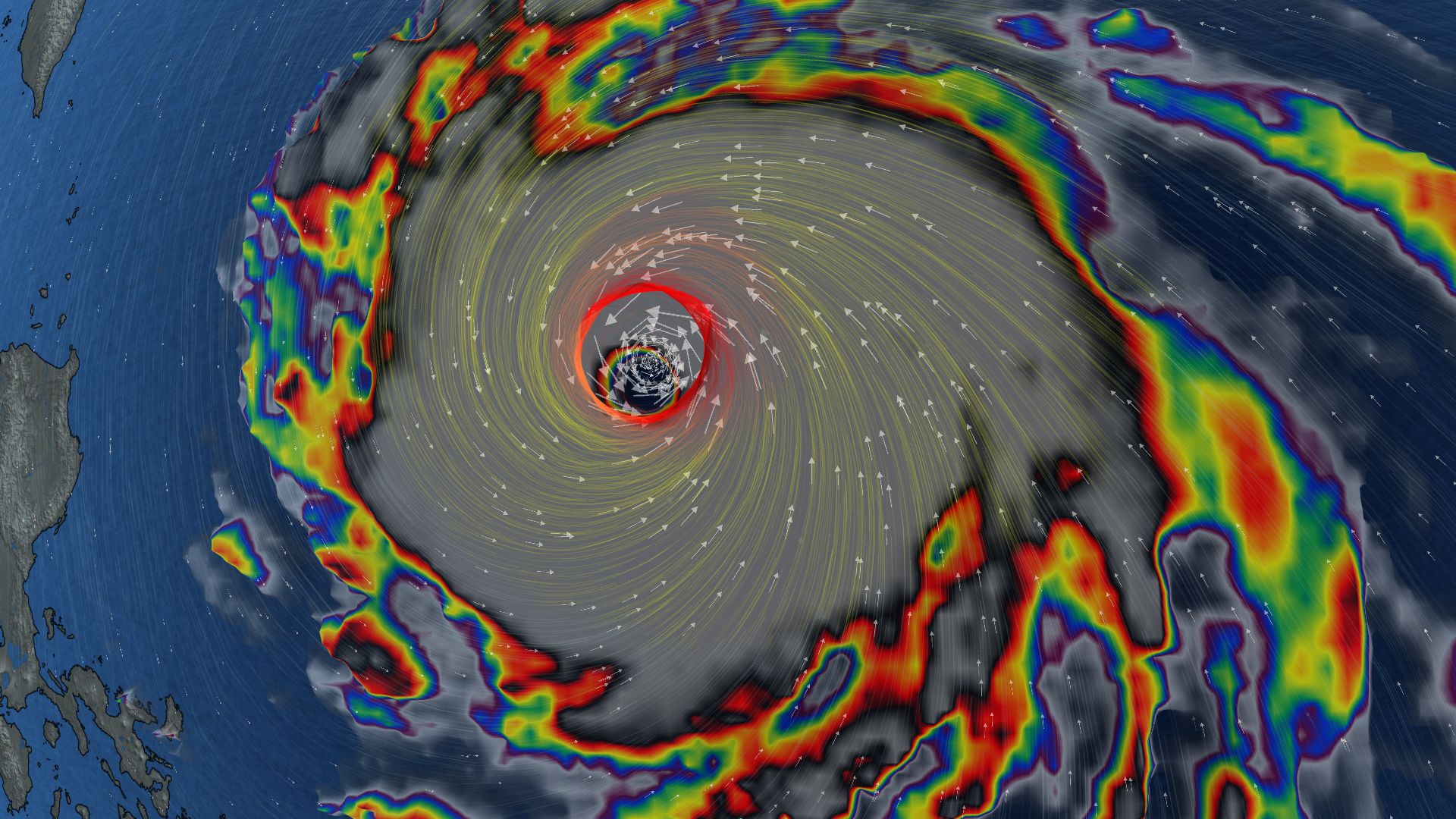
Super Typhoon Champi has become the world’s strongest tropical cyclone in 2026, with respect to wind speed. The system in the western Pacific Ocean became a powerhouse with its maximum winds of 296 km/h, the equivalent of a Category 5 storm. Hurricane Polo previously held the title of the world’s strongest tropical cyclone in 2026, in terms of wind speed. The storm peaked with maximum sustained winds of 285 km/h and a minimum central pressure of 892 mb, which is still lower than that of Champi (895 mb), making Polo stronger in that sense. Such low air pressure made Polo the second most intense hurricane on record in the eastern Pacific. Champi is also now the world’s seventh Category 5 storm of the year. Typhoons and cyclones? The typhoon also had a very healthy radar structure as it passed over Guam early Sunday morning local time. Sea surface temperatures in this section of the western Pacific are around 30°C, which is slightly warmer than normal for this time of year. The environment around the typhoon features deep humidity, calm winds and low wind shear. and enough support at upper levels to vent air away from the storm. The massive Champi will continue its path west toward Taipei before turning northwest later this week. It will enter a more unfavorable environment, so Champi is forecast to weaken to a Category 4 or 3 storm on Thursday and Friday. All of those ingredients, plus the storm’s own internal organization, are critical for a tropical cyclone to maintain its composure and continue to strengthen. What will the Canadian impacts be? The massive storm is pulling on the jet stream, having an influence on weather patterns around the world. Champi took a further westward path towards Taiwan. Downstream, impacts are expected in Canada, reinforcing a late October/early November pattern we had previously forecast. In Ontario and Quebec, the weather is expected to become more changeable and unstable at times in the middle and end of next week, continuing into the following week. Warmer than normal temperatures are expected to prevail, but rapid disruptions are also expected. With files from Dennis Mersereau, digital journalist and climate specialist at The Weather Network, and Rachel Modestino, meteorologist at The Weather Network.WATCH: Hurricanes, typhoons, cyclones; What is the difference?