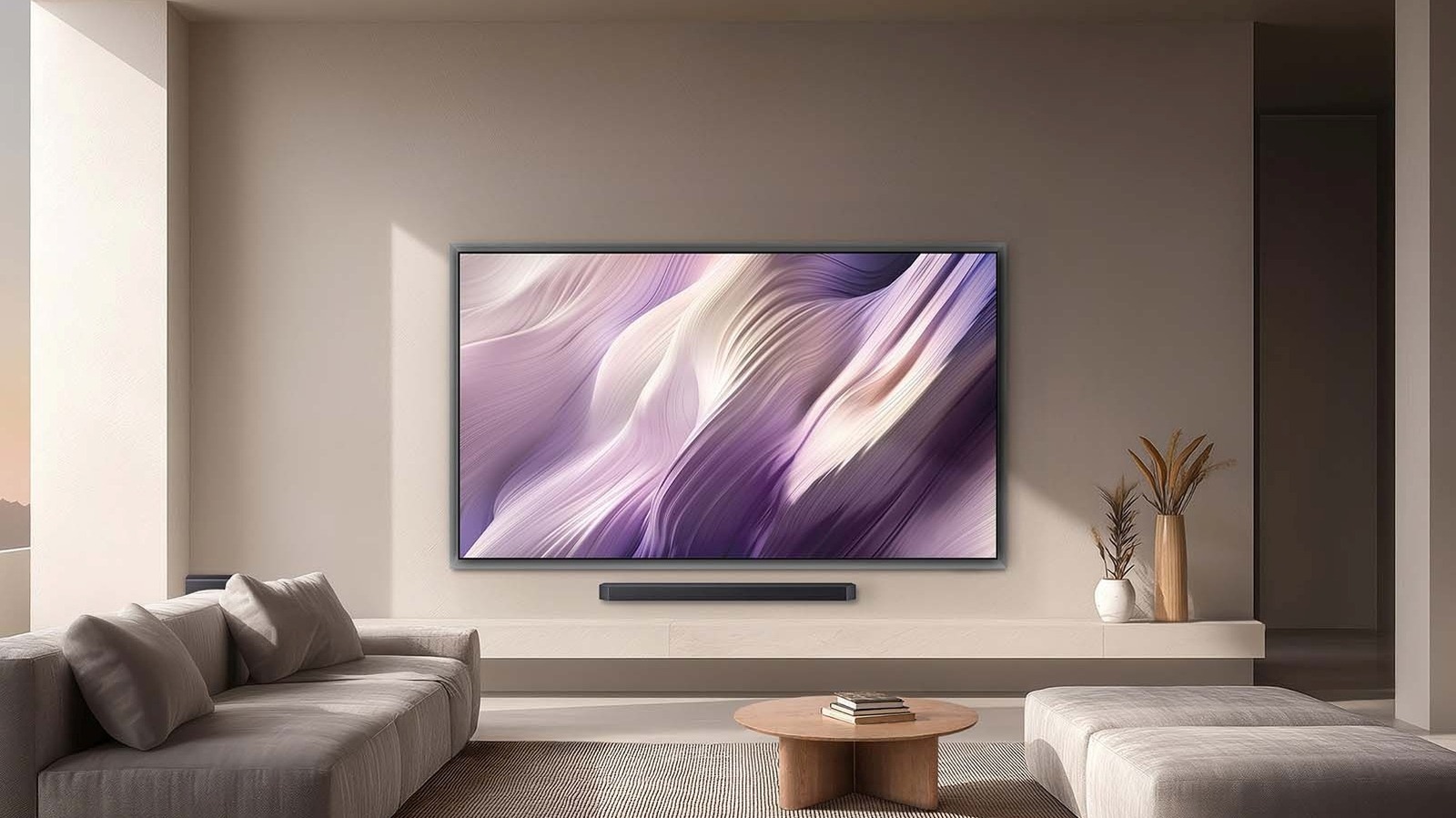
We may receive a commission for purchases made through links. Samsung’s S95H, known as S99H in Europe, is the company’s flagship OLED TV in 2026. It has received high praise for its picture quality and even recently swept all the best TV awards at the HDTV 2026 shootout. The TV is available in four sizes in the US and has a lot to like, from its vibrant QD-OLED display panel (except for the RGB Tandem OLED panel on the 83-inch) to impressive gaming features, including a 165Hz refresh rate. However, being a flagship OLED TV, it comes with a hefty price tag, with a list price ranging between $2,500 for the 55-inch model and $6,500 for the 83-inch variant. If you’re looking for a good OLED TV, you don’t necessarily need to pay a lot of money for the S95H. There are mid-range and entry-level models not only from Samsung, but also from brands like LG, Roku, Sharp, and Sony that you can consider. Generally, every OLED TV offers fantastic picture quality, but you may have to sacrifice brightness, gaming features, and other aspects. We’ve handpicked some of the best and affordable OLED TV models to help you get started. We have considered expert reviews and user comments, where available. Samsung S85H If you’re set on purchasing a Samsung TV, which is reasonable considering it has the best customer satisfaction rating among the major smart TV brands, but don’t have the budget for the S95H, the company’s S85H OLED TV is worth considering. It’s significantly more affordable, starting at $1,200 for its 48-inch model. More importantly, as we approach the holiday season, discounts are expected to increase. You’ll also be able to choose from five different screen sizes, from 48 inches to 83 inches. Unlike Samsung’s S95H, which uses a QD-OLED panel in most of its sizes, the S85H is based on a WOLED panel. It also has a 4K resolution and a 120Hz refresh rate with VRR. Other features include support for HDR10+ and Dolby Atmos. Unfortunately, there is no support for Dolby Vision. The TV is powered by Tizen with One UI, which provides access to popular streaming services, Samsung TV Plus, Google Cast, Apple AirPlay, and more. Also, a small detail that separates Samsung’s OLED TVs from other manufacturers is that Samsung will offer seven years of operating system updates, which is rare in this industry. Experts from Rtings.com, Tom’s Guide, Trusted Reviews and WhatHiFi are happy with the S85H’s performance and highlight its elegant design and image processing. However, they don’t really like the audio quality, the stuttering in slow panning shots, and its limited handling of reflections. The TV earned an average buyer rating of 4.1 out of 5 on Amazon, with buyers liking the picture quality and ease of unboxing. That said, some buyers don’t appreciate the TV setup process, calling it “incredibly difficult” and “horrible.” Sony Bravia 6 OLED TV Sony doesn’t really have a history of offering affordable OLED TVs, but this year, the company is offering the Bravia 6 as a base model, which can be a good option for anyone not looking to spend a lot of money. It comes in a wide range of sizes, from 48 inches to 83 inches, giving you plenty of options. It also has a starting list price of $1,300, but has begun trading at a discount. The Sony Bravia 6 is powered by Google TV, offering access to popular smart TV apps, Google Cast, and more, including the Gemini AI assistant. In other highlights, the TV comes with a 120Hz refresh rate with variable refresh rate (VRR) and support for Dolby Vision HDR, Dolby Atmos, and DTS:X. Its four HDMI ports support full version 2.1 bandwidth and one supports eARC. The TV also has a built-in ATSC 3.0 tuner. Other connectivity and port options include two USB-A ports, one of which is rated for 5Gbps speeds and 4.5W output power, Wi-Fi 6E, an Ethernet port, and optical audio output. The only thing Sony TV lovers will miss about the Bravia 6 is the company’s proprietary XR coprocessor, and a MediaTek chip is responsible for all image processing. As a result, it’s not as good as other Sony TVs at content smoothing. Still, it does a pretty good job. Rtings.com experts like the image quality and performance. However, they point out that it is difficult to reduce glare in bright rooms. Amazon buyers have also given it a rating of 4.3 out of 5 and are happy with its gaming features and visual performance. The only concerns some Amazon buyers have are its relatively lower overall brightness and slow startup time. Samsung S90H Another Samsung TV that you can consider is the S90H. It sits between the S85H and S95H in Samsung’s portfolio and is significantly closer to the S95H in terms of feature set than many of our other recommendations. It is available in a large number of sizes, ranging from 42 inches to 83 inches. In particular, Samsung uses different OLED panel technologies in different sizes. For example, the 42-, 55-, 65-, and 83-inch models have a regular WOLED panel, while the 48-inch and 77-inch models come with newer tandem RGB OLED panels. RGB Tandem OLED panels typically offer better performance than WOLED panels. Another highlight of the display panel is the matte coating, which helps counteract glare and reflections. The S90H has a 4K display with a 165Hz refresh rate, which high-end gaming PC owners would certainly appreciate. It also comes with four HDMI 2.1 ports, each of which can handle a 4K 165Hz signal, three USB ports, 3.5mm audio output, optical audio output, and Wi-Fi 6E. Additionally, you get HDR10+ and Dolby Atmos support, but there’s no Dolby Vision or DTS audio support, like the S85H. The S90H starts with a list price of $1,400 for the 42-inch model, but goes up to $5,300 for the 83-inch model. However, it is increasingly available with significant discounts. The TV has received rave reviews from experts at CNET, IGN, Rtings, T3, and Wirecutter, who like its strong gaming support, anti-glare display, and picture quality. However, there are some concerns about the anti-aliasing quality of low-resolution content and the lack of Dolby Vision support. Amazon buyers also have a positive opinion of the TV, giving it a good average buyer rating of 4.4 out of 5. The only notable complaints concern the TV’s user interface. LG B6E OLED TV The B6E is the cheapest OLED TV you can find in LG’s 2026 line. It has a starting list price of $1,400 and is available in 55-, 65-, and 77-inch models. However, if you time your purchase correctly, you can get it for almost half the price. Like our other recommendations, it has a 4K resolution and comes with a 120Hz refresh rate panel with VRR support. It also supports Dolby Vision and Dolby Atmos. Additionally, LG has included four HDMI 2.1 ports, Wi-Fi 5, a USB-A port, an Ethernet port, and optical audio output. However, the built-in tuner is limited to ATSC 1.0 and you get a simple remote control that lacks motion or microphone controls. Like other LG TVs, the B6E runs on the webOS platform, which has all the popular apps. Rtings.com experts have good things to say about the B6E, praising its feature set and performance, including upscaling low-quality content; However, they highlight the lack of support for DTS audio formats, as well as stuttering in slow panning visual shots. Best Buy shoppers have given the TV an excellent buyer rating of 4.7 out of 5, noting that the TV offers excellent picture quality and solid gaming features. That said, some buyers are unhappy with LG’s smart TV operating system, which seems cluttered. You can also consider the LG B6 if you’re willing to shell out a little more. It’s pretty much the same TV as the B6E, but it comes with LG’s Magic Remote and advanced features like room audio correction, AI voice recognition, and SDR to HDR upscaling. Additionally, the B6 comes in 48-, 65-, 77-, and 83-inch sizes. Roku Pro Series OLED TV The Roku Pro Series OLED TV is one of the most affordable OLED models you’ll find on the market. Available in 55- and 65-inch sizes, it starts at $1,000 at list price; however, you can easily find it on sale for $100 off. The Roku OLED TV has most of the essentials you need, starting with a 120Hz refresh rate panel that not only allows you to enjoy high refresh rate gaming through a console or PC, but is also useful for reducing judder while enjoying 24p content. Other features include support for Dolby Vision and HDR10+, as well as Dolby Atmos surround sound audio. Connectivity and port options are pretty solid, and the TV comes with Wi-Fi 5, two proper HDMI 2.1 ports capable of handling 4K 120Hz signals, an eARC-compatible HDMI port, another HDMI port, which is likely limited to version 2.0 speeds, a USB-C port, a USB-A port, Ethernet, optical output, and an antenna jack. Being a Roku TV, it runs on the Roku OS, which has all the popular streaming apps, an easy-to-use interface, and access to tons of free content. Plus, you get a backlit voice remote control. The TV has received very positive reviews from experts at Consumer Reports, PCMag and TechRadar, who appreciate its price, color accuracy and high refresh rate. However, they highlight the lack of hands-free control and the lower brightness of the panel, which affects HDR performance. Amazon shoppers have also given it a reasonable average rating of 4.2 out of 5, saying it’s easy to use and offers excellent value for money. That said, some buyers are unhappy with the amount of advertising they’ll encounter and the lack of support for ATSC 3.0, which allows 4K streaming of free over-the-air channels. How We Selected These Affordable OLED TVs Tomohiro Ohsumi/Getty Images Samsung’s S95H is an impressive OLED TV that’s packed with features; However, it is also quite expensive, like any flagship OLED TV model. So when choosing more affordable OLED TV alternatives to the S95H, a main focus was price. We considered entry-level and mid-range models from all the manufacturers that sell OLED TVs in the US and chose TVs that you can easily buy. We refined our selection after considering expert feedback and buyer opinions to find OLED TV models that generally offer good performance and don’t have any deal-breaking drawbacks.