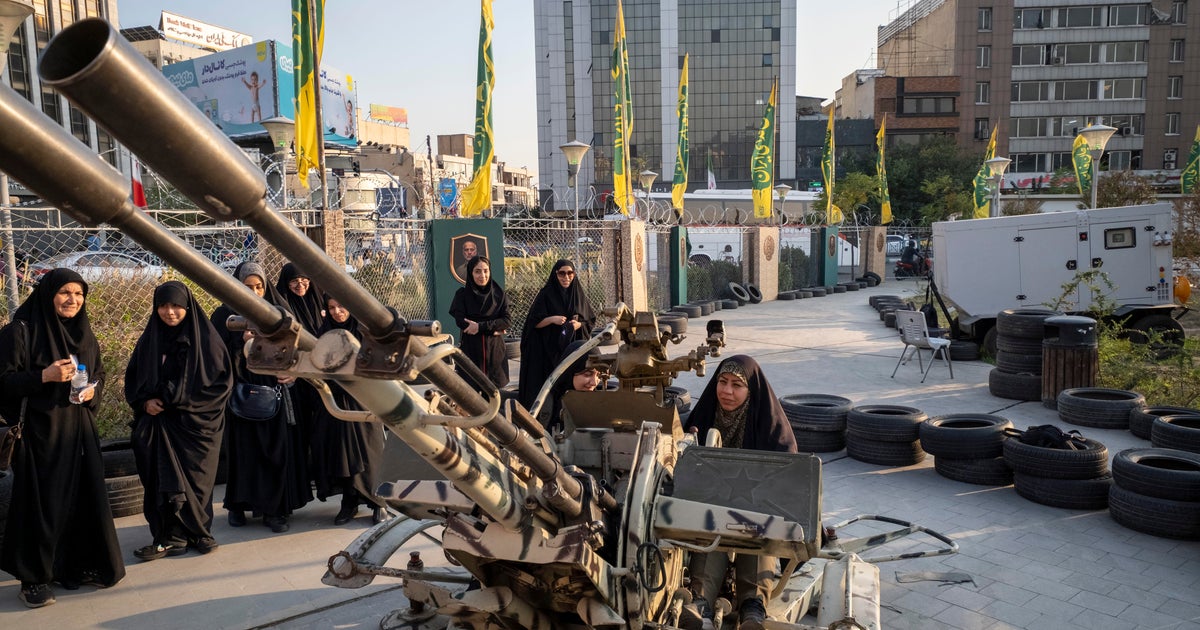
7:19 AM Houthi rebels kill 20 soldiers, Saudi-backed Yemen army says Iran-backed Houthi rebels attacked a military camp for government forces in southern Yemen on Monday, killing at least 20 soldiers, two Yemeni military officials said. Rebels fired ballistic missiles at the al-Alam military camp in the southern province of Shabwa in an attack that left at least two dozen soldiers wounded, officials said. Military officials from Yemen’s internationally recognized government spoke on condition of anonymity because they were not authorized to brief the media. Yemen’s decade-long civil war has escalated and become intertwined with the broader regional conflict sparked by the U.S. war with Iran in recent months, as the Houthis, considered one of Iran’s most potent proxy forces, attack the government’s Saudi supporters on their own territory. Houthi attacks on Saudi infrastructure, including civilian airports, have killed more than 20 people in recent weeks, and President Trump has said he is considering joining Saudi operations against the rebels. The Houthis have warned that if the United States intervenes, it would provoke a “swift and painful” retaliation against American personnel and interests throughout the region. CBS/AP 6:27 a.m. Oil prices decline slightly as Trump softens on Russia after ship attacks pushed crude to a nearly five-month high. 96.84 dollars per barrel. Prices fell after President Trump on Friday night signed an executive order to suspend new US sanctions against Russia just days before they were to take effect, prompting disappointment in Ukraine, and the move is likely to result in more energy exports from Russia. Trump’s decision came shortly after he said earlier this month that he had reached a diesel deal with Russia in a bid to reduce high U.S. fuel prices ahead of the Nov. 3 midterm elections. But despite Trump’s controversial efforts to ease energy costs for Americans, oil prices have remained much higher compared to before the Iran war, due in large part to ongoing supply chain risks caused by the crisis in the Middle East. On Friday, the price of Brent crude oil hit nearly $110 a barrel, its highest level since mid-May.CBS/AP 5:59 AM Attacks on vessels in and near the Strait of Hormuz continue A tugboat traveling near the Strait of Hormuz was hit by two unknown projectiles, a British maritime monitoring agency said Sunday. The United Kingdom Navy’s Maritime Trade Operations Center (UKMTO) said in a statement that a tugboat traveling south off the coast of the United Arab Emirates “reported being hit by two unknown projectiles.” “On its route,” the agency said, “a minor casualty has been reported.” There were 10 attacks on commercial vessels in and near the strait last week, according to the UKMTO, which said October has already become the worst month for attacks on shipping in the strait since the early days of the war in March. Two female members of Iran’s “self-sacrificing” forces operate an anti-aircraft gun during military training at a training ground in a city square in central Tehran, Iran, on Oct. 12, 2026. Morteza Nikoubazl/NurPhoto/Getty 5:59 AM United States issues security warning to Americans in the Middle East The United States issued a security alert on Monday urging Americans in the Middle East to “exercise greater vigilance.” “The Houthis have engaged in hostilities against Saudi Arabia, including attacks on civilian airports and other critical infrastructure that have resulted in civilian casualties and severe travel disruptions,” the statement said. It added that hostilities have the potential to escalate rapidly and that Iranian-backed groups may attack U.S. interests abroad “or in locations associated with the United States and Americans around the world.” At least 20 people, including an American, were killed in one week in October when Houthi rebels attacked airports. Saudis. 5:59 AM Russian Foreign Minister expected to visit Iran for talks Russian Foreign Minister Sergey Lavrov would make his first visit to Iran on Monday since the United States and Israel sparked the ongoing war with the Islamic Republic by launching joint attacks on February 28. Iran’s Foreign Ministry spokesman Esmaeil Baqaei said on Sunday that the two sides would discuss “regional and international developments.” Lavrov said his visit was aimed at “preventing the return of full-scale war.” Russian President Vladimir Putin told his Iranian counterpart in early October that Moscow was ready to contribute to mediation efforts. Iran put forward a seven-day ceasefire proposal in late September that called for an end to the U.S. naval blockade of Iranian ports, the lifting of sanctions on Iranian oil, the reopening of the Strait of Hormuz and a return to direct negotiations over Tehran’s nuclear program. President Trump rejected the proposal, which Iran says remains on the table. CBS/AFP 5:59 AM Saudi-led military coalition and Iran-backed Houthis strike commercially as Yemen’s civil war escalates The conflict broke out between the Houthis and the Saudi-led military coalition fighting the Iran-backed rebel group on Sunday, as both sides traded attacks. In Riyadh, where intensifying violence has disrupted residents’ lives, the iconic Kingdom Center skyscraper ordered “mandatory” remote work for office tenants until further notice. Although no reason was given for the order, it came after a security alert and two drone interceptions around the capital city, as well as a series of Houthi attacks on Saudi targets in recent weeks. Meanwhile, the Saudi-led coalition, which backs the internationally recognized government in war-torn Yemen, has launched repeated airstrikes on regions of the country controlled by the Houthis. A suspected Saudi airstrike in northern Yemen killed at least nine people and wounded 16 others on Sunday, the Houthis’ Saba news agency reported. The coalition said Sunday that two pilots were killed when their helicopter crashed in Najran, near the border with Yemen, and attributed the incident to a “technical malfunction.” The Houthis said they “shot down an Apache helicopter belonging to the Saudi enemy” in the same area. CBS/AFP 5:59 AM Iran says conditions for reopening Hormuz still in place Iran’s Foreign Minister said Sunday that Tehran’s conditions for reopening the Strait of Hormuz have not changed, but that its proposal for a limited ceasefire with the United States to reopen the vital waterway remains on the table. Foreign Minister Abbas Araghchi told Iran’s semi-official Tasnim news agency on Sunday that Tehran is still reviewing US “comments” on the Iranian proposal for a seven-day ceasefire that was first put forward in September but rejected by President Trump. “If they meet our conditions, the Strait of Hormuz will reopen on the sixth day, and negotiations will begin on the seventh day,” Araghchi said, referring to Iran’s proposed schedule, which calls for the U.S. to lift its naval blockade of Iranian ports and ease sanctions on the country, among other concessions. “Our conditions are fair, and if the United States is willing to reopen the Strait of Hormuz, it will be able to meet them in a few days,” Araghchi said.