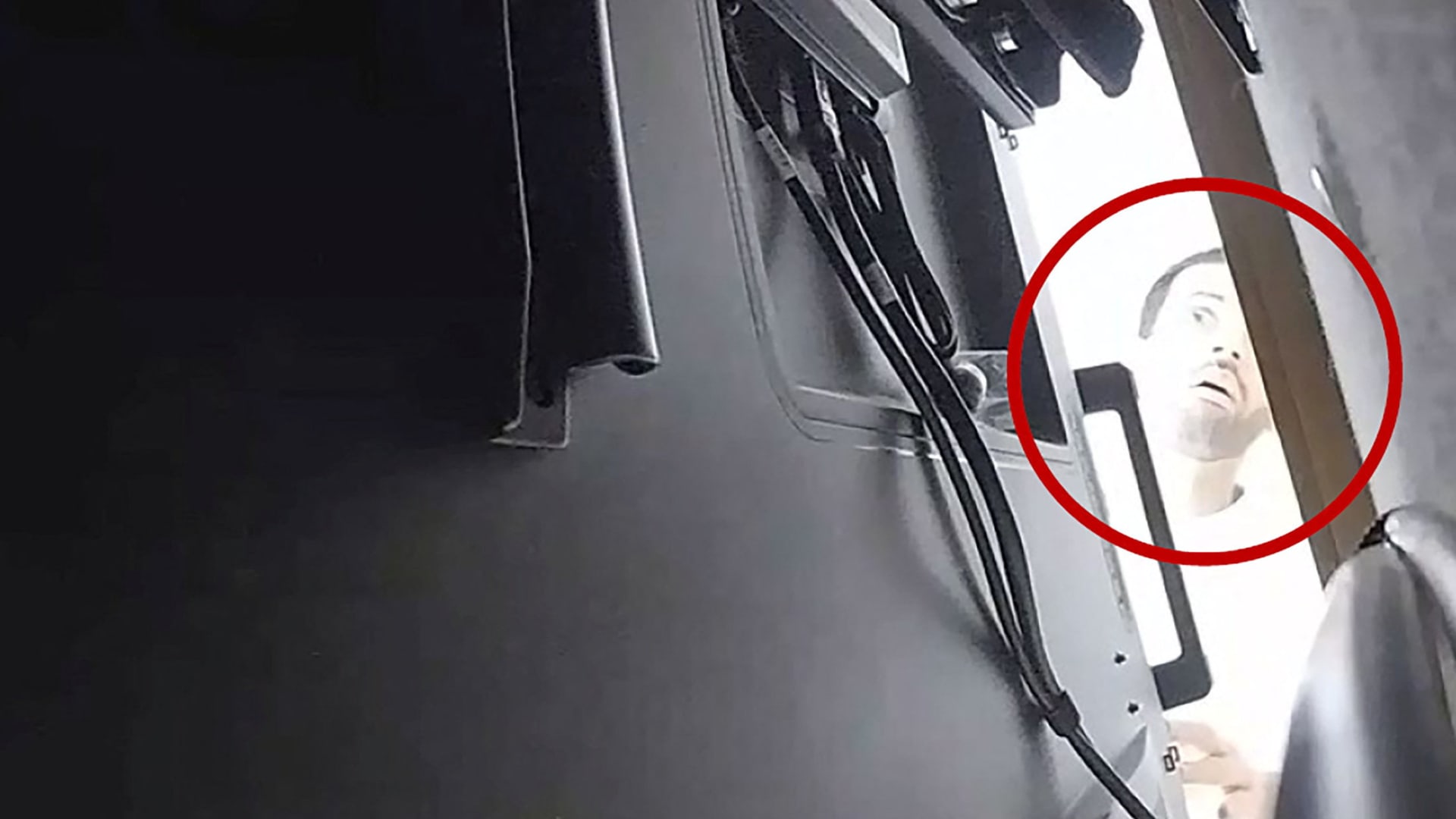
Photo of Abdulrahman Alfozan checking a recording device at the OpenAI office in San Francisco, California. Courtesy: US Department of Justice The Saudi national accused of placing a recording device in a sensitive OpenAI executive conference room in San Francisco was “in frequent communications via WhatsApp with a member of the Saudi Royal Family” throughout 2025 and 2026, prosecutors revealed in an explosive court filing on Sunday. The defendant, Abdulrahman Alfozan, communicated with Saudi royalty on Oct. 5, four days before he was arrested, the U.S. Attorney’s Office in San Francisco said in the filing, requesting that he be held without bail. Prosecutors did not identify the Saudi royal, nor did they say in the filing how Alfozan, who then worked as an engineer at OpenAI, knew that person. “Among other things, the individual [the royal family member] he told the accused [Alfozan] “In May 2026, the individual told the defendant: ‘Saudi Arabia needs you more than [sic] USA!’ to which the defendant responded ‘100,’ indicating that he agreed,” prosecutors wrote. “The individual repeatedly attempted to recruit the defendant and asked him when he planned to leave OpenAI,” prosecutors wrote. “At that time, the defendant said he would not leave until his shares were acquired.” Ventures, a Saudi venture capital firm, Prince Khalid bin Bader Al Saud, a member of the Saudi royal family, joined the firm as a venture partner in 2025. In his filing on Sunday, prosecutors did not mention that prince by name, nor did they say that the unnamed royal who contacted Alfozan had ties to Raed. The recording device placed in the OpenAI office Courtesy: US Department of Justice A member of the Saudi military later booked separate flights for Alfozan’s wife, Lujain Alassaf, and their three-month-old son to leave the United States after his arrest on October 9. disrupted the three’s plans to fly as a family to Saudi Arabia on Oct. 12. The wife and son flew from San Francisco to Doha, Qatar, on Oct. 10 on a business class flight paid for by the unnamed member of the Saudi military, the filing said. in prison since his arrest on charges of using or attempting to use an electronic, mechanical or other device to intercept oral communications. He faces a possible maximum sentence of five years in prison if OpenAI dismissed him after his arrest. arrest on October 13. Prosecutors said that in the days surrounding the time Alfozan allegedly installed the recording device on September 28 on the back of a television in the conference room, “OpenAI executives met with government officials in that same room. support from a foreign government that (i) does not have an extradition treaty with the United States; (ii) unlimited resources; and (iii) the ability to provide extraordinary travel assistance, even in similar circumstances in this District,” the document says. “He has the necessary connections not only to flee, but also to build a new life in Saudi Arabia. The court should order the defendant’s detention pending trial,” prosecutors wrote. Alfozan has spent about 15 years in the United States, working at several technology companies, including Meta, and earned a master’s degree from the University of California, Berkeley in 2025. He is a legal permanent resident of the United States and has applied to become a naturalized citizen. For his most recent job, as an OpenAI engineer, Alfozan was hired in July 2025 with an annual base salary of $325,000. Alfozan planned to take two months of parental leave after the birth of his son. “the defendant surreptitiously inserted an audio recording device into a USB port on the back of a television in an OpenAI executive conference room, where the device remained for at least several days,” the document says. The conference room is frequently used for “discussions of highly confidential technical, commercial, and strategic information, including proprietary research, as well as non-public information about OpenAI’s technical progress and strategic decisions, capabilities, priorities, government commitments, and business relationships,” according to the document. After his arrest, the iPhone was found to contain photographs dated September 22-28 that showed “at least one additional hidden device, as well as what appear to be input/output panels on televisions and other electronic devices in various locations throughout OpenAI’s buildings, including another conference room where sensitive meetings were frequently held.” “Defendant’s residence contained several electronic components similar to those of the custom devices defendant installed in OpenAI’s conference room,” the document says. OpenAI also found another recording device in a bag Alfozan was inadvertently left in a printer room on Oct. 5, the same day he was seen on camera checking behind the television where the first recording device had been left in the conference room, prosecutors said. The camera was installed after OpenAI discovered the recording device on September 30, prosecutors said. Read more CNBC Politics and Policy Coverage His cell phone also contained a deleted note from September 2026 “with links to several recording devices, including devices manufactured by Seeed Studio, the manufacturer of the OpenAI devices found in its offices and devices that FBI agents found at the defendant’s residence,” the document says. Another note, titled “OpenAI license,” suggests that Alfozan planned to early collect “the devices he had installed or intended to install and then extend his planned ‘parental permission’ to the maximum,” the document said. In addition to being in contact with a Saudi royal, Alfozan “was pursuing other opportunities in Saudi Arabia, including participation in the Misk Foundation’s ‘2030 Leaders’ program, which would have required his participation in person in Riyadh,” prosecutors said. A day before leaving the United States with their baby, Alfozan’s wife told FBI agents who interviewed her that “her U.S. visa was expiring and that she and her son would permanently return to Saudi Arabia, and that her husband, the defendant, eventually intended to do the same,” according to the document. “Alfozan learned that OpenAI had found the device based on his own documents and OpenAI’s public statements approximately eight to ten days before he was arrested,” Pernik wrote. “If his intention was to flee, he would have done so at that time.” The Consulate General confirmed in writing to the US Office of Pretrial Services on Thursday that it “‘will not issue any travel documents’ to Mr. Alfozan during his release and that if he requests one, ‘he agrees to immediately notify US Pretrial Services.'” The attorney argued that prosecutors have not shown that Alfozan is a serious flight risk. “Alfozan has lived in the United States for fifteen years and in the Bay Area for approximately ten,” Pernik wrote. “Fifty-four people, at least twenty-seven of them in the Bay Area, have written to the Court describing someone who hosts dinner parties, welcomes newcomers, advises students, and attends friends’ weddings, birthdays, and move-ins.” “That’s not the profile of a person with one foot out the door,” Pernik said.