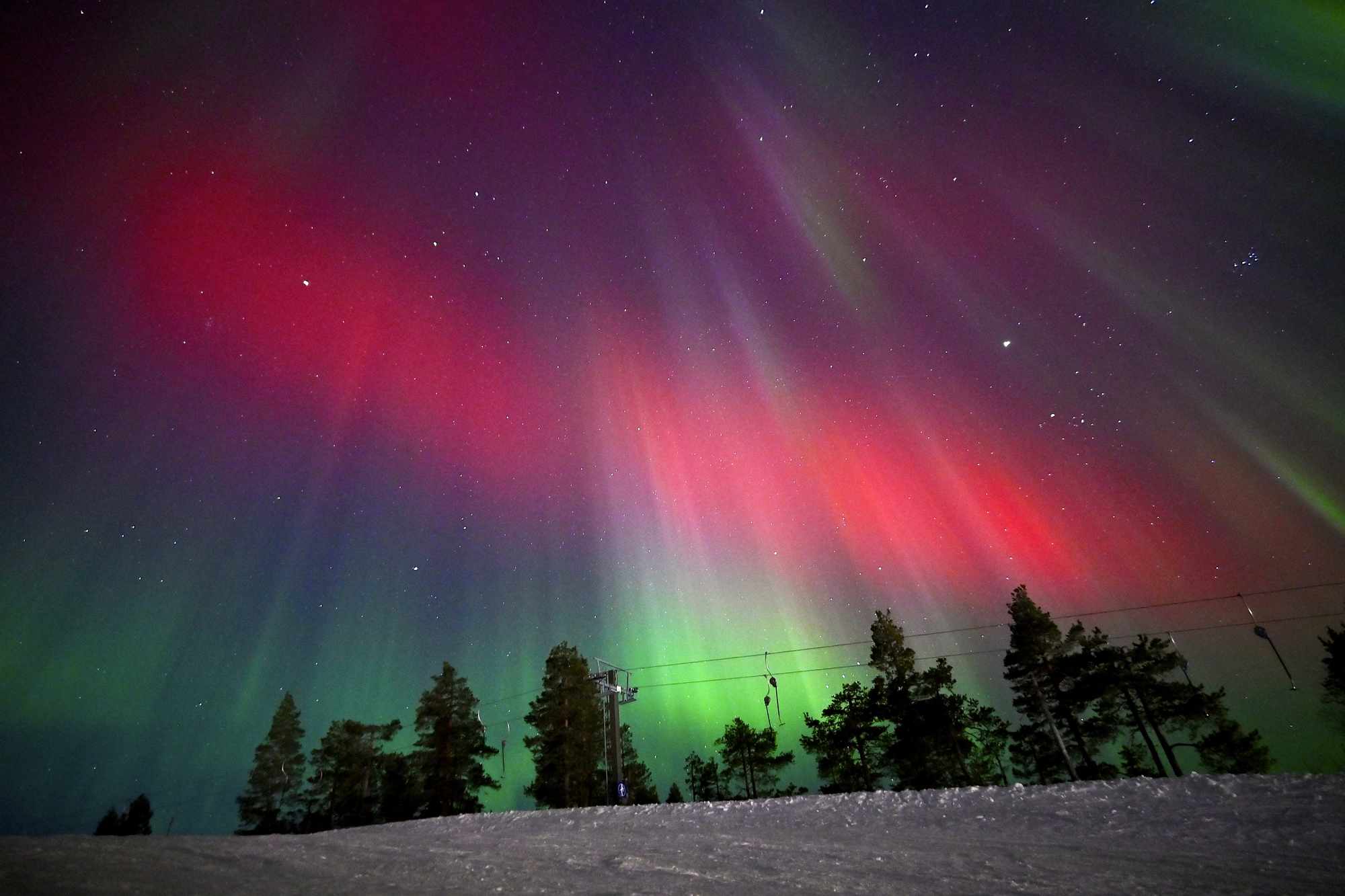
NEED TO KNOWAA predicts activity below storm level despite coronal mass ejections reaching Earth. Observers in Alaska, northern Canada, and some upper Midwest states have the best chances of seeing auroras. Smartphone night mode can capture faint displays better than the naked eye. Could the Northern Lights make a surprise cameo tonight? atmosphere, creating brilliant waves of light in the sky. Between Sunday, October 11 and Tuesday, October 13, a series of coronal mass ejections (CMEs) – huge clouds of charged particles and magnetic fields ejected from the Sun – headed toward Earth, and NOAA said their arrival could trigger geomagnetic storm conditions late this Thursday, October 16. According to the latest forecast, geomagnetic activity is expected to remain below storm levels, with the strongest three-hourly Kp predicted at just 2.67. This is a calm or unstable backdrop, not the G1 or G2 storm conditions that typically push the auroras further south. Still, the northern lights are notoriously fickle, so brief displays cannot be ruled out, especially under dark skies at high northern latitudes. NOAA’s three-day forecast also notes that as solar wind measurements arrive, conditions may change overnight. So if you’re hoping to catch a glimpse of the dazzling aurora, keep an eye on the real-time map and give your eyes time to adjust once you’re away from the city lights. In the meantime, read on for everything you need to know about this stellar event. When will the northern lights be visible? Northern Lights Credit: Dean Mouhtaropoulos/Getty Look up after dark and check conditions throughout the night. The NOAA forecast places activity below storm levels, with the highest Kp period expected between 11 pm and 2 am Eastern Time. However, despite the forecast window, it does not guarantee visible auroras. It doesn’t hurt to keep an eye out for the aurora either way. Where will the northern lights be visible? Northern Lights Credit: Lance King/Getty The best opportunity to glimpse the auroras is in the high northern latitudes, including Alaska and the far north of Canada, under clear, dark skies. “The aurora may become visible over some northern and upper Midwest states, from New York to Idaho.” NOAA said. How to see the northern lights? Aurora borealis. Credit: Gallo Images ROOTS Collection/Getty Get away from the city lights! Auroras are surprisingly faint to the naked eye at first, especially during weaker geomagnetic storms, so dark skies make a big difference. Patience matters too! After all, auroral activity can fluctuate rapidly, sometimes appearing as a faint glow before suddenly bursting into visible ribbons or waves of green light. Remember to also monitor conditions in real time using NOAA’s 30-minute aurora forecast and space weather apps that track solar wind and magnetic field changes. How to photograph the northern lights? Did you know that your smartphone camera could capture the aurora better than your eyes during weaker storms? If you’re using a smartphone, switch to night mode or long exposure mode and keep the camera as still as possible, ideally with a tripod or leaning it against something stable. You’ll want to keep your setup as stable as possible, as auroras are best captured with long exposures. All you have to do is head to your device’s settings and tap the “night mode” or “pro mode” option, which offers similar exposure times. Read the original article on People