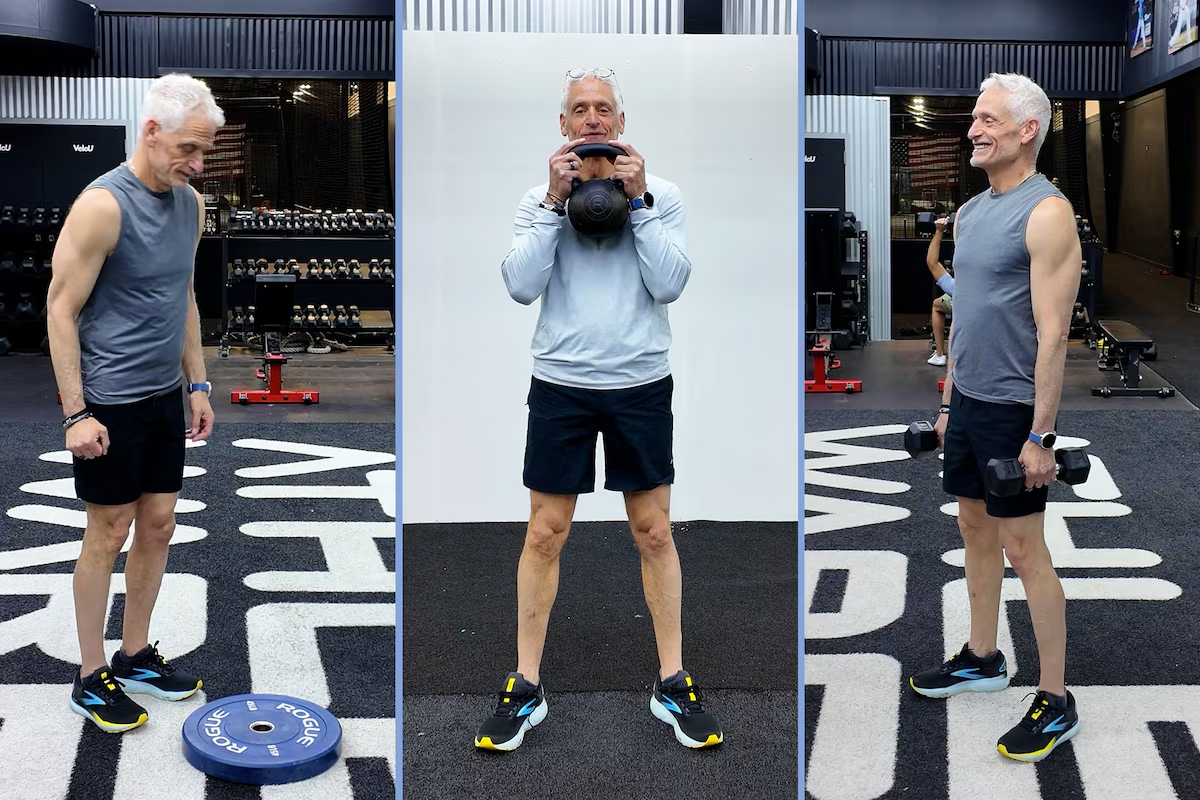
Well+Being FitnessThese simple moves can help protect and strengthen your knees. (The Washington Post)October 14, 2026 at 6:00 a.m. EDTJust nowAs an orthopedic surgeon, Howard Luks treats aching, aging knees. As a 63-year-old, he also possesses them. Over the decades, his knees have weathered meniscus tears, morning stiffness, thousands of miles of hiking, cycling and running and long days at the medical clinic or in surgery. But a few years ago, he began worrying about them. Still active and fit, a runner and frequent weight trainer, he was starting to see some of his older friends and patients shy away from activities they once loved out of fear they’d strain their knees. Their knee health actually worsened. “I didn’t want that,” he said. So he started reconsidering his workouts. In his 60s, he was still bench pressing and deadlifting as much weight as many 20-year-olds. He was strong. But he wasn’t agile. His balance felt wobbly. He decided to shore up his ability to move well. He started working with Brett Poniros, a performance coach in Upstate New York, and Poniros’ partners to develop a new resistance training routine that would protect and strengthen his knees by improving his body’s ability to move. “You want the knee to be going through a full range of motion,” Poniros said. “But you also want to develop speed and balance and make sure you can move in all directions under different loads. That’s good for knees and for long-term quality of life. If you can’t catch yourself when you trip, you’ll fall, maybe fracture a hip or wrist, and your life suddenly becomes very different.”Luks regularly performs these seven exercises at a gym. But they can be done at home, with minimal equipment. Check with your doctor before trying these moves if you’re concerned about your fitness. And if you’re new to weight training, start with a single repetition of each exercise, Poniros said. Experienced exercisers should repeat each move until their muscles feel tired but not exhausted. Adjust the difficulty up or down by adding or lowering repetitions, weight or speed. 1. Goblet squatThis move targets the quadriceps (thigh muscles), which “are so important” for knee health, Luks said, and might feel more comfortable than a standard squat. “Holding the weight in front of you helps keep your torso stiff and core engaged,” Poniros said. Use a kettlebell, like Luks, or a medicine ball, light dumbbell, filled gallon jug or even a heavy book, Poniros said. Stand with feet at least shoulder-width apart, pointing slightly out. Hold the weight with both hands, high up on the chest, close to your body.Lower as if sitting, spine upright, weight steady, until thighs parallel the ground.Return to starting position. Breathe normally and keep weight close to your chest throughout. 2. Jump squatThis squat variation adds fast, powerful movement up and down, since healthy knees and legs should be able “to create movement quickly and also absorb it quickly,” Poniros said. Luks holds light dumbbells in each hand, but you can start with no weight. For beginners, jumping an inch or two — or just barely leaving the ground — is fine.Stand with feet about shoulder-width apart, pointing slightly out. Lower as if sitting, until thighs are almost parallel to the ground.Press through your feet, push up and jump as high as you can. Land lightly, with knees slightly bent. Keep head steady, looking forward and spine straight, not rounded. 3. Step upThis is a simple move that builds balance and muscles throughout the leg, Poniros said. It requires a sturdy box, short step or stair. Have a wall or chair nearby to steady yourself. Increase the difficulty by stepping faster.Stand a few inches from the box, arms at your side.Step up with one leg, followed by the other, bringing arms to your chest. Step back down with your following leg first, arms back to your side. Try to keep eyes focused ahead, not looking at the step.After a few repetitions with one leg leading, switch to the other. 4. Twisting jump-upsBeing able to twist and rotate when needed helps prevent falls and protects knees by keeping us nimble, Luks said. It requires a box or thick cushion. To start, step off and turn after you touch the ground, to dial in the movement pattern, Poniros said. Start on the box or cushion, facing forward.Hop off, twisting in the air so you land sideways to how you started.Land lightly, knees bent, arms at your side. Jump up, pressing through your feet and twisting midair to face the cushion.Land lightly on the cushion, facing away from your starting position. Turn around and repeat.5. Quick feetThis move builds balance, coordination and the ability to shift your center of gravity quickly, Poniros said. Luks uses a weight plate, but you can use any thin object that will stay in place. Even a mark on a carpet can work.Start beside the weight or other object.Step on and off it as fast as you can.Land lightly. Let your arms hang loose. Keep eyes focused ahead, not on the weight. 6. Wall sitThis is another variation of the squat. It works the calf and gluteus muscles, along with the quads. Although it may look easier than a standard squat, during prolonged wall sits, “your quads will burn,” Poniros said. Start with back to a wall, feet several feet in front of you.Slide down into a sitting position, feet flat on the ground.Cross arms in front of you and hold the position as long as possible.Slide back up the wall. If your knees hurt, move your feet farther out from the wall.7. Split squat (rear foot elevated)“Exercises using one leg at a time increase strength, stability and balance,” Poniros said. If you can do 10 standard squats, you’re ready for this variation, he said. Have a wall or chair nearby for balance, if needed. Stand upright, then bend one leg and hook that foot behind you over a bench or other object at about knee height. Bend your other leg, lowering into a squat, with your thigh parallel to the ground, hands clasped before you. Hold the squat for a few beats, if you can. Return to starting position. Switch legs and repeat. This story is part of a week-long series about knees. Tomorrow: The scientific race to find a cure for arthritis.About this storyWorkout demonstrations by Howard Luks. Video by Ryan Weber. Video editing by Billy Tucker. Design and development by Junne Joaquin Alcantara. Additional design by Beth Broadwater. Story editing by Emily Codik and Theresa Tamkins. Design editing by Christine Ashack. Copy editing by Jeremy Lang. Filmed at Velo University in Pleasantville, New York.