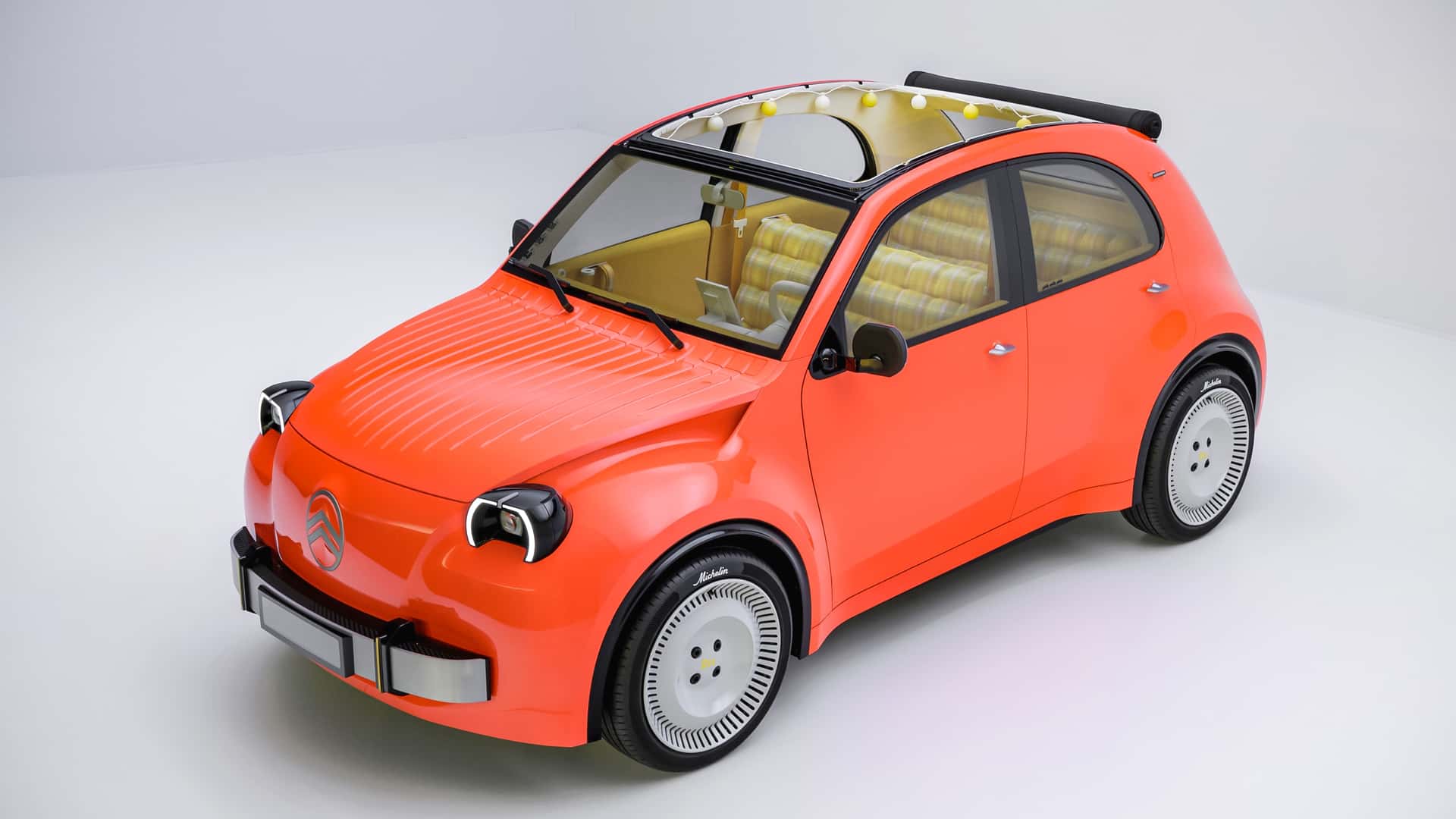
Citroën’s electric 2CV concept anticipates a European-made production car whose price will be around 15,000 euros by 2028. It is slightly shorter than the new Renault Twingo and aims to lower its price by approximately 4,500 euros. The retro styling meets the one-tonne weight target, but battery size, range and charging speeds remain undisclosed. Renault is proving that nostalgia sells electric cars. Their new 5 and Twingo are receiving good reviews and finding many buyers. Citroën has a gap in the form of a 2CV in its range and is finally addressing it. This is the Citroën 2CV Concept, set to debut at the 2026 Paris Motor Show. It recaptures the familiar shape of the little French icon, swaps combustion for electricity, and previews a production car due in 2028. Making an expensive car that reminds people of a cheap one is easy enough. But to stay true to the original 2CV, the reborn EV will be very affordable. Citroën wants to build it in Europe and sell it for about 15,000 euros. Photos by: Citroën Photos by: Citroën It would even undercut the new Renault Twingo E-Tech. That car was launched with a French starting price of 19,490 euros before incentives, which puts Citroën’s target approximately 4,500 euros less. The fine print of the 2CV’s price remains to be known, even if it includes subsidies (up to 5,700 euros in France), but the ambition is clear. They are also almost exactly the same size. The Citroën measures 3.76 meters (148 inches) long, making it just three centimeters (just over an inch) shorter than the Twingo. It’s also shorter than the original 2CV and would fit between the Ami and C3 in its range. Citroën aims for a weight of about 1,000 kilograms. Keeping the weight down means you can have a smaller battery, which will help make it affordable. That’s the idea, anyway. The battery capacity, range, charging speeds and power output of the future production model have not been announced. The styling is based on what people remember from the old 2CV: separate round headlights, pronounced fenders, a vertical windshield and that iconic curved roof. The hood in particular is inspired by the TPV, the project that anticipated the original car. On paper, that seems like the right approach. The 2CV was so unusual in shape that Citroën doesn’t need to pile on decorative references to make the connection. Maintaining those proportions while adjusting the lines should do most of the work. What surprised me were the 19-inch wheels on the concept. They’re steel wheels, which seems about right for a 2CV, but that’s still a lot of wheels for something that’s supposed to be simple and cheap, although they’ll probably be scaled down for production. The other exterior details include exposed windshield wipers, air intakes under the windshield, and slim turn signals integrated into the rear roof pillars. It has a contrasting black tailgate that extends to the bumper, along with very modern looking LED lights. Inside, Citroën has tried to make the small cabin appear open by eliminating almost the entire dashboard. A cylindrical assembly holds the steering wheel, controls and a “smart vision display” that projects information into the driver’s field of vision. There’s also an eight-inch square touchscreen with comic-inspired graphics, as well as physical controls. The wide seats use Citroën’s Advanced Comfort technology and the passenger seat extends so you can stretch out during a stop. You also get a folding fabric roof, removable storage baskets, a removable speaker, and fabric door pull straps. 62 Source: Citroën Citroën says the door pockets are even designed to hold eggs, a nod to the original car’s famous design. To bring this car to the market at this price, Citroën has the help of the European Union. The manufacturer says the production model will be designed to comply with future European electric car regulations. The European Commission has proposed an M1E category for electric cars up to 4.2 meters long, with the aim of freezing regulatory requirements for ten years. The idea is to give manufacturers a more predictable and less expensive route to building affordable electric vehicles. What I really like about this reborn 2CV is that it arrives at a time when car prices have skyrocketed. Like the original, the new electric vehicle will give people a way to get around when more expensive cars are out of reach. If Citroën can do that again, the familiar face will be an advantage. We want your opinion! What would you like to see on Insideevs.com? Take our 3-minute survey. – The InsideEVs team