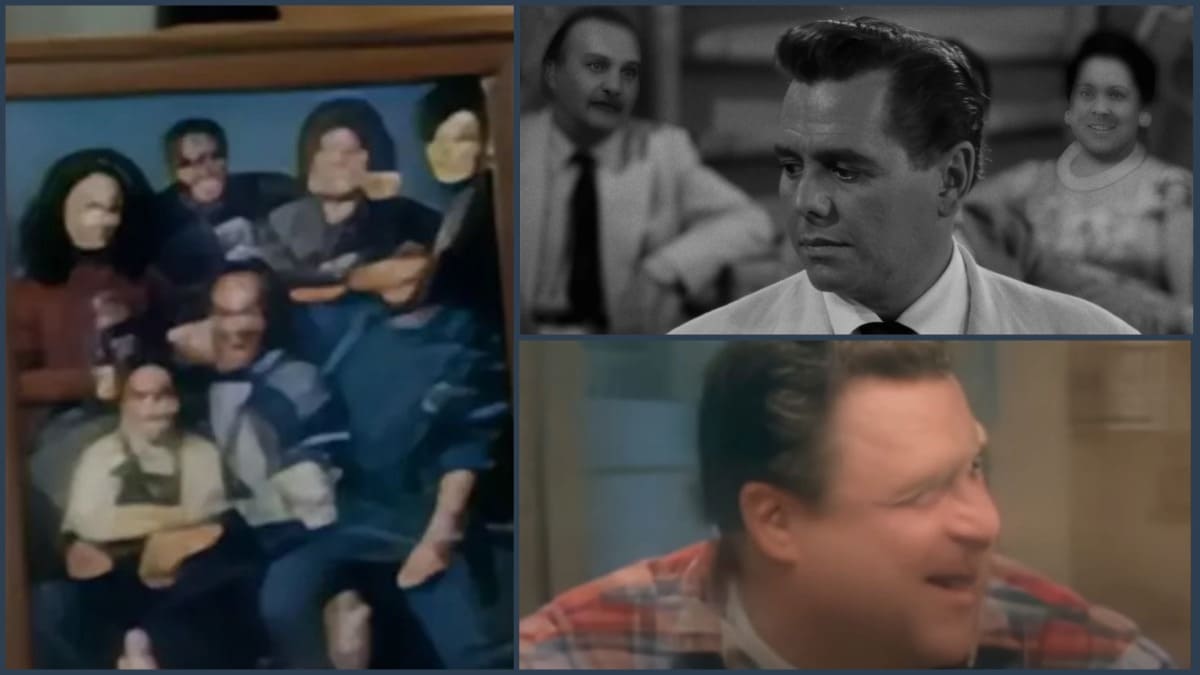
The problem with using the term “artificial intelligence” to cover everything from large language models to your TikTok algorithm to whatever OpenAI and Anthropic are panicking about raising funds for, is that there are actually a lot of cool tools that are technically AI too. Those tools don’t require water-intensive data centers or the world’s supply of RAM. They will not autonomously hack government agencies. They simply use machine learning to do things like discover new drugs, improve medical images, and most importantly, enhance old shows to make them crisp and beautiful for modern televisions. For almost a decade, a beautiful, wonderful group of people have been painstakingly improving Star Trek: Deep Space Nine, since it’s too expensive for Skydance (as the new Paramount-Warner Bros. entity is called) to do it the right way. These fans use artificial intelligence tools to carefully create a higher resolution version of the program from old scans of laser discs and DVDs. They are meticulous in their work; They have to be like any other craftsman. If you use the wrong setting on your drill, you will drive the screw directly through the board. Use the wrong settings on an AI-powered upscaling tool like Topaz and you’ll end up with waxy-looking people, strange digital artifacts, and a general feeling that you’re creating something resembling the original theatrical release of Cats. Unfortunately, much of Hollywood is distracted by the gloss of the term AI and seems to forget that AI enhancement is a tool that can be misused like any other. Take James Cameron for example. He is one of the most technologically savvy living directors. Naturally, he adopted AI tools to improve his older films, but the results have been inconsistent and, at times, downright crude. His 1989 film, The Abyss, was subject to AI denoising so aggressive that it gave the grainy Cold War sci-fi classic a more modern digital feel. Cameron claims that he personally worked on that project, which would mean that he actually chose to make everyone look as plastic as Mary Elizabeth Mastrantonio in the CPR scene. Maybe he exaggerated his role in the 4K upscaling project, or maybe he stuck with George Lucas, so absorbed in his own myth and an exciting new technology that he forgot what “good” really looks like. Lucas and his excessive tinkering with the original Star Wars trilogy had nothing to do with AI, but he remains the best example of all time of shiny new tools being abused due to enthusiasm. You could argue that Danny Boyle has been another victim of shiny technology. 28 days later it was shot on 480p miniDV instead of film. Using such small cameras allowed him to take incredible shots, such as in a completely empty London, but the cameras collected and retained much less information than film. You can’t make out all the details of each scene because that information can’t be captured with a small miniDV camera. As studios and distributors upgrade their movie libraries to 1080p and then 2160p Blu-Ray, 28 Days Later has languished. It will never look as good as a film shot on film or modern digital and that is directly due to Danny Boyle’s decision to use small cameras. But 28 Days Later was just released in 4K this year, which Boyle personally approved. It could have been Lucas in the past, but it wasn’t this time. “The good news is that it looks like shit,” states one review on the 4K Blu-Ray subreddit. The critic was not joking, he was only expressing relief, because 28 days later he did not include Lucas in the expansion process. There is no AI improvement. No sharpening. Simply a fantastic horror film that looks as good as it can, given the technical limitations. Sony produced the upgraded version and it’s a masterclass in restraint and craftsmanship. It’s also a rarity in Hollywood, where upscaling is usually done by two types of people. One is like Sony or Star Trek nerds: handling artificial intelligence tools as meticulously as an artist. This type is extremely rare. The other guy has a job to do as quickly and cheaply as possible. Quality and the final product take a backseat to meeting quotas. He’s the one who seems to be doing most of the improvement work in Hollywood right now. There are thousands of TV shows and movies that need to be improved, which translates into executive chatter into millions of hours of content that needs to be monetized. Most of that improvement isn’t for the boutique Blu-Ray market, where people can spend $80 for a quality movie transfer. It’s happening in streaming services that need more offers to increase subscribers. My favorite subset (in a bad way) of this form of improvement is what’s happening with old TV shows. Like 28 Days Later, there are limitations to what scaling can achieve. Many television shows were only preserved on tape, which degrades over time and wasn’t exactly pristine to begin with. That led to a lot of bad improvements, like the ghostly faces that cropped up on an episode of The Lucy-Desi Comedy Hour. In 2024, Paramount received rave reviews for releasing a massive box set for I Love Lucy fans that included enhanced content from original 35mm negatives, 16mm reels, and tapes. The AI quickly screwed that up, creating sharp, eerie-looking new people from blurry background actors. A different world was also hit. And Roseanne. They’re all old shows, syndication favorites that have been reliable moneymakers for broadcast television for decades. They could have been remastered like 28 Days Later or carefully enhanced like Deep Space Nine. Instead, they were mass produced. The problem wasn’t the AI, it was the studios and distributors who looked at it before release and said, “Yeah, it looks pretty good.” Like Cameron, they could have simply been Lucas’s. Hollywood right now has this almost obsessive need to imitate the tech business world, including its absurd passion for AI. It is a natural response to the invasion of big technologies. They cannot defeat them, so they are acquired by them or become them. However, what has always differentiated Hollywood from Silicon Valley is the ostensible care for the craft. Hollywood has made money and been the center of power in the media for decades, but it has also made art using all the tools at its disposal. But tools cannot compensate for apathy or mediocrity. That’s the core of the struggle in Hollywood right now. Not the big tech companies and their big tech tools, but Hollywood’s own need to do things as quickly and cheaply as possible. It’s not just John Goodman, Lucille Ball or Cree Summer turning AI into wax puddy when you watch their old streaming-enhanced comedies. The tools are already being used elsewhere: for title cards for Disney+ and HBO Max shows and by set designers for background art in Emmy-winning franchises. Hell, most of the rejuvenation feature films of the last decade have used AI in some way. The tools are powerful. It’s the people who can be the problem.