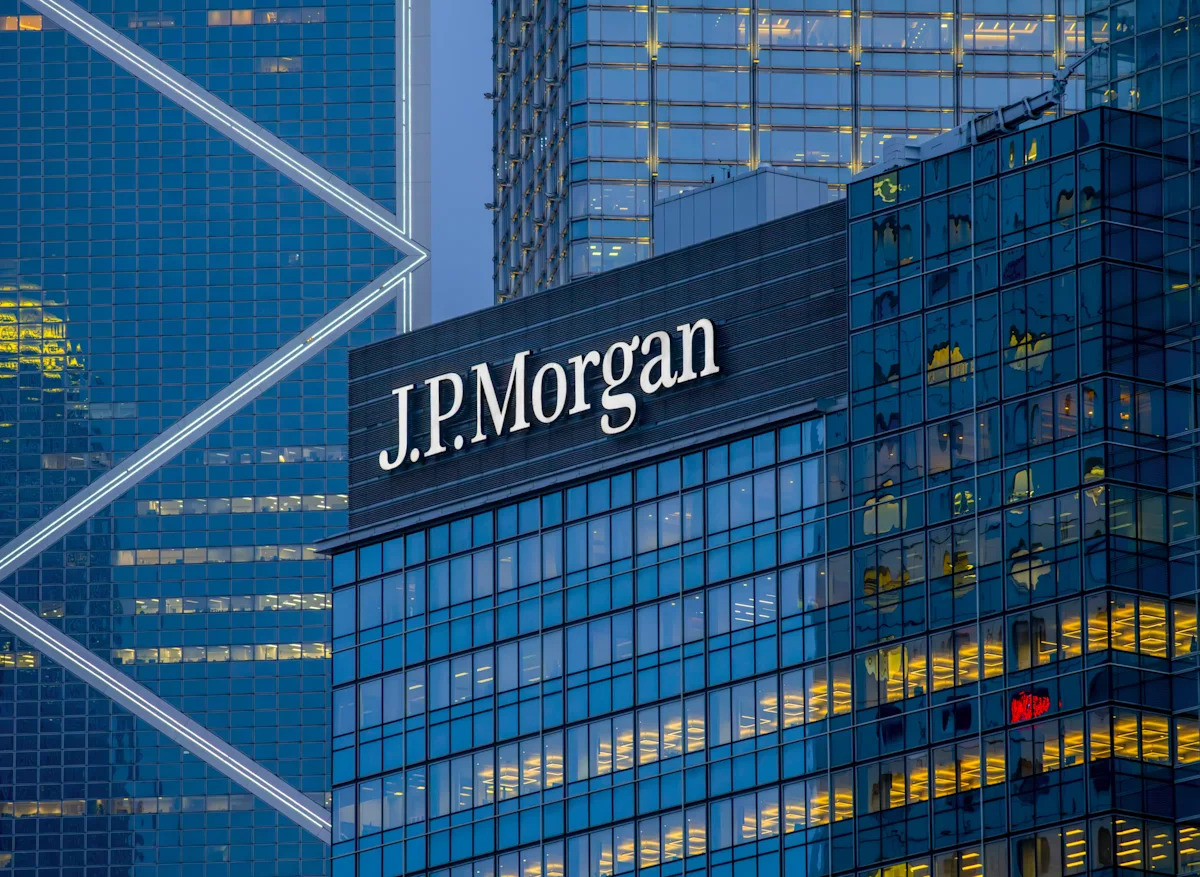
Fasten your seatbelts and keep all hands and feet inside the vehicle, because earnings season is back. Starting Tuesday, third quarter earnings will get off to a proper start, led by the major Bulge group banks throughout the week before the playing field opens up to other sectors as we head into October. Kicking off earnings week, investors will receive results from JPMorgan (JPM), Goldman Sachs (GS), Wells Fargo (WFC) and Citi (C) on Wall Street on Tuesday, while UnitedHealth (UNH) and Johnson & Johnson (JNJ) will offer insight into the state of the healthcare sector. Rounding out the big banks on Wednesday will be Bank of America (BAC) and Morgan Stanley (MS), along with alternative asset giant BlackRock (BLK) and Dutch AI manufacturing giant ASML (ASML). In another AI trade check, Taiwan Semiconductor (TSM) will report on Thursday. It’s also a big week on the economic data front, where Wednesday’s consumer inflation data will be a major factor in the Federal Reserve’s rate decision at the upcoming October FOMC meeting. Investors will also get a handle on wholesale inflation with the Producer Price Index report on Thursday, along with readings on industrial production and manufacturing activity on Friday. The market wants to hear what the big banks think about rising yields. When Wall Street’s biggest banks begin reporting earnings this week, they will be coming off one of their best periods in the last 10 years. Or at least they would have been if a combination of factors hadn’t caused yields to soar to multi-decade highs. When JPMorgan Chase (JPM), Goldman Sachs (GS) and Citigroup (C) begin, followed by Bank of America (BAC) and Morgan Stanley (MS) on Wednesday, all eyes will be on how the money titans talk about the impact of higher interest rates. After recent boom quarters of big unexpected profits for banks, profits are expected to decline quarterly, along with transaction revenue and M&A activity, according to analyst estimates, although overall they should still turn a profit for the year. Over the past month, financial services (XLF) was the second-worst performing sector in the S&P 500, losing about 4%, good for second only to utilities (XLU) in worst performance. As of Friday’s market close, the top five banks had lost approximately $350 billion in market capitalization as the financial sector suffered. Looking ahead, only 35% of institutional investors expect bank stocks to outperform the broader market, down from 68% in July and 82% in December, according to research from Truist Securities. Take Goldman Sachs, for example. Activity in fixed income, currencies and commodities trading at the bank “has been a little bit weaker” relative to the same period last year, CEO David Solomon said at a conference hosted by Barclays in late September. Morgan Stanley co-chairman Daniel Simkowitz summed it up aptly at the event, giving investors a preview of what to expect this week: “I think it’s safe to say that Q3 is not a Q2.” JPMorgan Chase Chairman and CEO Jamie Dimon speaks during the Reagan National Defense Forum at the Ronald Reagan Presidential Library in Simi Valley, California, December 6, 2025. (Reuters/Jonathan Alcorn) · REUTERS/REUTERS Wednesday’s inflation reading may decide the Fed’s next move. If there was a word to define 2026 for the U.S. economy, other than “AI,” it might simply be “inflation.” Largely since the war in Iran began in late February, rising prices for gasoline, food, computer parts, semiconductors and a host of other goods have been in the focus of American consumers as the country endures five years of above-target inflation. In September, those price increases pushed the FOMC to issue its first quarter-point rate increase in three years, bringing the target rate to a range of 3.75% to 4%, as Federal Reserve Chairman Kevin Warsh said: “The plain fact is that inflation is too high and has been for too long.” With no price relief in sight and US Treasury yields at more than 20-year highs despite rising rates, investors’ attention quickly turned to October, and rightly so. The September Summary of Economic Projections (the so-called dot plot) showed that a majority of FOMC voting members saw the need for at least a more than quarter-point increase this year, with four members calling for increases of 50 basis points more. The September Consumer Price Index report, due out on Wednesday, will be a deciding factor in whether to implement 25 basis points more monetary policy tightening in October or wait until December. “While still above the pace consistent with the Fed’s 2% target, the figure may not be strong enough to materially change market expectations toward a rate hike in October following recent dovish comments from Fed officials,” Bank of America economist Stephen Juneau wrote to clients on Thursday. In this regard, recent comments from FedSpeak members, including New York Fed President John Williams, have suggested that some prominent officials see room to wait and see in October, without the need to rush into another hike. That said, traders are pricing in a roughly 80% chance that the Federal Reserve will raise rates in October. New York Federal Reserve Chairman John C. Williams speaks at the Economic Club of New York on September 4, 2025. (Reuters/Kylie Cooper/File Photo) · Reuters / REUTERS The telecom wars are back, thanks to Elon Musk If you’re wondering what major industry Elon Musk planned to disrupt next, look no further than the telecommunications sector. Share prices of major cellular carriers fell at the end of the week after SpaceX (SPCX) announced it had reached a deal to acquire a portfolio of nationwide low-band spectrum licenses. Verizon (VZ) stock fell 5% on Friday, while AT&T (T) stock fell nearly 7% and T-Mobile (TMUS) stock fell more than 6%, as the announcement stoked concerns that Starlink would disrupt the wireless telecommunications space. Starlink has established itself as the leading player in satellite communications technology, but the consumer telecommunications space (i.e. cellular coverage network) is a new venture. SpaceX purchased a spectrum portfolio of up to 14 megahertz of paired spectrum in the 800 MHz band from Grain Management, an investment firm. During the company’s earnings call in August, SpaceX Chief Operating Officer Gwynne Shotwell said Starlink planned to build a terrestrial wireless network and go after Verizon, AT&T and T-Mobile customers. He said SpaceX also plans to launch its second generation of Starlink Mobile satellites in 2027. “I anticipate we will be able to acquire quite a few of their [AT&T, Verizon, and T-Mobile’s] “Customers because I think our service will be better,” Shotwell said on the earnings call. SpaceX Starship and Super Heavy v3 Booster lifted off on their 14th test flight from the SpaceX launch complex in Starbase, Texas, on September 28, 2026. The mission deployed 26 Starlink V3 satellites. (Reuters/Steve Nesius/File Photo) · Reuters / REUTERS Economic and earnings calendar Monday Economic data: No economic data due to the holiday. Calendar: No notable gains Tuesday Economic Data: NFIB Small Business Optimism, September (98 expected, 98.7 before); ADP weekly employment change, week ended September 26 (+23,750 before); (WFC), Citigroup (C), Domino’s Pizza (DPZ), Albertson’s (ACI) Wednesday Economic Data: MBA Mortgage Applications, week ended October 9 (-4.2% before); CPI, month-over-month, September (+0.6% expected, +0.4% before, September (+0.2% expected, +0.3% before); +3.4% before); Core CPI, year-on-year, September (+2.5% expected, +2.4% before); real average weekly earnings, year-on-year, September (+0.4% before); real average hourly earnings, YoY, September (-0.3% before; Beige Book Earnings Calendar: ASML (ASML), Bank of America (BAC), Morgan Stanley (MS), BlackRock (BLK), The Progressive Corporation (PGR); Fastenal Company (FAST), State Street Corporation (STT) Thursday’s economic data: Retail sales advance, month-over-month, September (+0.3% expected, +1.1% before); retail sales excluding automobiles, month-over-month, September (+0.5% expected, +1.3% before); (197,000 before); +4.6% before) Commercial Inventories, August (+0.4% expected, +0.8% before) Earnings Schedule: Taiwan Semiconductor Manufacturing Company (TSM), Charles Schwab (SCHW), Prologis (PLD), BNY Mellon (BNY), US Bancorp (USB), PNC Financial Services Group (PNC), Marsh & McLennan (MRSH), Interactive Brokers (IBKR), JB Hunt Transportation Services (JBHT), Alcoa (AA) Friday Economic Data: New York Fed Services Business Activity, October (-8.7 before); an in-depth analysis of the latest stock market news and events influencing stock prices Read the latest financial and business news from Yahoo Finance