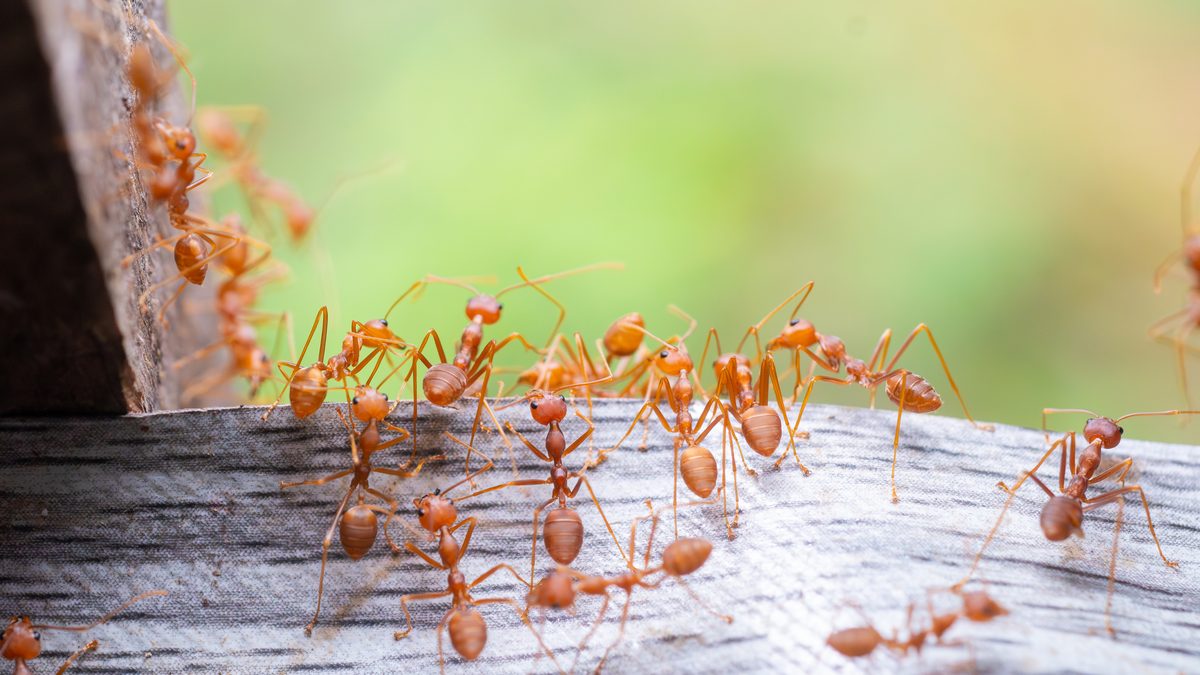
Ants are the most species-rich family of social insects, with more than 15,000 species worldwide. They originated between 140 and 168 million years ago, but did not achieve ecological dominance until 66 million years ago, when an asteroid ended the age of the dinosaurs. Scientists now know exactly what allowed the ants to succeed after this mass extinction. The research was carried out by an international team of scientists led by Lukas Schrader from the Institute for Evolution and Biodiversity at the University of Munster, Germany. The findings are published in the journal Science Advances. By analyzing and comparing the genomes of 163 ant species from 12 of the 16 ant subfamilies alive today, the researchers were able to reconstruct the evolutionary history of these animals over the past 100 million years. The analysis revealed that the ants benefited from so-called transposable elements in their DNA, often called “jumping genes.” These are DNA sequences that can move and replicate within a genome. For a long time, science considered them “genomic parasites”: like viruses, they were thought to multiply in the genome without benefiting the host and, in the worst cases, cause disease. Today, “jumping genes” are increasingly recognized as drivers of evolutionary innovation. According to the new study, the ant lineages that carry the greatest number of transposable elements in their genomes are also the most species-rich today. The researchers were able to identify independent bursts of transposable element activity in the ancestors of the largest ant groups in the early Paleogene (about 66 million years ago), shortly before these lineages diversified into the thousands of species we know today. “The asteroid impact had dramatic consequences for the environment. We have now found the genomic mechanism that connects these ecological disorders with the subsequent rapid diversification of ants: transposable elements,” says Schrader. Similar patterns have been identified in other groups of animals, with studies showing bursts of jumping genetic activity during phases of increased speciation, for example in bats. The new study also linked jumping genes to the expansion of gene families involved in chemical communication, which is essential for the social life of ants: They navigate, recognize nestmates, and coordinate colonies almost exclusively by smell. Scientists believe that this ability to recognize and interpret chemical signals may have been enhanced by the activity of their genomes. Read the full findings here. Cover image: a group of red ants. Credit: Nuoriginal2017/Getty Images