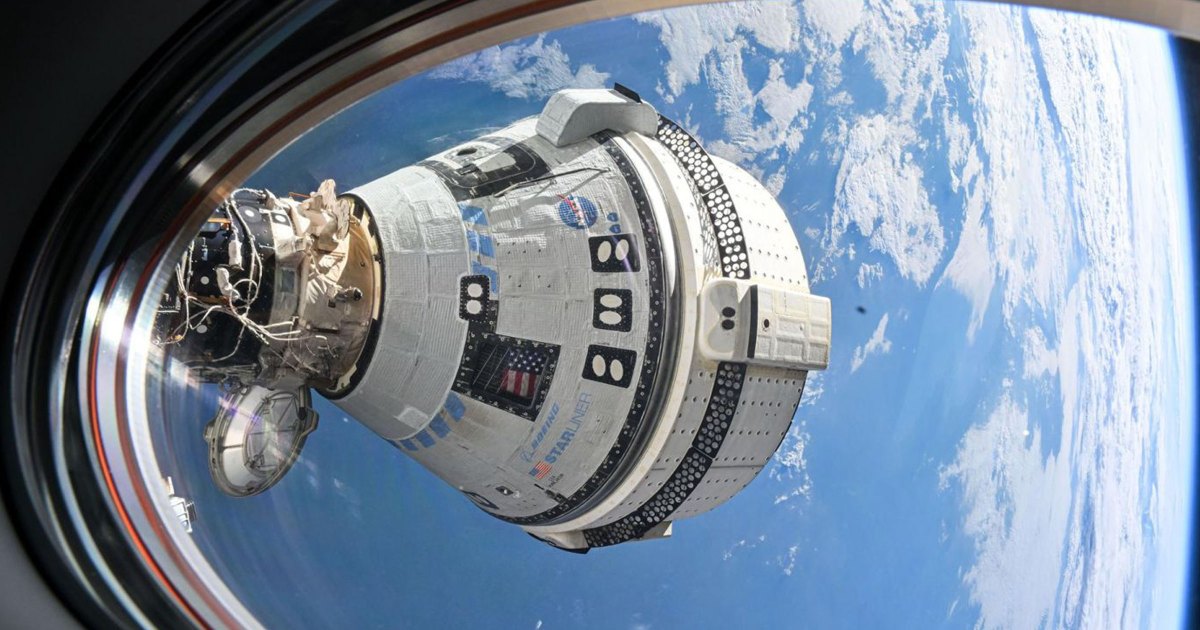
Sign up to see the future, today Must-see innovations from the cutting edge of science and technology By all indications, Boeing’s Starliner spacecraft has been nothing short of a disaster. It has cost NASA a staggering amount of money, and even after more than a decade of development, the capsule has yet to complete a crewed mission to the International Space Station. It’s been a humiliating saga, including a failed uncrewed launch attempt that went haywire thanks to a computer glitch, an aborted mission that stranded two NASA astronauts aboard the station for nine months, and a litany of technical headaches along the way. But with SpaceX threatening to retire its Crew Dragon spacecraft, NASA could soon be forced to make the affected spacecraft work whether it likes it or not, while questioning its entire access to space. “I don’t think it’s a secret that SpaceX intends to shelve older platforms like Falcon and Dragon as they focus on their next-generation capability, Starship,” NASA Administrator Jared Isaacman told reporters on Monday. The agency said it was weighing the option of purchasing two additional launches on Boeing’s Starliner. Without SpaceX’s Crew Dragon spacecraft, which has regularly carried crews to the ISS for six years, NASA’s options could soon run out. Starliner, which has cost Boeing billions of dollars, came eerily close to being scrapped entirely in 2024, but with SpaceX threatening to abandon its existing launch pads in favor of its massive and still untested Starship, the space agency apparently saw the writing on the wall. NASA also now has to foot the bill. The agency announced this week that it will commit $359 million to bail out Boeing and help it rebuild the thrusters of its reaction control system, arguably the biggest source of the spacecraft’s problems during its last ill-fated mission. The space agency will also need to certify United Launch Alliance’s Vulcan rocket for crewed missions before the retirement of the Atlas V. The goal is to launch Starliner no earlier than December of this year. NASA also already has three pre-existing contracts for crewed missions with Boeing, according to Ars Technica. “We are starting an uncrewed Starliner-1 mission to the International Space Station to validate improvements made to the spacecraft and collect the flight data we need,” Isaacman said in a statement. “From there, we will use what we learn, continue to implement corrective actions identified by our Program Research Team, and complete the testing and certification required for crewed flight.” “Our current plan is to return astronauts to Starliner-2 by 2028,” he added. It’s an awkward time of transition for the agency. The ISS will be retired at the end of this decade, leaving a clear gap in access to our planet’s orbit. It is still unclear what will eventually replace the old orbital outpost, with multiple private companies vying for lucrative government contracts to launch their own habitats. If it were up to NASA, Boeing’s Starliner would probably be part of that vision, but given what we’ve seen so far, it’s far from guaranteed. More about Starliner: Boeing’s Starliner is such a disaster we don’t even have words