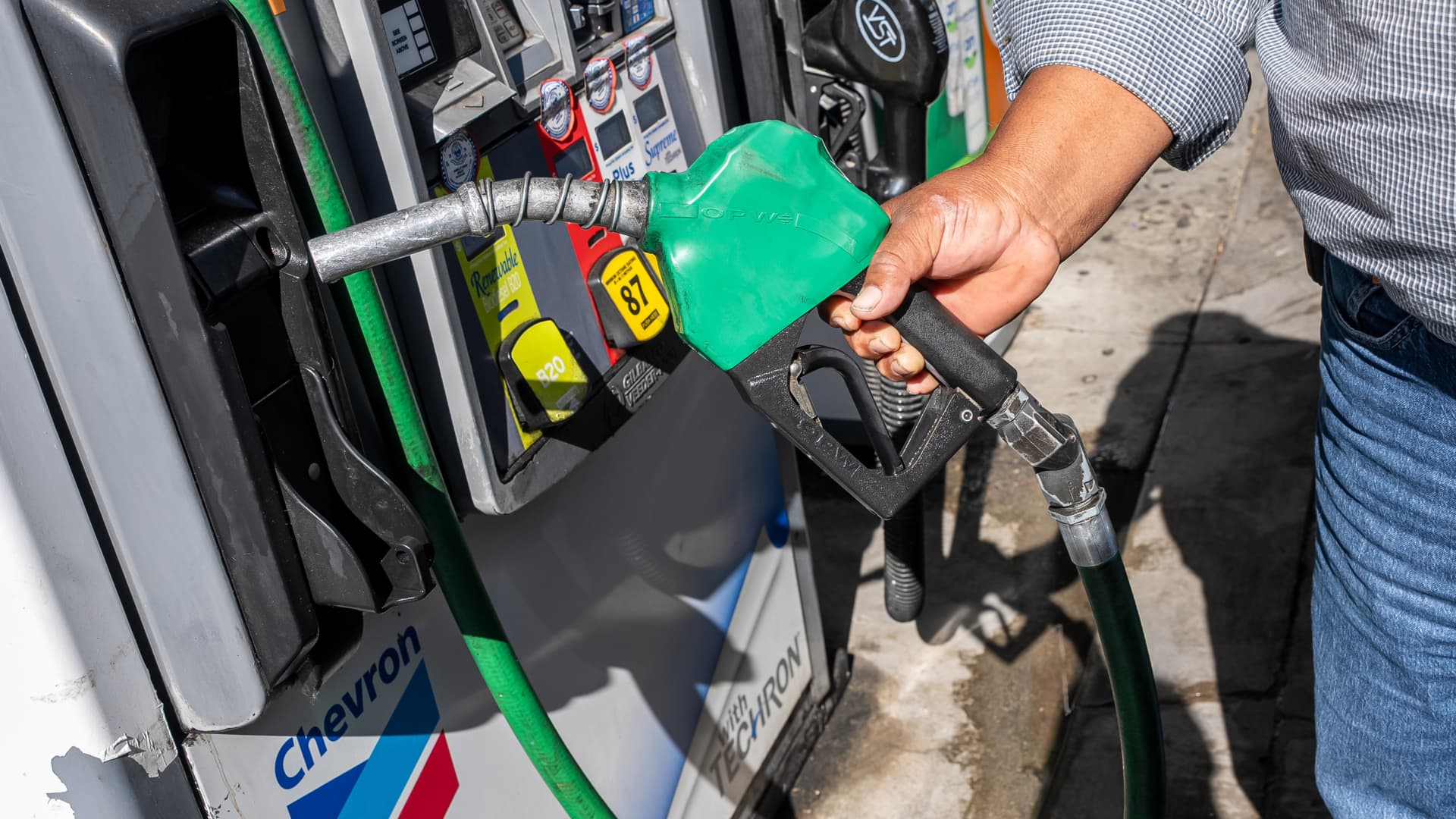
Group of Seven nations agreed on Friday to release 100 million barrels of reserves to address rising diesel fuel prices, after the Trump administration pressured Europe to deploy its reserves. G7 leaders said the rollout will begin immediately and continue for four months with “a substantial early release of diesel within the first 20 days” coordinated through the International Energy Agency. “We will meet in the context of the IEA in the coming days to discuss the possibility of additional diesel emissions as necessary,” the G7 leaders said in a joint statement. Diesel prices in the United States reached record levels in September and remain elevated on Friday at $6.37 per gallon on average. The members of the G7 are France, Canada, Germany, Italy, Japan, the United Kingdom and the United States. France currently holds the presidency of the group. The European Union also participates in its meetings. President Donald Trump said moments before the G7 announcement that Europe had “agreed to release a massive amount of its heavily stored diesel.” The world is facing a fuel supply crisis due to Ukraine’s attacks on Russian refineries and disruptions in the Middle East due to the Iran war. The Trump administration has been pressuring Europe to release its diesel stocks as an alternative to the United States imposing an export ban. Treasury Secretary Scott Bessent said Thursday that the United States’ partners in Europe “should accelerate compliance with their existing commitments and make additional supplies available immediately to address ongoing disruptions.” G7 leaders agreed on Friday to “refrain from imposing restrictions on the export of energy and energy products” among the group’s members, according to their joint statement. They also called on “all producers to refrain from imposing bans that could exacerbate market tensions.” Trump faces growing political pressure from Republican lawmakers to address rising fuel prices before the midterm elections in November. The president said last week that he was considering an export ban, a move that is strongly opposed by the oil industry and the broader business community in the United States. Trump later appeared to lean against an export ban because of its potential impact on gasoline prices. EU exposure to US The prospect of the world’s largest diesel exporter implementing a total ban has sparked alarm across the Atlantic. The United States supplied about half of the EU’s diesel imports in August, according to the International Energy Agency, underscoring the 27-nation bloc’s exposure to a possible US export ban. EU trade chief Maros Sefcovic said he had discussed diesel supplies and price increases with his counterpart, US trade representative Jamieson Greer. “We have every interest in working together to lower prices, whether for diesel or also for other oil and gas supply products,” Sefcovic told reporters in Milwaukee at the G20 trade ministers’ meeting, according to Reuters. He added that any US move to restrict diesel exports would be unexpected and would have a negative impact on Europe’s economic prospects. IEA Emergency Statement IEA members agreed in March to make available 400 million barrels of crude oil and refined products to address supply disruption caused by the Iran war. Europe pledged around 107 million barrels, made up of 68% fuel and 32% crude oil. Asia and Oceania made 108 million barrels available, composed of 40% fuel and 60% crude oil. The United States promised 172 million barrels, all of them crude oil. Another 23 million barrels came from the Americas. U.S. Energy Secretary Chris Wright said Tuesday that “the United States and Japan are fulfilling their commitments,” but “several European member countries have released only a fraction of the crude oil and petroleum products they promised.” Wright’s comment came after the Department of Energy announced the release of up to 40 million barrels of crude oil.