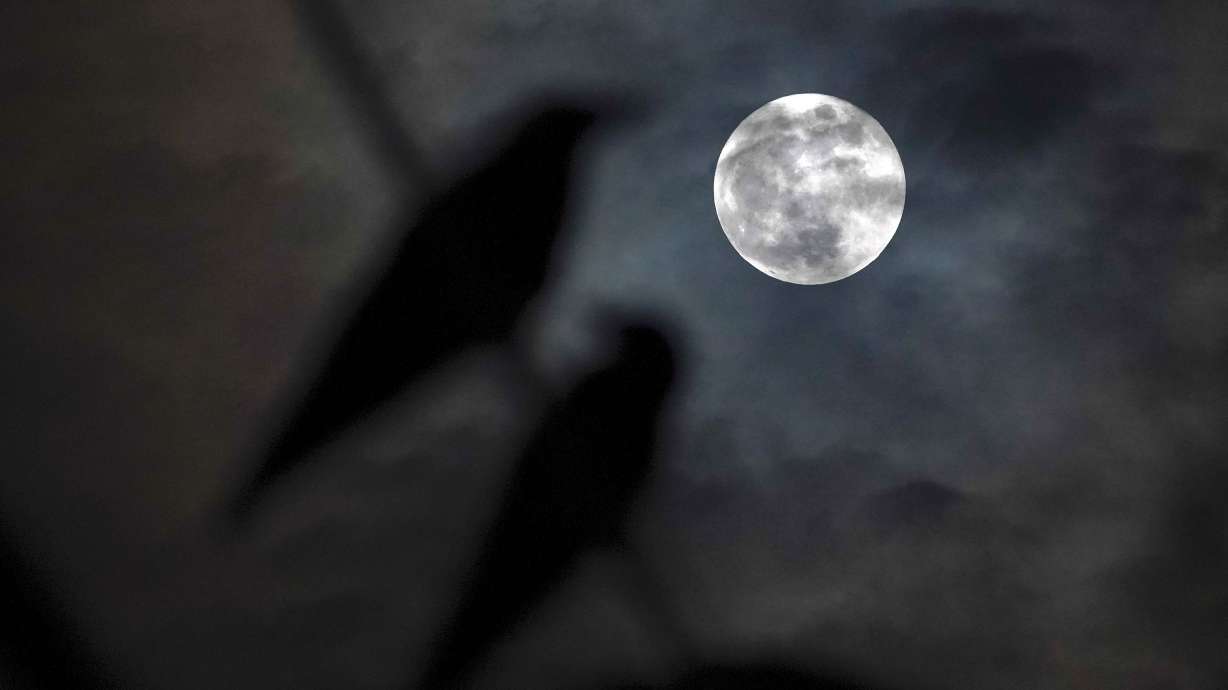
NEW YORK – Get ready for a double heavenly gift. The first full moon of the fall season will reach its maximum illumination in the night sky this weekend, and skywatchers will also have the opportunity to spot Saturn. The moon will be at its brightest at 10:49 a.m. MDT on Saturday, but the best time to see the silver orb will be just after sunset later that day, according to EarthSky. The ringed planet will appear golden and near the full moon between Friday and Monday. Saturn will reach opposition, or when positioned in front of the Sun from Earth, on October 4. Opposition marks the best time to view Saturn, as it will be closest to Earth in orbit, making the planet appear larger and brighter in the sky, according to EarthSky. Neptune will also appear close to the Moon, but the faint gas giant is much harder to see without binoculars or a telescope and clear, dark skies, according to NASA. If clouds prevent optimal viewing, the moon will also appear nearly full on Friday and Sunday nights. The Story Behind the Harvest Moon September’s full moon is traditionally known as the Corn Moon and marks the time when farmers typically harvest the crop, according to The Old Farmer’s Almanac. Indigenous groups such as the Abenaki people of the northeastern United States refer to it as the Corn-Making Moon, while the Assiniboine know it as the Yellow Leaf Moon. But this year’s September lunar event is more popularly called the Harvest Moon because it lands so close to the fall equinox, the official start of fall in the Northern Hemisphere, which occurred on Tuesday. The full autumn moon earned its well-known nickname because farmers used its brightness to continue harvesting crops after sunset, according to The Old Farmer’s Almanac. But many indigenous tribes also use the name when referring to the full moon in September. The harvest moon is often associated with an orange glow, adding to its autumn appeal. But any full moon will take on a similar amber-tinged hue if people see it near the horizon. This is because viewers are looking through a thicker part of Earth’s atmosphere, according to EarthSky. Upcoming Full Moons There are three more full moons to anticipate in 2026. Keep an eye out for the supermoons of November and December, or when the full moon appears larger and brighter than usual, as it will be closer to Earth in its orbit. Here is the list of the remaining full moons, according to the Farmers’ Almanac. 26: Hunter MoonNov. 24: Beaver MoonDec. 23: Cold Moon The key findings of this article were generated with the help of large language models and reviewed by our editorial team. The article itself is written solely by humans.