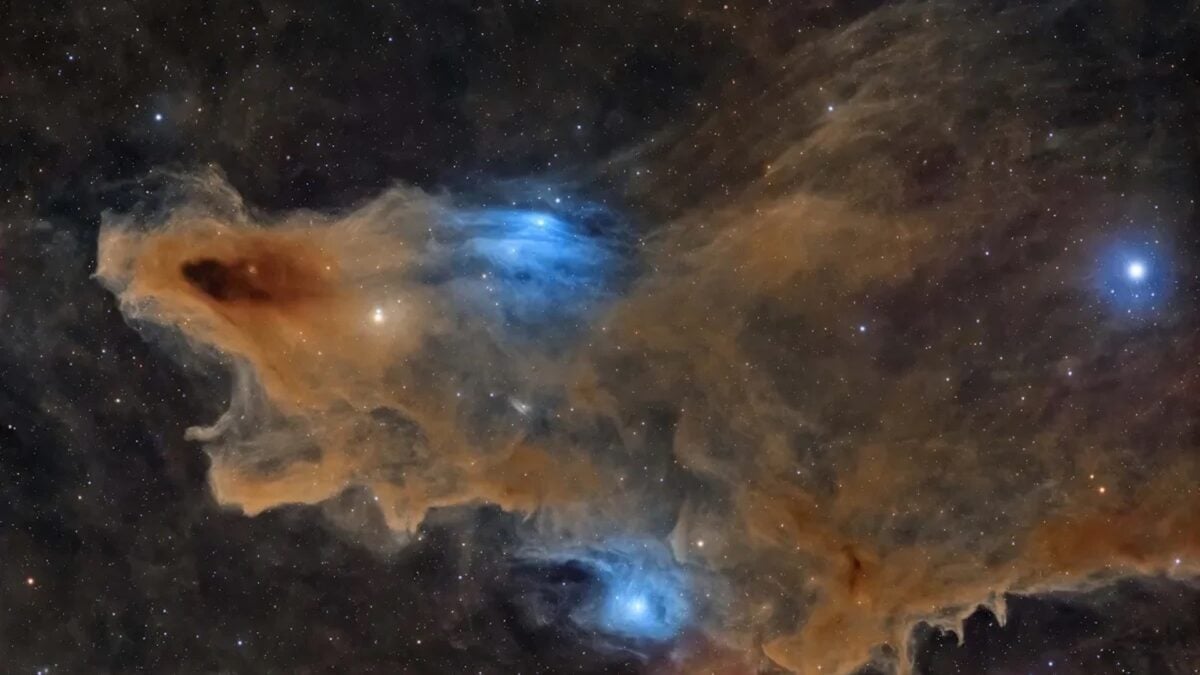
The universe shines in dazzling images highlighted by the Astronomical Photographer of the Year awards. From up-close views of our solar system to distant wonders of galaxies and nebulae, this year’s contest winners have captured the diverse wonders of space in haunting detail. The competition, organized by the Royal Observatory in Greenwich, London, attracted almost 4,000 entries from photographers around the world. The overall winner of the contest is The Quiet Predator by Ali Alobaidly of Kuwait, which captures the massive, dark absorption of the Shark Nebula. The panel of judges also selected winners in eight different categories, as well as two special awards. The full list of winners can be seen here and will also be on public display at the National Maritime Museum in Greenwich, London. Below are some of Gizmodo’s favorite picks from the 18th Annual Space Photography Awards. Stellar remains Abell 85. Credit: Cédric Humbert Located in the Cassiopeia constellation, about 9,780 light years from Earth, Abell 85 is an expanding layer of gas left after the death of a star. The faint supernova remnant is extremely faint and difficult to capture. To obtain this highly praised image in the stars and nebulae category, photographer Cédric Humbert used 30 hours of exposure to highlight the signal of doubly ionized oxygen and highlight the filaments of the ball of matter in the center. Anatomy of the chromosphere Anatomy of the chromosphere. Credit: Peter Ward This second-place image reveals the Sun as we have never seen it before. Photographer Peter Ward chose to highlight the layers of the Sun’s chromosphere, or the part of the star’s atmosphere located just above the visible surface. “The image reveals the deep, hidden structure of the chromosphere. Calcium-H structures glow electric lilac, interwoven with the scarlet glow of ionized hydrogen. Red filaments of H-alpha cross the solar surface and bulges rise from the limb. [the edge of the solar disc]” Ward explained in a statement. “The blue component reveals the magnetic architecture of the Sun, highlighting areas where powerful magnetic fields burst through the surface.” The corona The corona. Credit: Radoslav Sviretsov A tranquil scene of magnetic beauty captures a powerful backdrop of the northern lights against a small church in Fúlipollur, Iceland. “In times like this, I feel nothing but gratitude for being in the right place at the right time. “The aurora sighting occurred during a particularly strong geomagnetic storm, an event that allowed us to witness the northern lights in a way rarely seen,” photographer Radoslav Sviretsov said in a statement. “This small traditional Icelandic church is located between Keflavík and Reykjavík, far from light pollution, a place where the sky remains dark and truly alive.” The silent predator The silent predator. Credit: Ali Alobaidly “Sometimes a photograph comes to life through its impeccable presentation, sharp details and dynamic contrast of light and dark. This is such an image,” contest judge Steve Marsh said of the overall winning photo. The Shark Nebula is made up of clouds of interstellar gas and dust that spread out into the shape of the iconic apex predator. “The Shark Nebula is already a striking object, but when it is resolved to the point where even detail-rich distant galaxies can be seen through it, you know you are looking at something very special,” Marsh explained in a statement. “Perfectly rendered, softly glowing stars visible to the very edges of the frame, fine wisps of faint nebulosity consistent throughout the ‘shark,’ and a brilliantly resolved patch of dark nebula to your eye place this image at the forefront of modern astrophotography.” Pearl of Venus Pearl of Venus on the Moon. Credit: Petr Horalek On September 19, 2025, the Moon crossed in front of Venus’ path in the daytime sky, creating a rare lunar occultation of the planet. Photographer Petr Horalek captured this moment as Venus submerged the crescent Moon. “It was a great challenge to find both objects in the sky and produce good photographs of this unusual sight,” Horalek said in a statement. “Fortunately, the weather was perfect and I was able to do it. The most beautiful moment was when Venus was just beginning to disappear behind the crescent. It looked like a shining pearl on the lunar limb.” A message from the ancients A message from the ancients. Credit: Max Inwood In this striking contrast between the night skies and their influence on people, photographer Max Inwood captured an ancient petroglyph panel, known as the 13 Moons, in the California desert. “This petroglyph is believed to be an ancient calendar that represents the 13 full moons that Earth can experience in a year,” Inwood said. “In this photograph I captured the northern constellation Cygnus over the site. This region of the Milky Way is filled with bright hydrogen emission nebulae, which contribute to the reds and pinks seen in the sky. The colors contrasted beautifully with the strong green glow present on the horizon, creating a rainbow of hues. A small light was used to illuminate the petroglyph, which would otherwise be difficult to see in detail under the pristine dark sky.” Echoes of an ancient explosion M1 Echoes of an ancient explosion. Credit: Haocheng Zhu Photographer Haocheng Zhu is the winner of the best newcomer category for capturing the bright supernova remnant known as the Crab Nebula (Messier 1 or M1). “I started astrophotography less than a year ago and M1 changed the way I look at the night sky,” Zhu said. “In 1054 CE, during China’s Song Dynasty, astronomers recorded a ‘guest star’ bright enough to be visible even in daylight: a supernova whose remnant we now know as the Crab Nebula. Its tangled filaments still expand through space, carrying the energy of an explosion witnessed nearly 1,000 years ago. What appears dim today was once bright to the naked eye.” Comet Lemmon Comet C2025 A6 (lemon). Credit: Julien De Winter and Landon Boehm The newly discovered comet C/2025 A6 (Lemmon) made its closest approach to Earth in October 2025 before disappearing from view. This image was taken from the Starfront Observatories in Texas when the comet was approximately 101 million kilometers (63 million miles) from Earth on October 28, 2025. “A few days before reaching perihelion on November 8, its closest approach to the Sun, the comet was already showing remarkable activity and offered an extraordinary sight in the night sky,” said photographers Julien De Winter and Landon Boehm.