Photo-Illustration: by The Cut; Photos: Getty Images
When I was 28, I spent a few days in sunny Cyprus, where I visited the Baths of Aphrodite, a spring-fed grotto where the Greek goddess of beauty supposedly liked to take a dip. Ignoring the “Stay away from the water” signs, I slipped under a rope and splashed a few drops on my forehead. According to legend, contact with this magical H2O guarantees eternal youth and beauty, so how could I resist? Aphrodite had other plans for me, though: 48 hours later I woke up with a big brown patch of hyperpigmentation above my eyebrows in, I kid you not, the exact shape of the island of Cyprus. It took me three years to get rid of it.
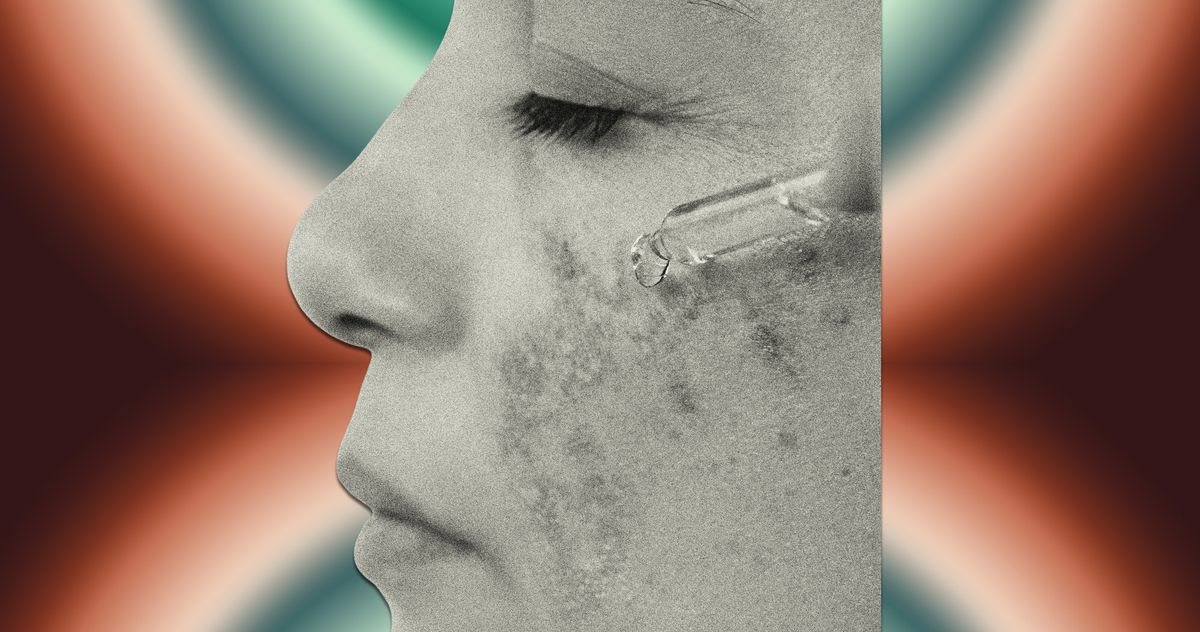
This dark blob, forever remembered as the Curse of Aphrodite (but no doubt the result of inadvertently rinsing off my sunscreen), was melasma, a specific type of pigment disorder that manifests as irregular-shaped brown or grayish-brown spots on the face. It most commonly occurs on the forehead, cheeks, or upper lip, and can be caused by UV exposure, excessive heat, hormones, or a combination thereof. It is notoriously difficult to fade, and it can be chronic — meaning that even if you think you’ve successfully treated it, it may rear its ugly head again months or even years later. For many people, a melasma flare-up is an annual summer tradition.
September is often the best time to start a treatment regimen, after peak fun-in-the-sun time has passed. And while a dermatologist can certainly step in with a variety of protocols, it is possible to tackle melasma at home without spending crazy money on lasers and prescription topicals. Here are the best products and tactics to try.
Melasma occurs when pigment-producing cells become overactive, but there’s no single culprit. Genetics, skin tone, hormones, sun exposure, visible light (including the glow emitted by phones and computers), inflammation, and heat can all play a role. Pregnancy, birth control, and other hormonal shifts are particularly common triggers, which is why melasma is sometimes called the “mask of pregnancy.”
“Melasma often runs in families and is more common in medium to deeper skin tones,” says board-certified dermatologist Jessica Cheung. Sun and visible light are the biggest environmental triggers, she says, but inflammation and oxidative stress from pollution can also stimulate pigment production. Because there is a vascular component, heat alone might even manifest a melasma patch in those who are predisposed. “Hot yoga, saunas, cooking over a hot stove, and intense outdoor exercise can all contribute,” says board-certified dermatologist Annette Czernik.
“Unlike a sunspot or post-inflammatory mark, melasma can involve pigment at multiple depths, inflammation, and vascular changes, making it more complex and likely to recur,” says dermatologist Laurie Glodowski, wellness-center director and laser specialist at Generations Wellness Center. Fading it can be a slow road, and more aggressive treatments are not necessarily more effective. Lasers and light treatments that generate significant heat can provoke inflammation and rebound pigmentation, which is why you might want to start with gentle treatment at home before bringing out the big guns.
Hydroquinone is often cited as the gold-standard topical treatment for melasma, but it is prescription-only and should be used under medical supervision as it carries toxicity concerns and risk of further skin discoloration. Czernik says that it can be a home run for the right patient, noting that it is typically prescribed in combination with a retinoid and mild corticosteroid. Cheung also favors hydroquinone for stubborn melasma, but says non-hydroquinone options — including azelaic acid and kojic acid — can work very well for people who cannot tolerate it. Azelaic acid is particularly effective because it is also anti-inflammatory, making it tolerable for longer-term use. Gentle OTC retinoids can increase cell turnover and enhance other treatments, and vitamin C can help with overall brightening. The key, though, is to not go overboard. “People see discoloration and often assume they need to scrub, peel, or exfoliate it away, but melasma does not work that way,” Czernic says. “You can absolutely make melasma harder to manage by attacking the skin too aggressively.”
Keep it simple. In the morning, cleanse gently, apply an antioxidant such as vitamin C and/or a pigment-fighting serum such as La Roche-Posay Mela B3 Dark Spot Serum, then finish with a tinted broad-spectrum SPF 30–50 containing iron oxides, which protect against visible and blue light. At night, apply a retinoid, azelaic acid (the Ordinary makes a nice one), or hydroquinone if you are going the prescription route, and follow with a moisturizer to support the skin barrier.
Want to be emailed about sales and other updates to your saved products?
Success! You’ll get an email when something you’ve saved goes on sale.
Yes
Want to be emailed about sales and other updates to your saved products?
Success! You’ll get an email when something you’ve saved goes on sale.
Yes
For a fully OTC routine, Czernik recommends SkinCeuticals Discoloration Defense as a pigmentation-reducing serum, Differin Gel as a retinoid, and EltaMD UV Clear Tinted Broad-Spectrum SPF 46 for daily sun protection.
Want to be emailed about sales and other updates to your saved products?
Success! You’ll get an email when something you’ve saved goes on sale.
Yes
Want to be emailed about sales and other updates to your saved products?
Success! You’ll get an email when something you’ve saved goes on sale.
Yes
Want to be emailed about sales and other updates to your saved products?
Success! You’ll get an email when something you’ve saved goes on sale.
Yes
There’s no such thing as a quick fix for melasma. You may see initial improvement in six to eight weeks, but meaningful improvement can take several months. Once the patches have faded, the job isn’t necessarily over. “We generally manage melasma rather than permanently cure it,” says Cheung. This means constant vigilance: Never, ever skip daily sun and visible-light protection (even in winter), and continue to use a non-hydroquinone pigment suppressor at least once a week.
“If you have been treating melasma at home for a few months and nothing is changing, it is a good idea to see a dermatologist,” says Czernik. This is also for confirmation that the spot is actually melasma and not another type of dark spot. Dermatologists may recommend a course of gentle mandelic acid chemical peels, microneedling, or non-ablative lasers like Clear + Brilliant before prescribing hydroquinone. Glowdowski likes the Fotona StarWalker laser, which, she says, “uses extremely short, high-powered pulses to create a predominantly photoacoustic effect, breaking pigment into tiny particles while minimizing unnecessary thermal injury.” Cheung says successful treatment will often require a combination approach, and she will microneedle melasma-afflicted skin with a customized cocktail of tranexamic acid, glutathione, polynucleotides, and exosomes, and intradermal botulinum toxin. “The rationale is mechanistic,” she says. “Exosomes calm inflammation and stimulate collagen production, supporting the blood vessels involved in melasma, and polynucleotides also help regulate the pigment pathway. Intradermal botulinum toxin, delivered via tiny superficial injections, addresses vascular and inflammatory signaling rather than pigment directly.”
Everyone’s magic combination may be different. My Cyprus-shaped melasma blob lightened up considerably with diligent use of a vitamin-C serum (I used SkinCeuticals CE Ferulic religiously), but it took a series of gentle mandelic acid peels and several sessions of Clear + Brilliant to finally erase it. I have been zealous about sunscreen (I love the Ilia Sun Serum SPF 50) ever since and continue to do my best not to anger any mythological deities. Thankfully, it has never returned.
Want to be emailed about sales and other updates to your saved products?
Success! You’ll get an email when something you’ve saved goes on sale.
Yes
Want to be emailed about sales and other updates to your saved products?
Success! You’ll get an email when something you’ve saved goes on sale.
Yes
Stay in touch.
The latest in style, self, culture, and power in your inbox.
Vox Media, LLC Terms and Privacy Notice
By submitting your email, you agree to our Terms and Privacy Notice and to receive email correspondence from us.
Related