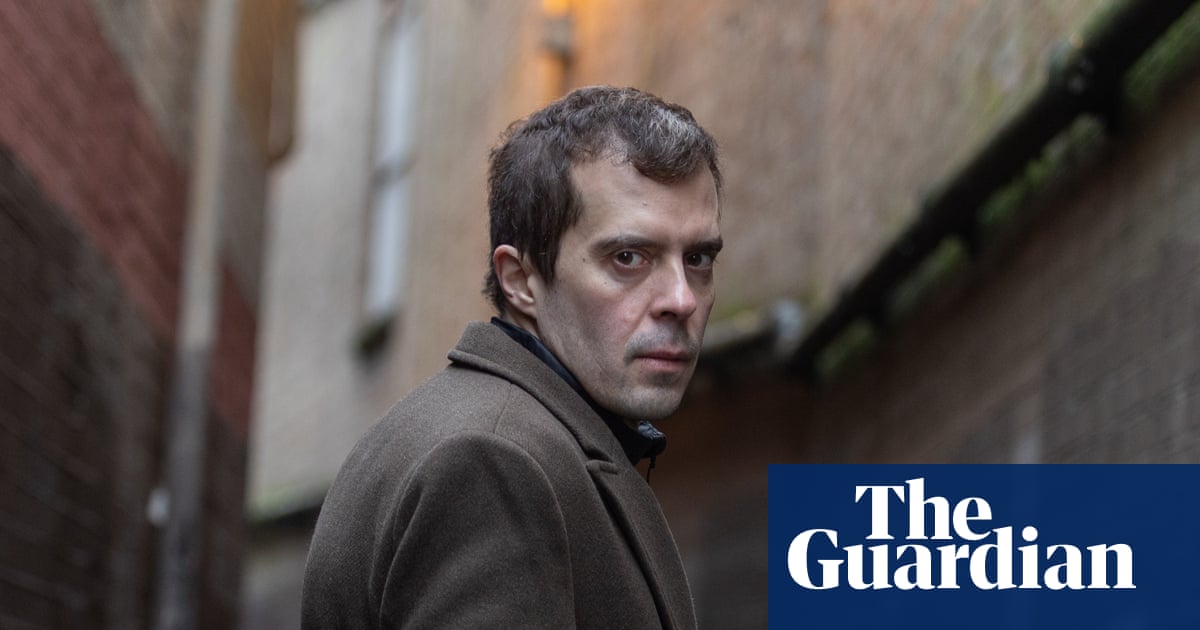
Roman Dobrokhotov had been quite pleased to have his appearance at a conference in Washington DC this week publicized, although it was not something he would normally risk in Europe. The dissident Russian journalist was named during a trial in London last year as one of the targets of a Russian spy network that appeared to have murderous intentions. “Maybe burn him alive in the street, spray him with super strong acid, VX, like the North Koreans, or castor,” an agent hired by Russia had written about plans for Dobrokhotov in Britain. under the red flag of the Soviet Union or the tricolor of Vladimir Putin’s Russian Federation. It might be possible that Kremlin agents could get away with deploying poison-tipped umbrellas over people crossing London’s Waterloo Bridge, as was the fate of Bulgarian dissident Georgi Markov in 1978, but risking such colorful murders on the Brooklyn Bridge or indeed anywhere on American soil would be an entirely different matter. An umbrella similar to the one used by the KGB to kill dissident Georgi Markov at the International Spy Museum in Washington DC. Photograph: Saul Loeb/AFP/Getty ImagesIf it was not part of the so-called Moscow rules, the legendary operational guidelines for Western and Russian spies, then there was certainly an add-on, a kind of gentlemen’s agreement, that neither side would kill on the other’s territory. That had been the understanding of many of the other dissidents as they prepared to appear at the Washington Dialogue conference on Russian affairs being held in the headquarters of the National Endowment for Democracy, just steps from the White House. This week the kaleidoscope was shaken. “It seems that starting today the rules have changed in the United States,” said Dobrokhotov, 43. “We will have to change the way we behave there. No place is safe.” The turning point that overshadowed the Washington conference was Tuesday’s announcement that the U.S. Department of Justice was opening in absentia indictments against five people who allegedly worked for Russia’s intelligence services and who had allegedly conspired to “conduct attacks and assassinations around the world, including in the United States.” living in the capital of the United States. Those named as part of the spy network were a serving Russian Federal Security Service (FSB) officer, Kirill Khrameev, 27, and his father, Yuri Khrameev, 63, a former FSB colonel, along with two 35-year-old Cubans, Oemis Romagoza Durruthy and Yaidel Delgado Suárez, nicknamed “the Viking,” and a 22-year-old Venezuelan, Ángel Eduardo Castro. FSB Colonel Yuri Khrameev, accused (along with his son Kirill) of plotting to kill Russian dissidents in the United States. Photograph: Twitter XOemis Romagoza Durruthy, an expatriate Cuban dance instructor was allegedly hired by the FSB to find and kill Russian dissidents in the United States. Photograph: VK The FBI had discovered encrypted messages – written in Spanish and ineptly wrapped in spy code – commissioning what one of the alleged members of the network had described as “a very serious job”: an offer of $40,000 (£30,000) to surveil and then kill someone in Washington whom the Russian state wanted to “disappear”. There was talk of bringing assassins from Mexico to carry out the “construction” (the word used by agents for murder), but they were “delayed” and that is why a local assassin was sought, according to the accusation. Authorities did not reveal the identity of the alleged victim, but among the rumored potential targets was Vladimir Kara-Murza, who was released from prison in Siberia and went to the US as part of a swap for Russian intelligence agents in 2024. He declined to comment on the case when approached by The Guardian. Political activist and former prisoner in Russia Vladimir Kara-Murza in London after the Ankara prisoner exchange of 2024. Photograph: Sophia Evans/The Observer The almost unprecedented nature of the plot on American soil was inadvertently highlighted in the indictment itself, which listed a series of assassinations carried out by Russian intelligence services. There was Paul Klebnikov, an American journalist and historian, murdered in Moscow in 2004. Two years later, Alexander Litvinenko, a former FSB officer, was murdered in London by two Russian agents who put radioactive material in his tea. In 2018, Sergei Skripal, a former Russian military intelligence officer, and his daughter, survived after being poisoned with a military-grade nerve agent in Salisbury, United Kingdom; A local woman, Dawn Sturgess, died after being contaminated. In 2019, a German court determined that Zelimkhan Khangoshvili, a former commander in the Second Chechen War, was murdered in Berlin, by order of the Russian state. And in 2024, Alexei Navalny, the Russian opposition leader, died in custody after being previously poisoned with the nerve agent Novichok while out of the country. “More recently, countries across Europe have accused Russia of sabotage operations and extrajudicial attacks,” the indictment continues. “For example, in or around September 2026, a German investigation allegedly linked GRU military intelligence services to a drone attack on Leipzig/Halle Airport in Germany.” German police said explosives experts examined a drone near a runway at Leipzig/Halle Airport in Schkeuditz, Germany, in August. Photograph: Axel Schmidt/ReutersBut the paperwork made no mention of any such activity on American soil, and for historically rooted reasons. “I would describe it as an unwritten set of Cold War rules of the road,” said Chris Costa, a former US intelligence chief who is now executive director of the International Spy Museum in Washington, DC. “The US and the Soviet Union carried out aggressive espionage on each other, but the limits were understood, particularly when it came to physically attacking each other’s intelligence personnel and families… If these allegations are proven, directing surveillance and assassination on US soil crosses a very different line from traditional espionage.” Berlin’s Glienicke Bridge, also known as the “Bridge of Spies” during the Cold War. Photograph: Ullstein Bild/Getty Images Why would the Russians cross this red line? Jack Devine, former CIA associate director of operations, said the Kremlin had perhaps become indifferent to the potential repercussions, but that it could prove to be a misstep. “Today Russians give much less weight to political criticism internationally and are less concerned about the ramifications, including sanctions,” he said. “Putin has a view of himself in Russia and in the world as a powerful, old-school leader that he has often recalled in his interviews and public statements. I think he is wrong and may be underestimating the long-term internal and external ramifications of this isolation.” For Calder Walton, author and deputy director of the Belfer Intelligence Project at Harvard University, it is not just Russian motivations that need to be analyzed. In 2023, Walton revealed in his book Spies that three years earlier a Russian assassination squad had attacked Aleksandr Poteyev, a defector who had been living in the United States. “In the Poteyev episode, US authorities apparently opted for secrecy, presumably to protect intelligence sources and methods and avoid a public confrontation with Moscow,” he said. “By revealing this indictment, the Justice Department is doing something different: exposing the alleged network, warning potential recruits, reassuring threatened dissidents, and imposing costs on individuals who might otherwise have continued to operate in the shadows. Public attribution is itself a counterintelligence weapon.” “It’s very important that the United States decided to reveal this now,” one said. “The decision to do so raises the profile and shows the clear and imminent threat to dissidents in the United States.” Walton added: “The immediate political fallout may be limited because all five defendants appear to be abroad and remain at large. “However, we should expect greater protection for Russian dissidents and defectors, intensified investigation of Russian proxy networks, closer intelligence cooperation with European allies, and potentially more sanctions, expulsions or criminal charges.” Anastasia Shevchenko, an outspoken critic of Putin who fled Russia for Lithuania in 2022 after becoming the first person found guilty of violating a new law for participating in an “undesirable organization,” she said she had been warned in a recent interview to obtain a visa for the United States that she could not assume she would be safe during her visit Russian journalist and activist Anastasia Shevchenko at a Russian Anti-War Committee conference in Strasbourg in May Photograph: SOPA Images/LightRocket/Getty Images Nikkie Lyubarsky, research associate at the Centre. Soufan, a New York NGO specializing in global security, said the revelation of the indictment could reflect an escalation of tension “behind the scenes” between the White House and the Kremlin as a result of Russia’s alleged support for Iran in the ongoing conflict with the United States and Israel. [the indictments] Now I definitely have some doubts,” Lyubarsky said. “This obviously coincides with the sanctions that were just passed in the House and with the recent visit of the CIA director to Russia. There’s probably some kind of escalation going on behind the scenes that we’re not aware of. It could be related to Russian intelligence sharing with Iran. That would be my best guess.” At the Washington Dialogue conference, the perhaps understandably conspiracy-minded dissidents munching on sandwiches during lunchtime had their own theories. Was Donald Trump seeking to distance himself from the news that his son Donald Trump Jr’s wedding had been paid for in part by oligarch and Putin loyalist Umar Kremlev? Natalia Arno, founder and president of the Free Russia Foundation, who experienced symptoms of suspected poisoning during A 2023 trip to Prague that she believes was commissioned by the Kremlin, she said that despite all the theories, one thing had undoubtedly changed: “We thought the Kremlin wouldn’t be so brazen as to do something on American soil,” she said. “It’s a different picture.”