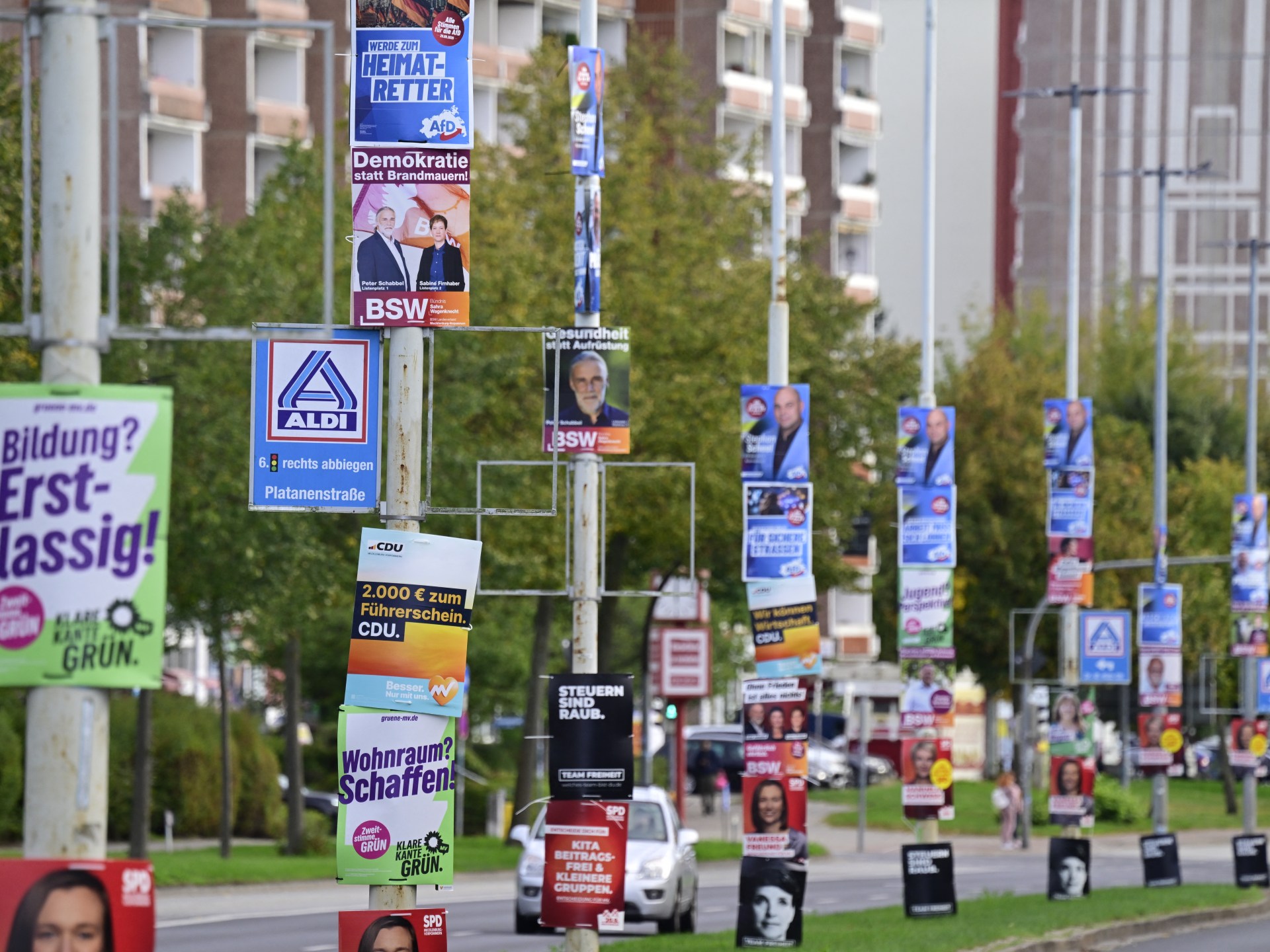
The far-right AfD party defeated the German chancellor’s CDU in the recent Saxony-Anhalt state election, casting doubt on its future. Published September 20, 2026 September 20, 2026 Voters in the eastern German states of Berlin and Mecklenburg-Vorpommern head to the polls as advances by the far right and far left threaten to affect Chancellor Friedrich Merz’s political standing. About 2.5 million people are eligible to vote in the city-state of Berlin, Germany’s capital, and almost 1.3 million in Mecklenburg-Vorpommern on Sunday. Polling stations in both states, traditionally considered more left-wing, opened at 08:00 local time (06:00 GMT) and will close at 18:00 (16:00 GMT). The AfD did not achieve an absolute majority, which would have allowed it to govern alone. And after just 16 months in power, Merz’s approval ratings have plummeted to around 14 percent, the latest polls suggest, as he struggles to push through promised economic and welfare reforms with his center-left coalition partners, the Social Democratic Party (SPD), raising doubts among his party colleagues about whether he can continue to lead. In Mecklenburg-Vorpommern, Merz’s party is a spectator in the main battle between the popular SPD state premier Manuela Schwesig and the AfD’s leading candidate, former radio presenter Leif-Erik Holm. While the AfD polled at 36 percent to the SPD’s 37 percent, Merz’s CDU, with just 6 percent, was dangerously close to the 5 percent hurdle needed to stay in power. According to public broadcaster ZDF, from a polling station in Schwerin, Al Jazeera’s Dominic Kane said that in Mecklenburg-Western Pomerania “a lot is at stake.” “The race between the AfD here and the social democratic government is very close,” he added, pointing to recent opinion polls. Regional elections typically do not attract much interest outside of Germany, but the AfD’s success in Saxony-Anhalt, which it sees as the first step toward winning federal elections scheduled for 2029, has sent shockwaves across Europe. “Saxony-Anhalt was undoubtedly a revolution for the German party system,” he told Al Jazeera. Hartleb claimed that the AFD had been “fundamentally excluded” from the system of power, while other political parties had tried “everything” against it in recent years. “But it didn’t work,” he said, citing voter dissatisfaction over migration, the economy and social inequality. Kane reportedly scheduled a CDU crisis meeting and cleared his calendar to deal with possible aftershocks from Sunday’s election. AfD’s top candidate for the Mecklenburg-Vorpommern state election, Leif-Erik Holm, attends an election campaign event in Schwerin, Mecklenburg-Vorpommern, northeastern Germany, on September 19, 2026. [Danny Gohlke/AFP]