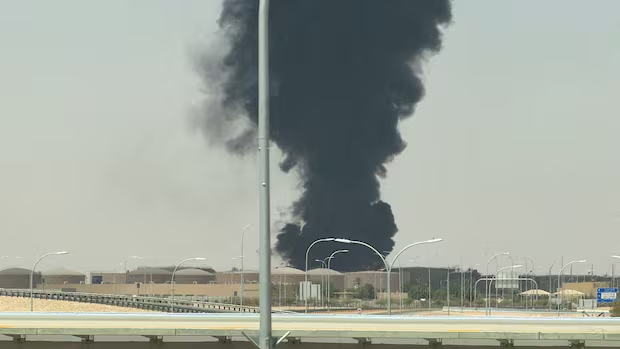
Listen to this articleDear 3 minutesThe audio version of this article is generated using AI-based technology. Pronunciation errors may occur. We are working with our partners to continually review and improve results. Saudi Arabia confirmed Saturday that Yemen’s Houthi rebels attempted to attack its capital with a ballistic missile, the first target against Riyadh since escalating fighting with Tehran-backed rebels has opened a new front in Iran’s war. The statement from the Saudi-led coalition fighting the Houthis came well after the dawn attempt, which the coalition said was intercepted. Some Riyadh residents heard an explosion. Later, some saw a plume of smoke near the airport. There were no reports of casualties or damage. The statement also said the Houthis attempted to attack civilian infrastructure in the Red Sea port city of Yanbu, where a key Saudi oil pipeline ends, and in Taif, Baysh and Farasan, but were thwarted, without giving further details. The Houthis previously claimed, without providing evidence, that they had attacked “sensitive locations” in Riyadh and Saudi oil giant Aramco’s facilities in Yanbu, causing “massive fires.” Aramco, the world’s largest oil company, did not respond to a request for comment. Growing conflict near another major global shipping corridor has brought new pressures to markets. Houthi military spokesman Brig. General Yahya Saree claimed that they attacked with ballistic and cruise missiles, as well as drones. He said Saudi Arabia had tried to attack the rebel-held city of Sanaa in neighboring Yemen, without giving details. The Associated Press could not independently verify the claims. Escalation of the conflict In recent days we have seen one escalation after another. The first civilian casualty was reported on Thursday when Saudi civil defense said debris from an intercepted Houthi drone killed a Yemeni resident in Saudi Arabia. And on Wednesday, Saudi Arabia said the Houthis had attempted to attack Mecca, Islam’s holiest city, with a drone it said was intercepted, calling the security of the Prophet Muhammad’s birthplace a “red line.” The Houthis fiercely denied the accusation.WATCH | Expert discusses the conflict: CBC News Network talks to Charles Kupchan about the recent escalation between the Houthis and the Saudis Get the latest on CBCNews.ca, the CBC News app and CBC News Network for breaking news and analysis. The United States, a close ally of Saudi Arabia, has signaled that it has no current fight with the Houthis. Regional officials have told The Associated Press that Saudi Arabia is running out of missile interceptors and has instead asked for air defense support from France, Britain, Pakistan and Egypt. Meanwhile, fighting has increased inside Yemen between the Houthis and the internationally recognized government backed by Saudi Arabia. The rebels advanced up the country’s Red Sea coast more than a week ago, seizing the key port city of Mokha and islands in the Bab el-Mandeb Strait at the southern end of the Red Sea. That has improved their surveillance of passing ships, although the Houthis have said they only target the Saudis. The fighting in Yemen also marks a return to a devastating civil war after four years of relative calm.