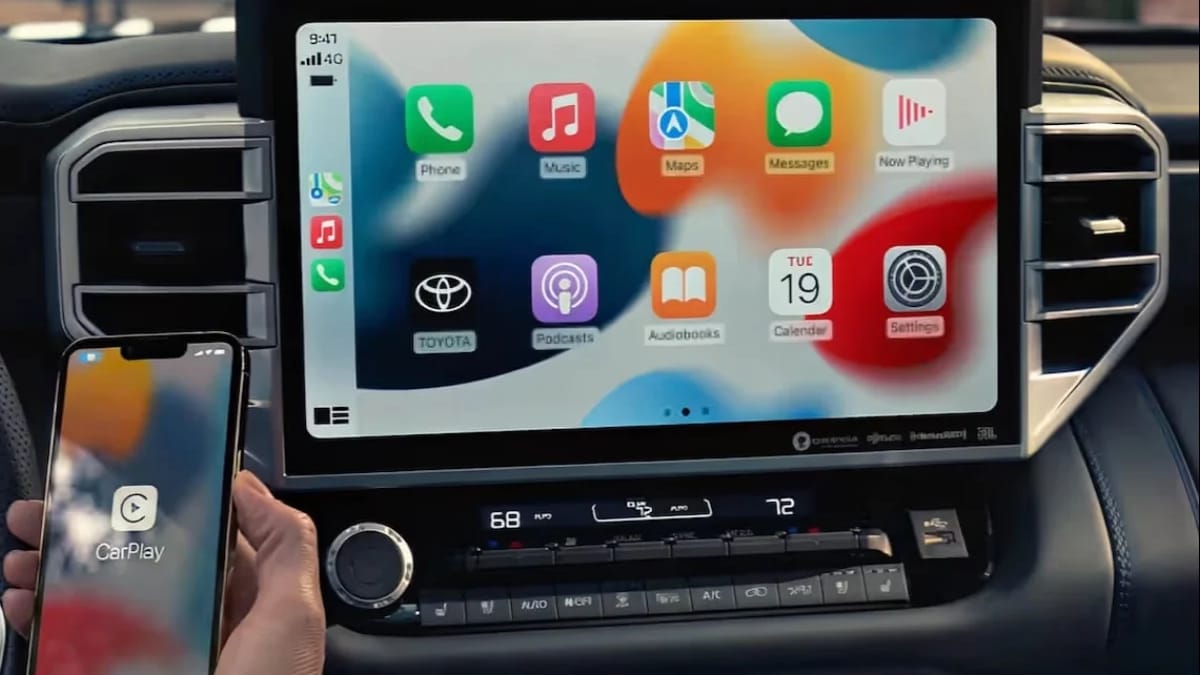
Automakers appear to be quietly ditching Apple CarPlay and Android Auto, and are trying to take advantage of a $625 billion opportunity. Apple CarPlay, as well as Android Auto, seem to have become elephants in the room when it comes to modern cars. Most, if not all, automakers seemed to have leaned toward using Apple and Android systems in their new vehicles. But now it seems that money is talking, hence the decision of many of them to walk away from the systems. Why automakers want to ditch Apple CarPlay and Android Auto Manufacturers once relied on their own systems for vehicle infotainment software. However, Apple and Google saw an opportunity and created CarPlay and Android Auto. However, it now appears that the major manufacturers that used to support these systems are walking away again. System integration, data control and revenue are the three main reasons for this change. Unsplash While integrating CarPlay into vehicles is easy enough, Apple likes to have a lot of control over its software. So if your car has CarPlay, your experience will effectively be 100 percent Apple. Android Auto is more open and has allowed some manufacturers to put their own touch on it. But there’s still an element of control, and that’s not something automakers want to deal with. The multibillion-dollar opportunity Automakers also want to run their own ads on the systems. Being tied to Google and Apple restricts the ads they can serve. The Ptolemus Consulting Group has estimated that location-based advertising can be worth more than $600 billion and up to $625 billion. So it’s no surprise that automakers want to take advantage of that part of the market. Automakers BMW would have full control over what is displayed on these systems if they move away from Apple and Android software. They would also have full control over the revenue these systems can generate. And revenue won’t have to be split between the automaker and Apple or Google. The tech giants would no doubt want a piece of the pie when it comes to the revenue that ads in software can generate. The abandonment of Apple and Google has occurred rapidly. It’s been more than a decade since Apple and Google systems made their debut. However, in the last year, manufacturers have begun to abandon ship one after another. One of the advantages of the systems was that they offered familiar interfaces for drivers and passengers. If they had an Android phone, the screen they had in the car seemed incredibly familiar and easy to operate. However, giants such as General Motors have been abandoning these systems. Let’s not forget, that also includes companies like Chevrolet, Cadillac, Buick and GMC. Google, instead, has focused on its own infotainment system and software. Tesla and Rivian are two that didn’t even consider Apple and Google; They stuck to their own systems from the beginning. So it looks like the era of Apple and Google in our cars could be coming to an end. Apple CarPlay Timeline June 2013: Apple presents its automotive vision at WWDC under the name “iOS in the Car” March 2014: The system is renamed CarPlay and officially launched at the Geneva Motor Show September 2014: The Ferrari FF hits the market as the first production vehicle to include the software 2015-2016: Major automakers such as GM, Honda and VW begin to implement support on standard models February 2017: The first wireless option makes its debut on the BMW 5 Series January 2018: Toyota finally ends its resistance and adds the technology to its Avalon lineup 2019 2020: A major dashboard update brings a split-screen view and expanded third-party navigation June 2022: A next-generation multi-screen digital cluster interface is previewed at WWDC May 2025: “Ultra” level debuts alongside deep digital dashboard integration for Aston Martin August 2026: iOS 27 update features AI voice updates and parked video playback