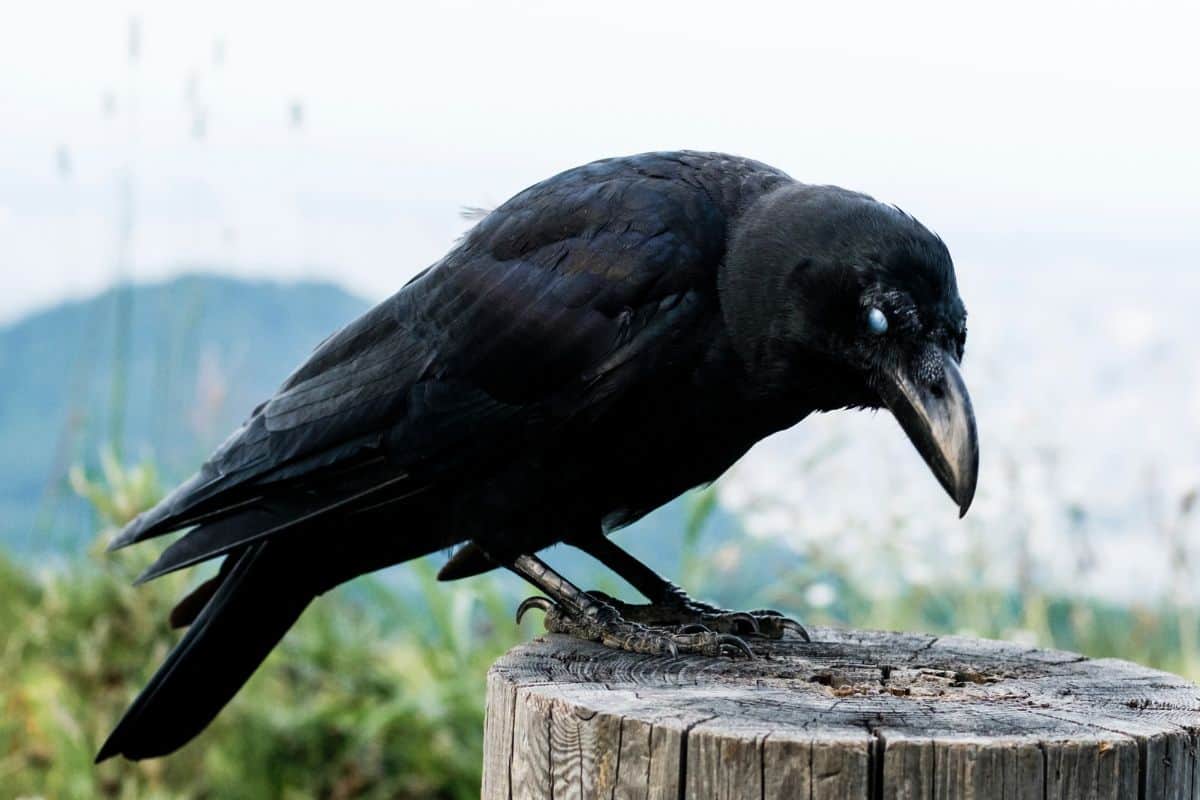
Crows in the spotlight: A noisy presence and a puzzling reputation As dusk falls over Charlottetown, the skies above Victoria Park fill with thousands of crows and their close relatives, the rooks. Their loud choruses disturb many residents, who try in vain to scare away the birds. Solitary crows, although less numerous, also roam the province, completing the mysterious spectacle. Despite their disturbing calls and the concern they cause, these birds are not only survivors but also outstanding thinkers in the animal world. Crows and their relatives have a reputation, but it may deserve more respect than fear. A bird brain, but not as we know it “These are the most intelligent birds we know,” says Pierre-Yves Daoust, professor emeritus at the Atlantic Veterinary School at the University of Prince Edward Island. Crows have some of the largest brains of all birds, a fact that scientists say is directly related to their cognitive abilities. Louis Lefebvre, a professor in the biology department at McGill University in Montreal, highlights his mental achievements: planning for the future, solving completely new problems, and creating and using tools carefully and appropriately. “These are skills found in children between four and six years old,” says Lefebvre. With such talents, perhaps being told you have a “bird brain” is not as contemptible as it seems, at least not when compared to members of the crow family. Learning, reasoning and a touch of mathematics Researchers have revealed that crows make deliberate choices: they stop and think before acting, use statistical reasoning and can even perform simple mathematical operations. Japanese studies show crows’ ability to solve problems. There, they throw nuts on the roads so that passing cars can open them, proof of analytical and deductive intelligence. There is even more. According to additional research, crows have abstract thoughts and can distinguish between individual humans based solely on facial structure. Their memories are so sharp that they can recognize and remember a face for years after seeing it just once. Social life and emotional bonds The communication skills of crows and crows are as sophisticated as their intellect. They maintain a complex system of sounds, gestures and postures. Crows imitate the calls of other animals, use objects to get others’ attention, and point with their beaks in a way similar to how people indicate something with their fingers. His social memory is remarkable. Crows recognize their friends even after years of separation and comfort each other after conflicts, gently preening a companion’s feathers or offering food as a gesture of peace. “Crows and ravens demonstrate a high degree of consciousness and close social cohesion. We owe them great respect,” Daoust emphasizes. Resilience and the limits of adaptation Adaptation is another trademark of these birds. Crow species can survive for more than forty years and thrive in an astonishing variety of environments, from dense forests and sprawling cities to open farmland. “They are very resistant to the destruction of their habitat and can easily adapt their diet,” says Lefebvre. With such flexibility, their risk of extinction remains low. Still, this resilience has limits. The Hawaiian crow, famous for its intelligence and tool-making skills, became extinct in the wild due to changes in its habitat caused by humans. Lefebvre is cautious and reminds us that not even the most intelligent animals are immune to relentless environmental pressure. The story of the crows is a story of adaptability, intellect, and intricate social lives, challenging us to see intelligence and consciousness in ways we may not expect. Thanks for reading! Do you have any comments for us? Thanks for your comments! We appreciate your help in improving our content. Our editorial team will review your suggestions and make any necessary updates. An error occurred while submitting your comments. Please try again.