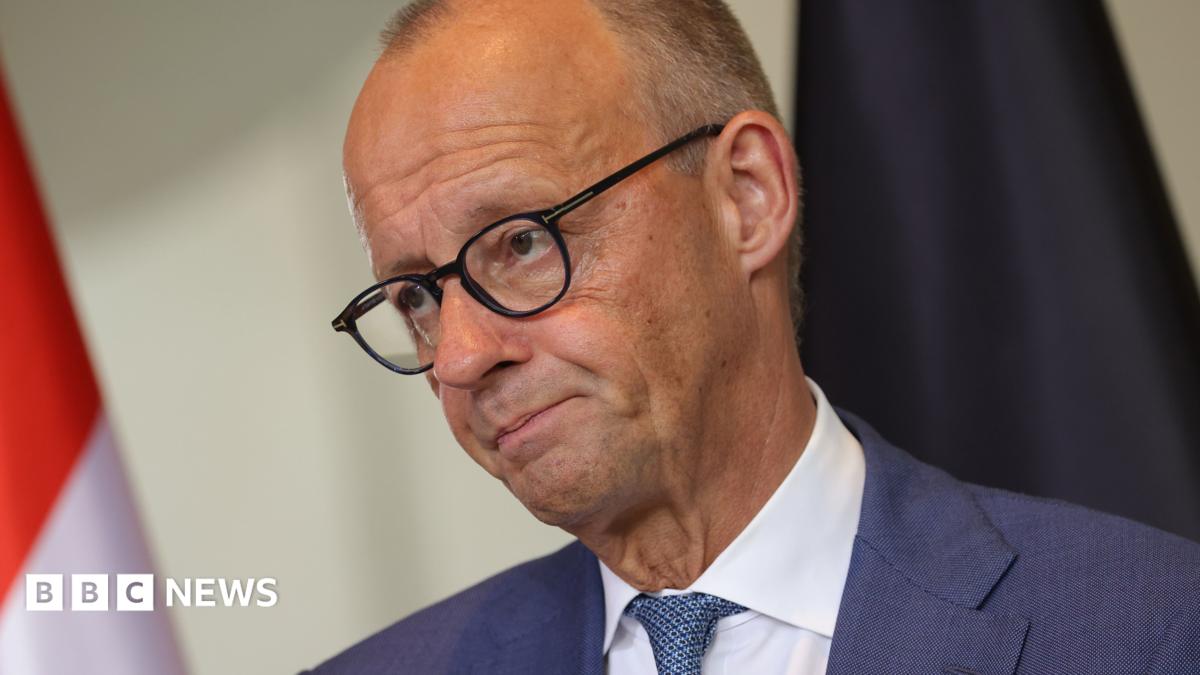
The leaders of eight German states have backed the nation’s chancellor amid growing speculation about his political future. The prime ministers, all part of Friedrich Merz’s Christian Democratic Union (CDU), wrote that restoring trust in their party involves “listening and taking political action, not debates about personnel.” (AfD) is emerging, raising questions about whether it is an electoral liability. He has vowed to continue, but two more state elections on Sunday have been seen as a key test of his leadership. Rumors of a “Kanzlertausch” – or “chancellor change” – have been around for months, but have increased since the conservative CDU fell to a distant second behind the AfD in the eastern state of Saxony-Anhalt in early September. to 43.8% of the vote, while the CDU plummeted to 17.2%, marking the first time since World War II that a far-right party has come close to controlling a German state. It is still three seats short of an absolute majority and the main parties would not enter a coalition with the AfD, although they could try to form a minority government. The policy amounted to “ethnic cleansing” of skilled workers. The AfD responded to his comments by saying it was filing a defamation complaint against the chancellor over what it described as “baseless” and “disgusting” claims. The chancellor’s abrasive communication style and his personal unpopularity (only 14% think he is right for the job, according to a recent Bild poll) have raised questions about his viability as leader of both Germany and the CDU. The prime ministers wrote, however, that “now more than ever, Germany’s political landscape needs stability.” “Our country will continue to need a stable and effective federal government with its own majority in the Bundestag. [German parliament]”said the leaders of Schleswig-Holstein, Saxony, Hesse, Rhineland-Palatinate, Saxony-Anhalt, Thuringia, Berlin and North Rhine-Westphalia.