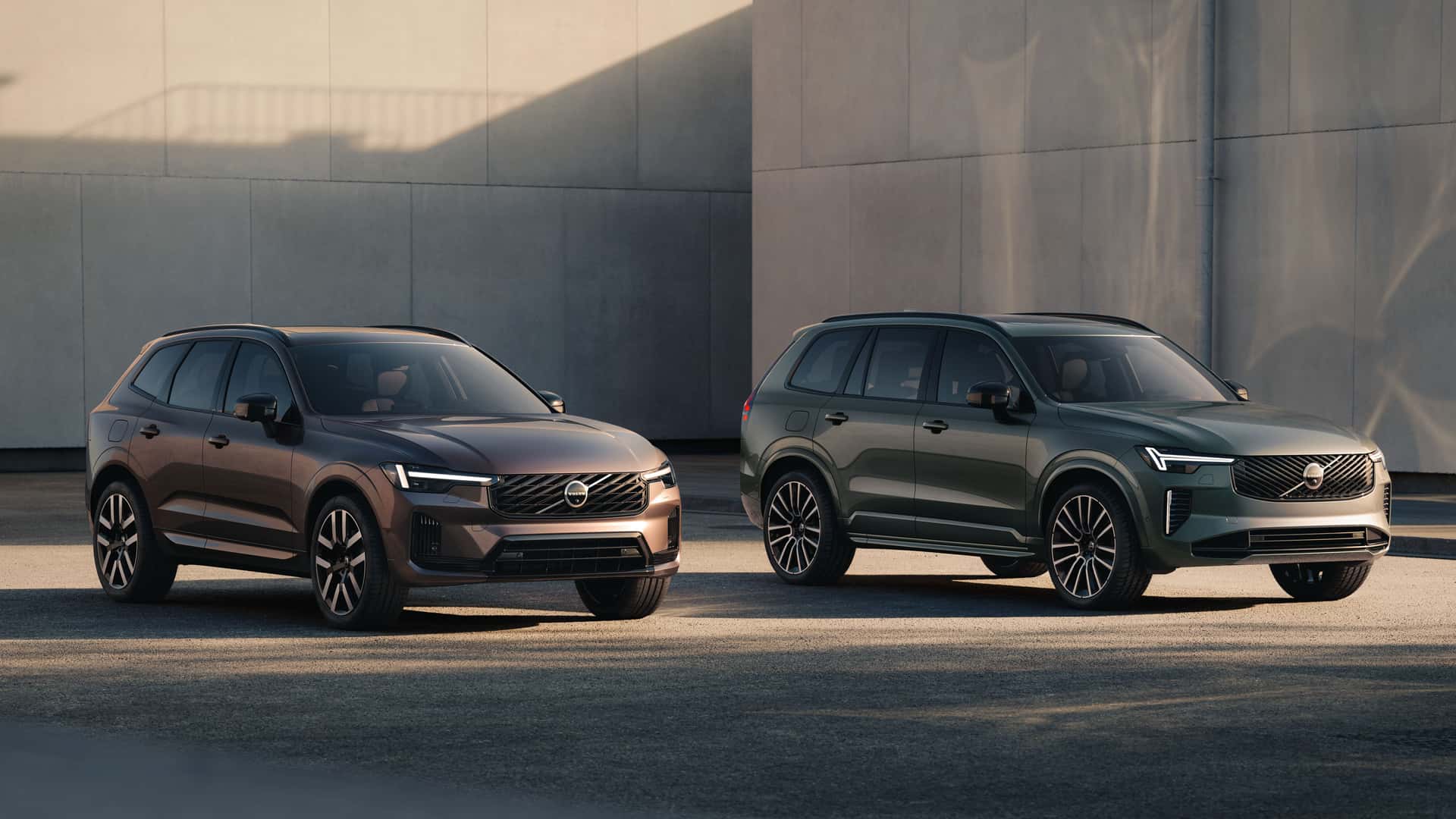
Volvo’s updated XC60 and XC90 will be the longest-range plug-in hybrids in the U.S. Owners can cover most of their driving needs simply by using battery power. The XC60’s EV range is greater than that of the original Nissan Leaf. Office commutes, everyday errands and even weekend getaways can now be done exclusively on battery power in the 2028 Volvo XC60 and The updated XC60 will cover 78 miles on a single charge before its petrol engine kicks in, compared to 35 miles currently. That’s more range than the first-generation Nissan Leaf, which had an EPA rating of 73 miles. And that car was all electric. The all-electric range of the larger XC90 PHEV is now 73 miles, up from 32 miles for the current model. That makes the XC60 and The automaker pledged to completely ditch combustion engines by 2030 at the start of the decade, but then backtracked in 2024 as EV sales growth slowed more than expected, especially in the U.S. Volvo says it’s still committed to electric vehicles, but it’s also clearly doubling down on plug-in hybrids. “The XC60 is our best-selling model of all time, while the XC90 marked the beginning of our premium journey,” Hakan Samuelsson, CEO of Volvo Cars, said in a statement. “Now, as long-range plug-in hybrids, they build on that legacy and, together with the all-electric EX60, give us our strongest electrified offering to date in the mid-size SUV segment. This means a path to full electrification for every customer.” Volvo says the average round-trip distance for its American customers is just 22 miles, and the vast majority of its drivers here drive less than 30 miles a day. That means most owners could drive completely on electric power for most of their needs, whether it’s dropping the kids off at school or a slightly longer weekend trip. You can also get more done with fewer charging sessions, thanks to the larger battery. 20 Source: Volvo With gasoline prices skyrocketing due to the U.S. war in Iran, owners could rely on cheap residential electricity for most of their commute and skip the pump most days. This could also mean less wear and tear on your gasoline engine and lower repair bills in the future. For longer trips, the XC60 offers 590 miles of total range on a full tank and a full charge, while the XC90 has a range of 560 miles. Both cars will continue to be powered by their turbocharged four-cylinder engines, which are now paired with a higher usable capacity battery of 37.9 kilowatt hours, double the previous 18.8 kWh. They will continue to get standard all-wheel drive and the same 455 horsepower combined maximum output. Volvo did not say whether the PHEVs could be charged quickly, but added that despite doubling capacity, they will charge in less than six hours with a Level 2 charger, representing only a 14% increase in charging time. If you have a more powerful home charger with 16 amps output, the battery can be charged in four hours. The XC60, the automaker’s best-selling model globally and in the United States, will also receive a minor facelift. The front design is now sleeker with a smaller, squarer grille and more chiseled headlights. The daytime running lights on Thor’s hammer also receive updated signatures. The tailgate and taillights now look cleaner than before, while the overall silhouette remains identical. The 2028 Volvo XC60 plug-in hybrid will have the longest all-electric range of any PHEV in the U.S. Photo by: Volvo PHEVs have also made great strides in recent years. The Mercedes-Benz GLC 350e can travel up to 54 miles on a single charge with a 24.8 kWh battery. And the 2026 Toyota RAV4 PHEV also gets up to 54 miles of EPA-rated all-electric range with a larger 22.7 kWh battery. Both the Mercedes and Toyota are among the few PHEVs that can also fast charge with DC, with a 10-80% time in just about 30 minutes. The Mercedes reaches a maximum of 60 kW maximum charging speed, while the Toyota has a power of 50 kW. But again, this is all based on the assumption that owners will actually charge their PEHVs and not be lazy about it. If they don’t, they will simply carry a very heavy battery and burn more gasoline. Some previous studies have shown that most PHEV owners don’t actually plug in their vehicles, resulting in more emissions and less savings at the pump than automakers advertise. However, a more recent peer-reviewed study from Toyota found that PHEV owners in North America were actually plugging in their vehicles most of the time, taking advantage of the all-electric driving range as intended. The XC60 and What would you like to see on Insideevs.com? Take our 3-minute survey. – The InsideEVs team