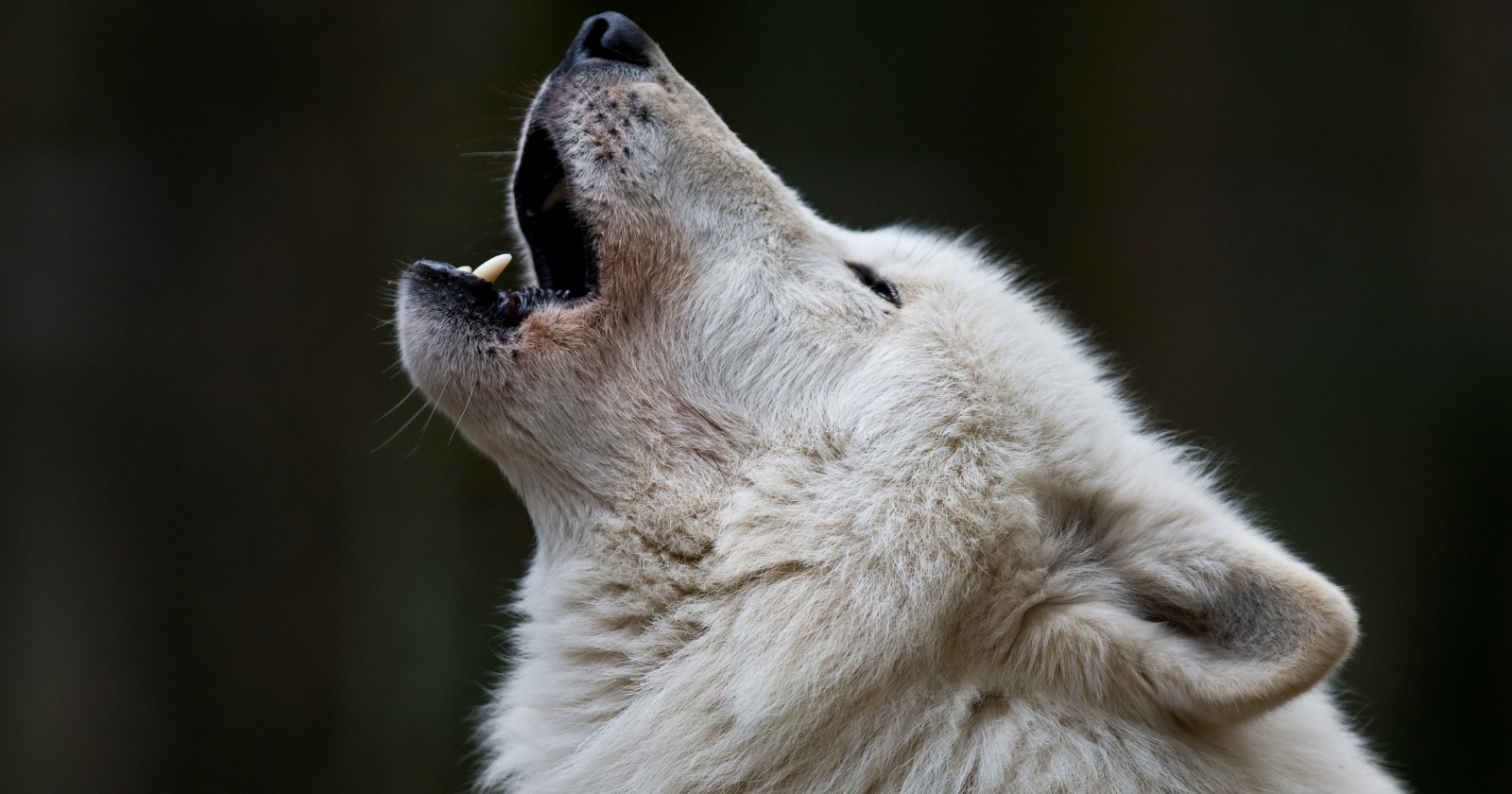
Forty thousand years in cold storage and the animal still seemed upset. That was more or less the scene on the bank of the Tirekhtyakh River in northeastern Siberia in the summer of 2018, when a man hunting for mammoth ivory pulled something furry out of the melting ground. Not a fang. The head of a wolf, ears raised, fangs showing, fur still brown and dense, whiskers in place, about 40 centimeters from the nose to the jagged edge where the neck ended. He handed it over to the department of mammoth fauna of the Academy of Sciences of the Sakha Republic. Its director, Albert Protopopov, told CNN that frozen wolf pups have turned up before, but never an adult animal with its soft tissues preserved. What the earth kept: Skin, muscles, teeth and brain, everything is still there forty thousand years later. Permafrost is not so much a gentle preservative as a tough one. Soil that stays below freezing year-round stops the bacteria and enzymes that normally break down a corpse, and anything buried fast enough simply stagnates there. Yakutia has plenty, which is why the region continues to produce mammoths, bison, cave lion cubs, and horses in conditions that look more like butchery than paleontology. What made this find unusual was the size and age of the animal. As reported by Live Science, the head alone measures about half the body length of a living gray wolf. Nobody cut it off A severed head in the permafrost invites an obvious explanation: human or animal interference. Investigators ruled it out without revealing anything. Naoki Suzuki of Tokyo’s Jikei University School of Medicine ran the specimen through a CT scanner to build a three-dimensional model of the skull and brain cavity, work described by Sci.News along with the first public display of the find. In a 2023 paper published in Biology Bulletin, Valerii Plotnikov, Protopopov, Suzuki, and Swedish geneticist Love Dalen reported no marks from a person or a scavenger anywhere in the sample. The moving ice had done it. Frozen ground shifts, splits and grinds for tens of thousands of years, and a neck is a weak point. That same newspaper quietly degraded the animal. Early reports called it an adult wolf aged two to four years. By measuring the wear on the teeth and pulp cavity of the upper canine, the researchers estimated that it was about a year old, eighteen months at most. A burly teenager, then, with a head the size of a small dog. The headline number continued to advance. Advertisements travel faster than newspapers, and this wolf’s age shows the gap. The first dates place it at more than 40,000 years old, and that figure went around the world. The AFP reported a date close to 32,000 years, which is the number Smithsonian Magazine used when covering the find. Plotnikov and his colleagues instead place it in the Karginskii interval of the Late Pleistocene, a warmer stretch of Siberian prehistory that generally dates back to between 50,000 and 24,000 years ago. The three statements can be placed in the same wide range without anyone being wrong. They simply cannot appear in the same headline. One head, 72 genomes A unique and spectacular specimen speaks of an animal. Dalen’s other work keeps that animal company. In a paper published in Nature in 2022, Anders Bergstrom, Pontus Skoglund and a large international team sequenced 72 ancient wolf genomes spanning the last 100,000 years, based on permafrost material from Siberia, Europe and northwestern North America. Two findings stand out. Ice Age wolf populations across the Northern Hemisphere were much less genetically separated than today’s wolves, suggesting that the animals roamed and bred across enormous distances in open country. And unlike mammoths, cave lions, and woolly rhinos, wolves never came close to becoming extinct. Previous studies had interpreted Pleistocene wolves as extinct lateral branches. The authors argue that continued gene flow simply smoothed older lineages toward newer ones. The same data set places the ancestry of dogs in far eastern Eurasia, with a second population of western wolves contributing to dogs in the Near East and Africa. This part of the story is controversial and the authors clearly say that no sampled wolf genome directly matches any of the ancestors. Why They Keep Showing Up Protopopov has been upfront about the reason his department’s workload continues to grow: The permafrost is melting and giving up its contents. Each fresh mummy is, in that sense, a receipt. The display cases of the museums in Yakutsk and Tokyo are filling with animals that should never have been seen again, and the collection is growing in exact proportion to how badly the ground is failing. A very good century for paleontology. Worrying about everything above. About this articleThis article is for general information and reflection. It is not professional advice. For your specific situation, consult a qualified professional. A personal measure of deep time. Look what has changed in the universe since you were born. Start with a date. Get a personal, detailed journey through everything that kept moving after you arrived. Six measurements obtained. No predictions. No astrology. Standards Space Daily articles are edited and fact-checked before publication. We use artificial intelligence tools in the newsroom. See our editorial standards and masthead.