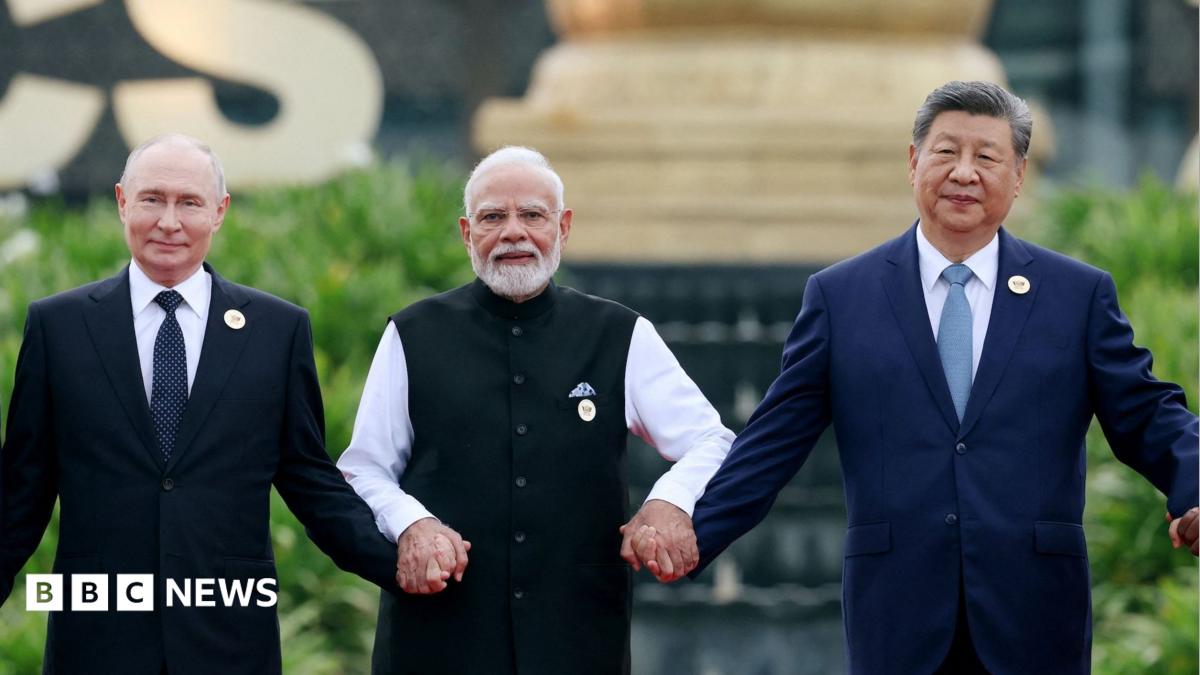
The summit managed to issue a joint statement when divisions among members have rarely been so evident. Twice earlier this year, meetings between Brics ministers failed to produce a joint statement. This time a consensus was reached, but leaving aside issues on which the members disagreed sharply, with few solutions. The “New Delhi Declaration” was adopted on the first day of the summit. But what is surprising is what it does not say. On the war in the Middle East, the statement calls for “maximum restraint.” It also condemns “attacks on civilian infrastructure and peaceful nuclear facilities,” but does not assign blame. It reiterates its support for a two-state solution, opposes the forced displacement of Palestinians or actions that could “legitimize or prolong the occupation,” carefully framing it around existing UN resolutions. It does not mention Russia’s war in Ukraine at all, unlike previous Brics statements. There is a similar caution in matters of trade. It lists concerns about “indiscriminate increases in tariffs” and condemns unilateral sanctions, but does not mention the United States and is likely to avoid Washington’s wrath. Several BRICS members would have been reluctant to incur the wrath of President Donald Trump, as he has already called the group’s proposals “un-American,” including the possibility of linking central bank digital currencies for cross-border trade. “I was pleasantly surprised that there was a strong reference to tariffs, because India might have wanted to be less direct about it, but perhaps this was an opportunity to convey its displeasure,” he added.