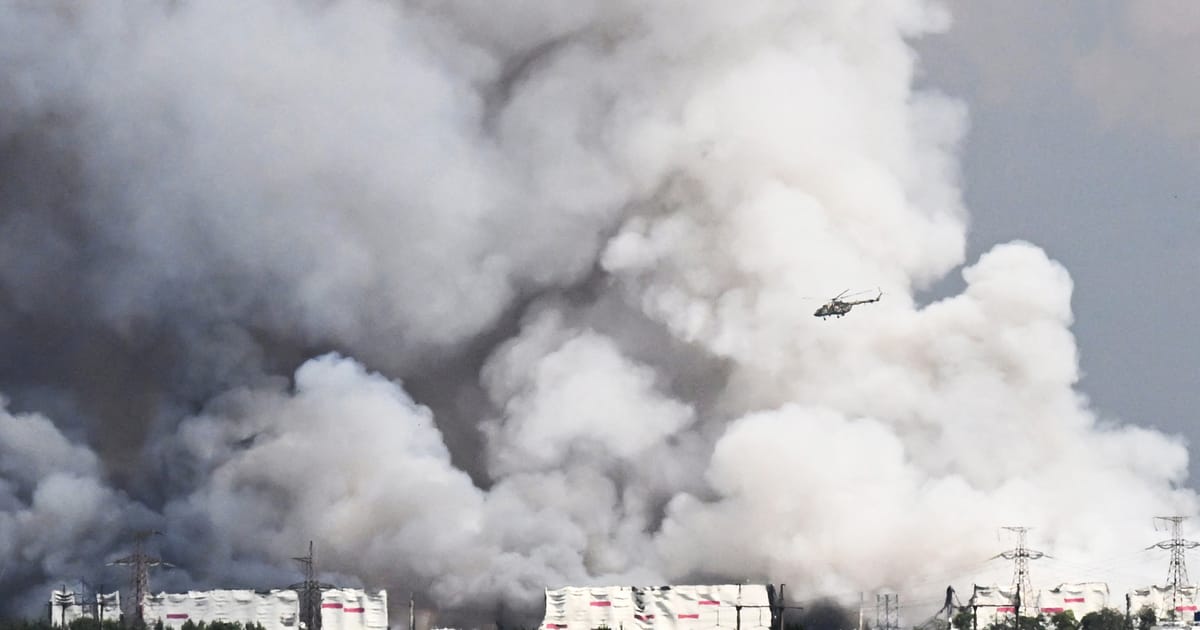
Matveev added that Zelenskyy’s air campaign has exposed how the Russian military cannot fully protect the country. This was underlined in May when the Kremlin reluctantly scaled back the Victory Day revelry celebrating the Red Army’s defeat of Nazi Germany. Soon after, in June, Ukraine repeatedly attacked Russian oil refineries and fuel infrastructure, including around Moscow. In July, Ukrainian drones arrived at the Omsk refinery in Siberia, Russia’s largest, about 2,700 kilometers from Ukrainian-controlled territory, apparently using an improved drone. Russian President Vladimir Putin arrives to attend the simple Victory Day military parade in Moscow’s Red Square on May 9, 2026. | Alexander Kazakov/Pool/AFP via Getty Images By then, the Ukrainian attacks had hit many of Russia’s major refineries, oil terminals and fuel storage facilities. At the same time, Ukraine launched an operation against Russia’s so-called shadow fleet in the Black and Azov Seas, targeting more than 200 vessels, according to Ukrainian officials. Russian media have reported on the impact of the Wildberries and Ozon warehouse strikes on small businesses, with clothing and electronics sellers lamenting having lost years of work, including their livelihoods. Pro-war military bloggers have not held back their criticism, blaming the Russian armed forces for ineffectiveness. But are these complaints enough to alarm Putin and prompt him to stop the war?